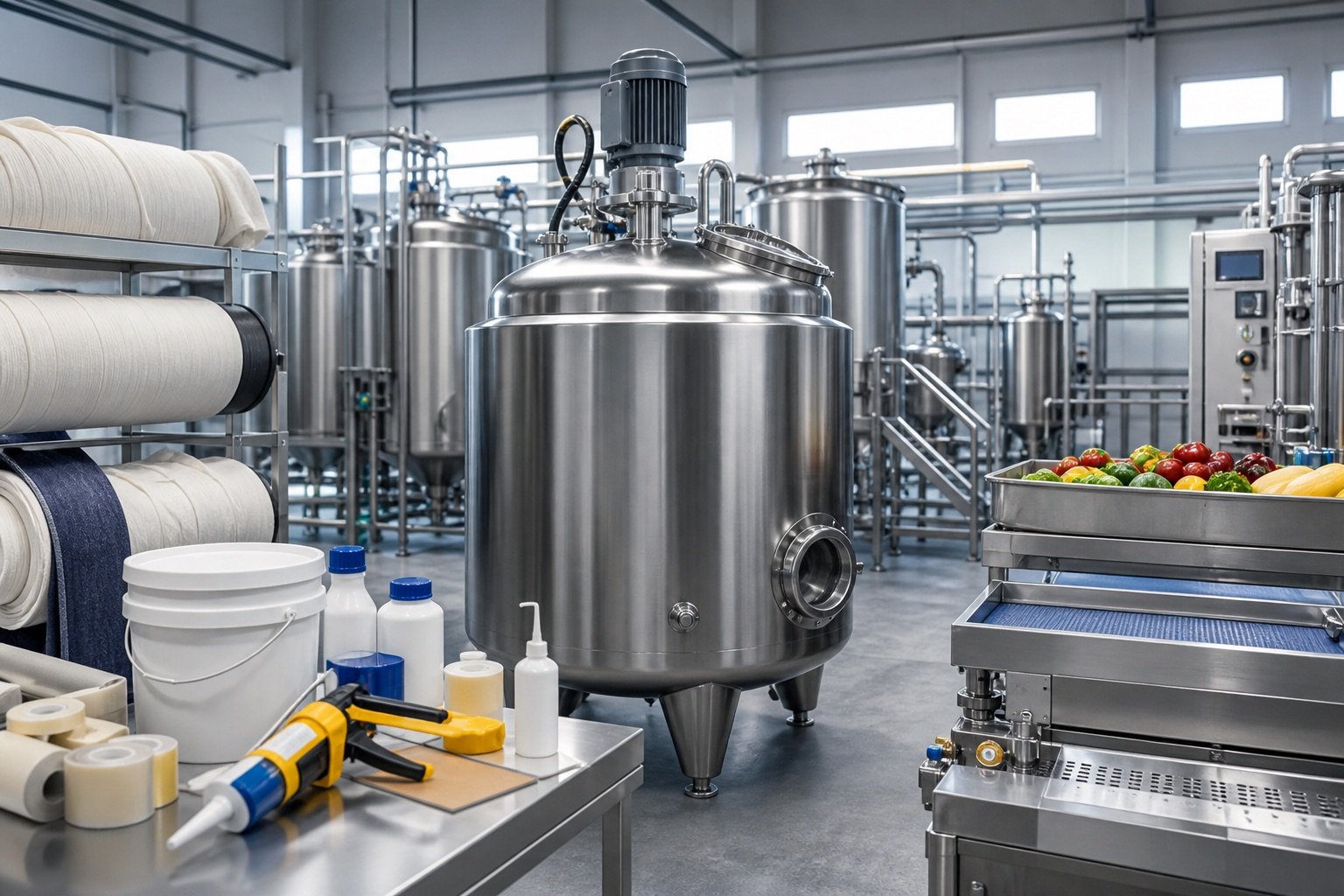
Glacial acetic acid is a versatile industrial raw material used both as a reagent and as a processing aid. Its value comes from the acetate group it introduces into downstream chemicals, its acidity and its compatibility with many manufacturing systems. The following overview highlights major application areas without replacing application-specific technical assessment.
Chemical synthesis
A large share of acetic acid demand is connected to downstream chemical production. It is used to manufacture vinyl acetate monomer, acetic anhydride, acetate esters and other intermediates. These materials support adhesives, coatings, films, fibers, solvents and engineered products.
Coatings, inks and adhesives
Acetate derivatives are widely used in formulations that require controlled evaporation, film formation or bonding performance. Acetic acid can also be used for pH adjustment and reaction control. Formulators must evaluate compatibility, moisture, color and impurity limits for the specific resin system.
Textile and leather processing
In textile operations, acetic acid may help adjust pH during dyeing, finishing and washing. Controlled acidity can influence dye uptake and processing consistency. Concentrated material should be metered through properly designed systems and diluted according to site procedures.
Pharmaceutical and fine chemical manufacturing
Acetic acid and acetate intermediates can participate in synthesis, purification and pH control. These applications often require tighter specifications, documented traceability and controls aligned with the manufacturer’s quality system. Buyers should never assume that an industrial grade is automatically suitable for regulated production.
Food-related applications
Food-compliant acetic acid can be used as an acidity regulator or processing ingredient where permitted. Suitability depends on grade, applicable food regulations and the manufacturer’s approval system. Only material specifically supplied and documented for the intended food use should enter such processes.
Rubber, plastics and other manufacturing
Acetic acid is also found in latex coagulation, polymer-related operations, cleaning and numerous specialty processes. Required concentration and impurity controls vary. A technical discussion with the supplier helps match the commercial grade to the application.
See our glacial acetic acid product information for available supply discussions.
Choosing material for an application
Define the required assay, water limit, critical impurities, documentation and packaging. Conduct process trials when changing supplier or grade, especially where product color, reaction yield or regulatory status is sensitive. The guide to grades and purity explains common COA parameters.
Frequently asked questions
Is glacial acetic acid used directly or after dilution?
Both are possible. The process design determines concentration. Any dilution must follow an approved procedure with suitable materials, ventilation and heat management.
Can one grade serve every industry?
No. Industrial, food-related, pharmaceutical and other applications can have different impurity, documentation and regulatory requirements.
What should buyers disclose to a supplier?
Share the intended application, specification, annual volume, packaging, destination and relevant compliance requirements so the supplier can assess suitability.
Need help matching supply to an industrial process? Send us your requirements.