Formic acid is corrosive and must be handled under a site-specific risk assessment. This practical overview supports industrial planning but does not replace the current safety data sheet, qualified safety advice or local legal requirements.
Use the current SDS
Before receipt, ensure responsible personnel have the latest safety data sheet. It informs exposure controls, first aid, spill response, firefighting, storage conditions and transport classification.
Storage and containment
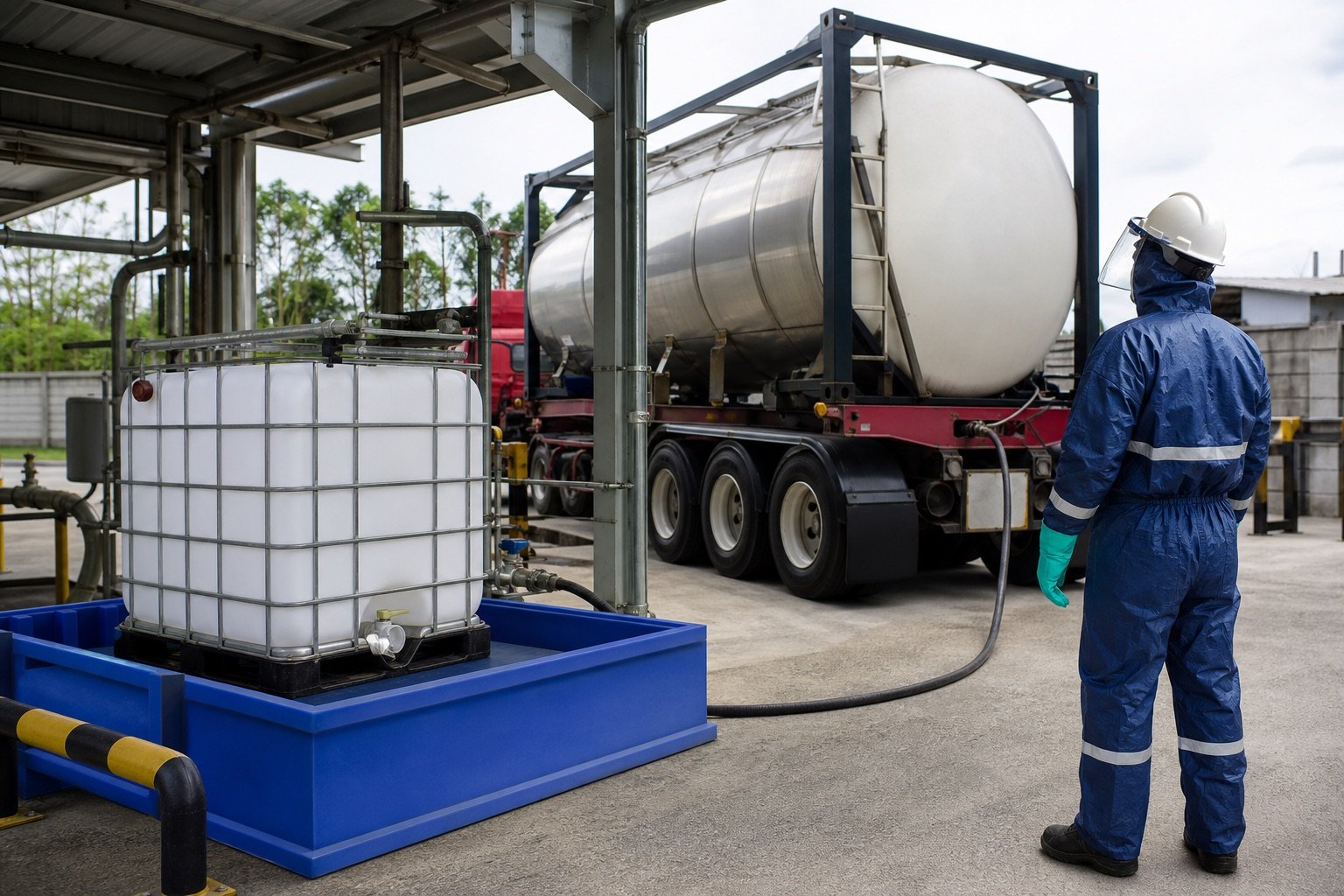
Keep containers in a designated, cool and well-ventilated chemical area, protected from damage and incompatible materials. Provide containment appropriate to the volume and local requirements. Clearly identify tanks and transfer lines to prevent cross-connection.
Equipment compatibility and PPE
Tanks, pumps, gaskets and hoses must be selected for the actual concentration, temperature and service conditions. PPE requirements follow the risk assessment and SDS; eye and face protection, chemically resistant gloves and protective clothing are commonly considered.
Receiving, transfer and transport
Verify product identity, batch, seals, capacity and connection compatibility before transfer. Transport is regulated: packaging, labeling, documents, vehicle requirements and trained personnel must comply with the applicable jurisdiction.
Frequently asked questions
Can formic acid be stored outdoors?
Only where the engineered system, climate protection, containment and local rules permit it.
Which materials are compatible?
Compatibility depends on concentration and temperature; consult the SDS and qualified engineering guidance.
For packaging and shipment questions, contact Hiacid. Review product options at Formic Acid.