Propionic acid is corrosive to tissue, produces irritating vapor and is classified by NIOSH as a Class II combustible liquid based on its flash point. Safe storage and transport therefore require compatible equipment, ventilation, ignition control, secondary containment and trained personnel. This overview supports planning, but the current supplier SDS, local regulations and qualified engineering review must govern each installation.
Design storage around compatibility
Tank, drum, IBC, piping, gasket, valve and pump materials must be selected for the supplied concentration, temperature and contaminants. NIOSH notes incompatibility with alkalis and strong oxidizers and notes corrosivity to steel. Do not generalize from one material or service condition; obtain current compatibility guidance from the equipment and chemical suppliers.
Provide containment and ventilation
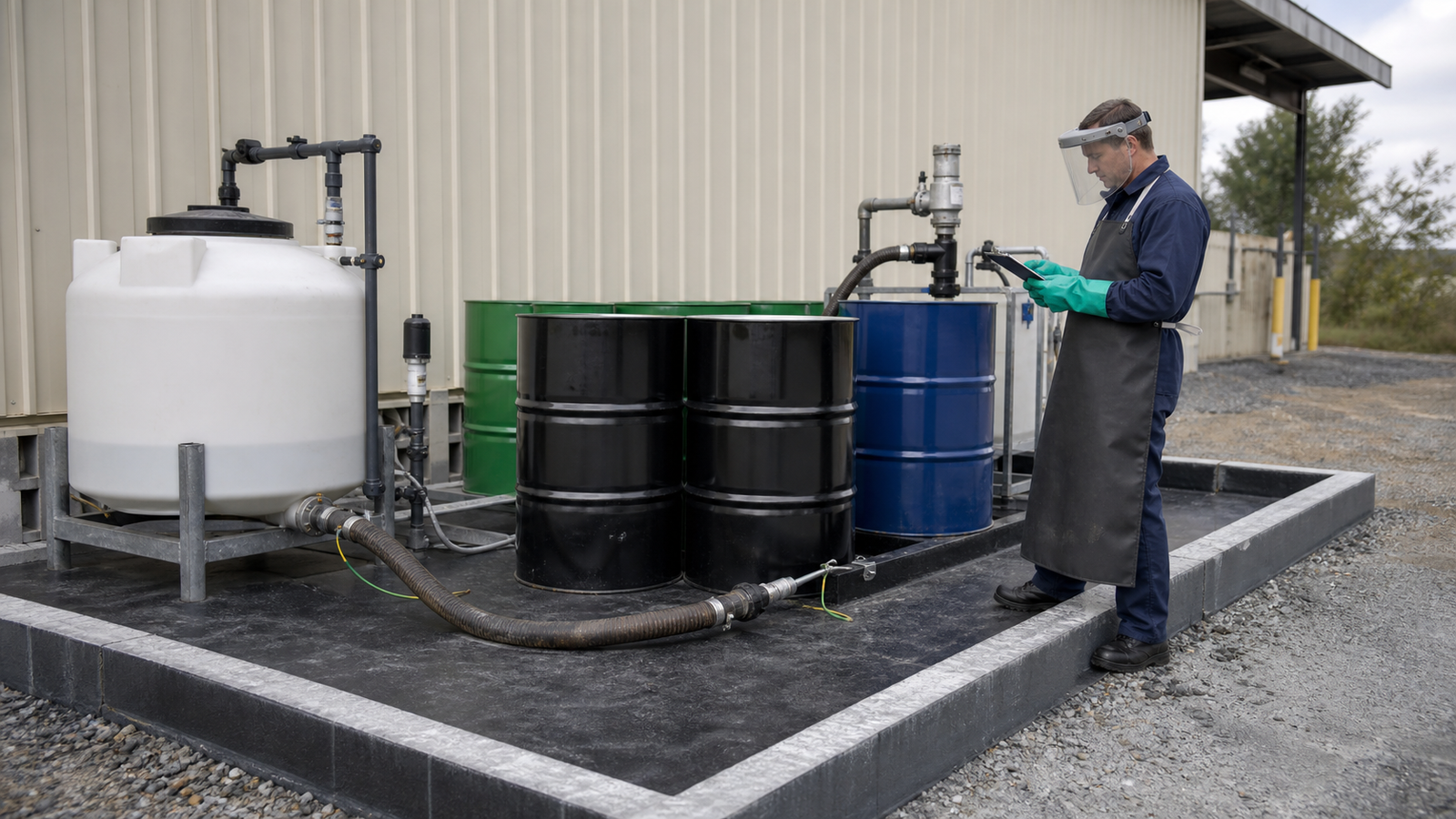
Use secondary containment appropriate to the quantity and local rules. Keep transfer areas accessible for inspection and isolated from incompatible drainage. Control vapors through closed handling and suitable ventilation, and provide eyewash and emergency shower facilities according to the site risk assessment.
Control ignition and transfer hazards
NIOSH lists a flash point of 126°F (52°C), so ignition-source control, bonding or grounding decisions and area classification should be addressed by qualified professionals and applicable codes. Closed transfer, verified connections and written procedures reduce splash, vapor and misdelivery risk.
Select task-specific PPE
Chemical splash goggles or a face shield, compatible gloves and protective clothing may be required depending on concentration and task. PPE is the final layer after closed systems, ventilation and procedures. Respiratory protection requires an exposure assessment and a formal program; odor alone is not a reliable control measure.
Prepare for leaks and exposure
Maintain written plans for isolation, notification, evacuation, spill control, decontamination and medical response. Only trained, equipped personnel should respond. Cleanup materials and neutralization methods must be chosen for the quantity, location and local requirements, with attention to heat and gas generation from reactions.
Inspect every delivery before unloading
Verify the product, grade, lot, seals, documents, receiving capacity and correct connection. Inspect the vehicle, package, hose and coupling condition and confirm compatibility with the receiving system. Maintain clear communication between the driver and site operator throughout the transfer.
Use authoritative safety information
The NIOSH Pocket Guide entry for propionic acid identifies eye, skin and respiratory irritation and burn hazards. Pair the current SDS with the buying guide, review the Hiacid propionic acid page and contact Hiacid to request current product documents.
Related propionic acid resources
- Propionic Acid Buying Guide: Purity, Packaging and Supplier Checks
- Propionic Acid Grades and Purity: How to Review a Specification
- Propionic Acid Uses: Feed Preservation, Propionates and Industry
Frequently asked questions
Is propionic acid combustible?
NIOSH classifies it as a Class II combustible liquid and lists a flash point of 126°F (52°C). Follow applicable codes and the current SDS.
Can carbon steel always be used?
No. NIOSH notes corrosivity to steel; compatibility depends on concentration, temperature, water and service conditions.
What should be checked before unloading?
Verify identity, grade, seals, documents, receiving capacity, connections, hose condition and communication procedures.
Is PPE enough to control the risk?
No. Closed handling, ventilation, containment and procedures should be established before relying on PPE.