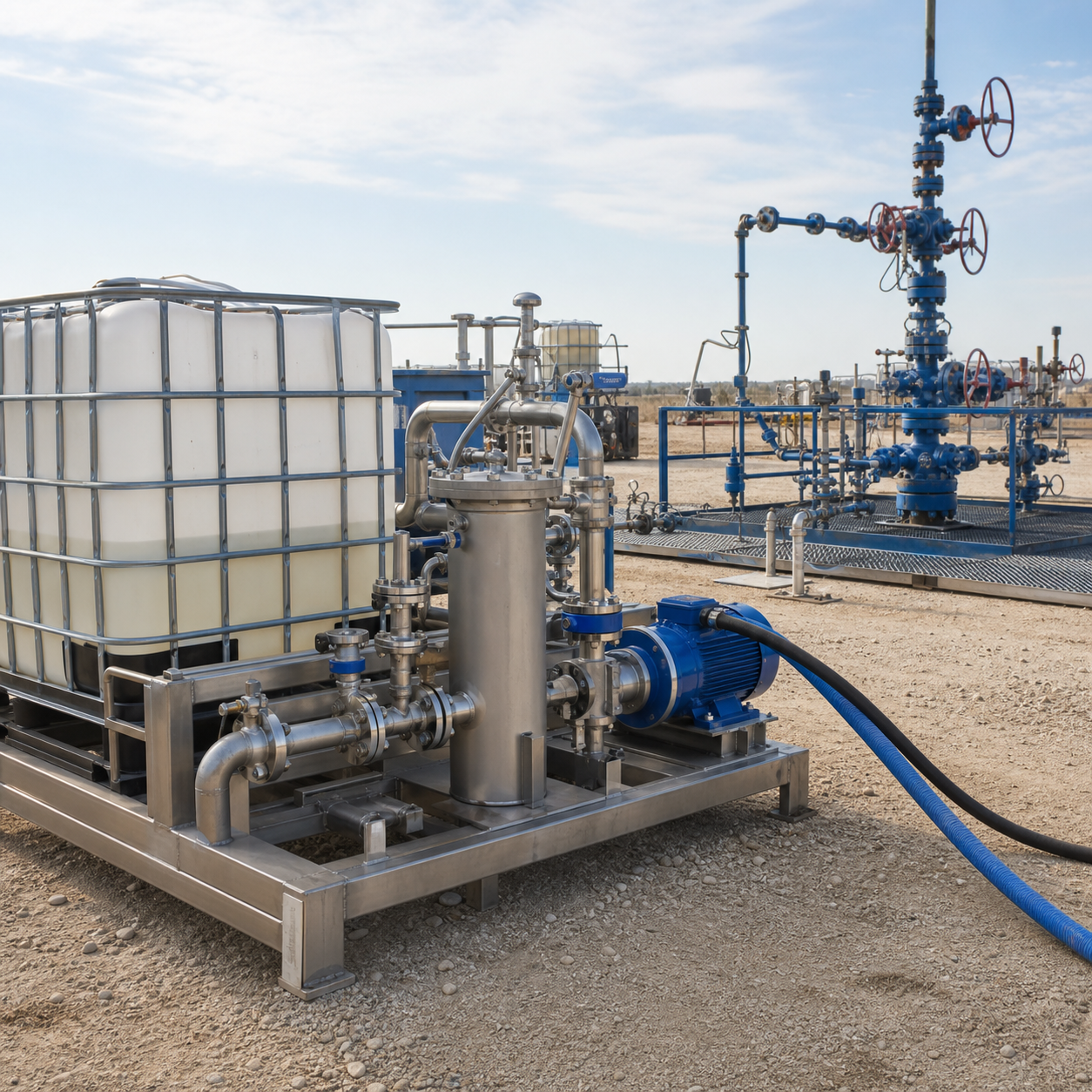
Formic acid is used in selected oilfield and geothermal well-treatment systems where an organic acid or delayed reaction profile fits the formation and completion design. It may be applied to carbonate dissolution, scale removal or specialized stimulation, often with corrosion inhibitor, iron control, surfactant or other additives. The correct formulation depends on mineralogy, temperature, pressure, metallurgy, brine composition and flowback requirements. Commodity formic acid must never be treated as a ready-to-pump well fluid. Service-company engineering, laboratory compatibility testing and operator approval are required. Procurement supports the program by delivering a consistent grade, verified concentration, clean logistics and traceable documentation. The field plan should also identify contingency fluid, maximum hold time, mixing-base controls and the exact authority that can approve a last-minute material substitution, so schedule pressure does not override the qualified treatment design.
Start with formation and damage diagnosis
Use mineralogy, scale analysis, well history, pressure behavior and fluid samples to define the treatment objective. Carbonate dissolution, silicate damage and organic deposits require different chemistry. Model reaction products and verify whether solids can precipitate when formate meets calcium or when the treatment contacts dense brine.
Run temperature-specific laboratory tests
Reaction rate, corrosion and additive stability change with bottomhole temperature. Test representative rock, scale, tubular metallurgy, brine and crude under realistic temperature and pressure where possible. Include shut-in time and flowback sequence. A room-temperature bottle test is not enough for a high-temperature well.
Design the complete fluid package
Confirm acid strength, inhibitor, iron control, surfactant, diversion and compatibility with completion fluids. Addition order and mixing water quality can change performance. The service company should define the recipe, while the acid supplier confirms the formic acid specification and lot quality.
Assess corrosion across the exposure window
Evaluate tubing, casing, coiled tubing, pumps and surface iron for the proposed concentration, temperature and time. Use qualified corrosion testing and appropriate inhibitors. NIOSH notes that formic acid is corrosive to metals; oilfield metallurgy and downhole conditions require much more detailed engineering than a general compatibility chart.
Specify the acid for field execution
State concentration, water, color and critical impurities with test methods. Confirm package, tanker cleanliness, seals, batch traceability and COA timing. If product is blended at a base, reconcile delivered mass and assay with final fluid volume.
Prevent contamination and wrong-product events
Use positive identification, dedicated or validated clean hoses, segregated storage and controlled transfer. Verify labels, seals and documents before unloading. Never return samples or mixed fluid to the original container. Field urgency should not bypass receiving checks.
Plan logistics and flowback management
Coordinate acid delivery with mixing capacity, weather, access, treatment schedule and contingency volume. Define storage time and temperature limits. The operator should also approve flowback handling, neutralization, sampling and disposal or treatment before pumping begins.
Use published well-treatment evidence appropriately
A geothermal well study includes formic acid among acids evaluated for stimulation and discusses long metal-contact considerations. It is background evidence, not a transferable treatment design. Formation-specific testing remains essential.
Score suppliers on execution reliability
Evaluate specification performance, capacity, dangerous-goods competence, tanker quality, lead time and response to urgent documentation. Review several recent COAs and agree complaint and retained-sample procedures. Lowest unit price has little value if a delayed or inconsistent load disrupts a scheduled stimulation job.
Prepare an oilfield RFQ
Provide concentration, impurity limits, volume, package or bulk delivery, destination, timing, COA, SDS, traceability and change-control needs. Review the Hiacid formic acid product record and supply page, then request a project quotation.
Related formic acid resources
- Formic Acid for Industrial Descaling and Metal Cleaning
- Formic Acid in Peroxyformic Pulp Processing
- Formic Acid Supply for Potassium Formate Runway Deicer
Frequently asked questions
Is commercial formic acid ready to pump downhole?
No. It must be part of an engineered treatment fluid qualified for the formation, metallurgy and operating conditions.
Why is temperature-specific testing important?
Reaction rate, corrosion and additive stability can change substantially with bottomhole temperature.
Can calcium formate precipitate?
It can under some fluid conditions, so model and laboratory-test the complete brine, acid and mineral system.
What should field receiving verify?
Check identity, concentration, COA, seals, quantity, package or tanker condition and traceability before transfer.