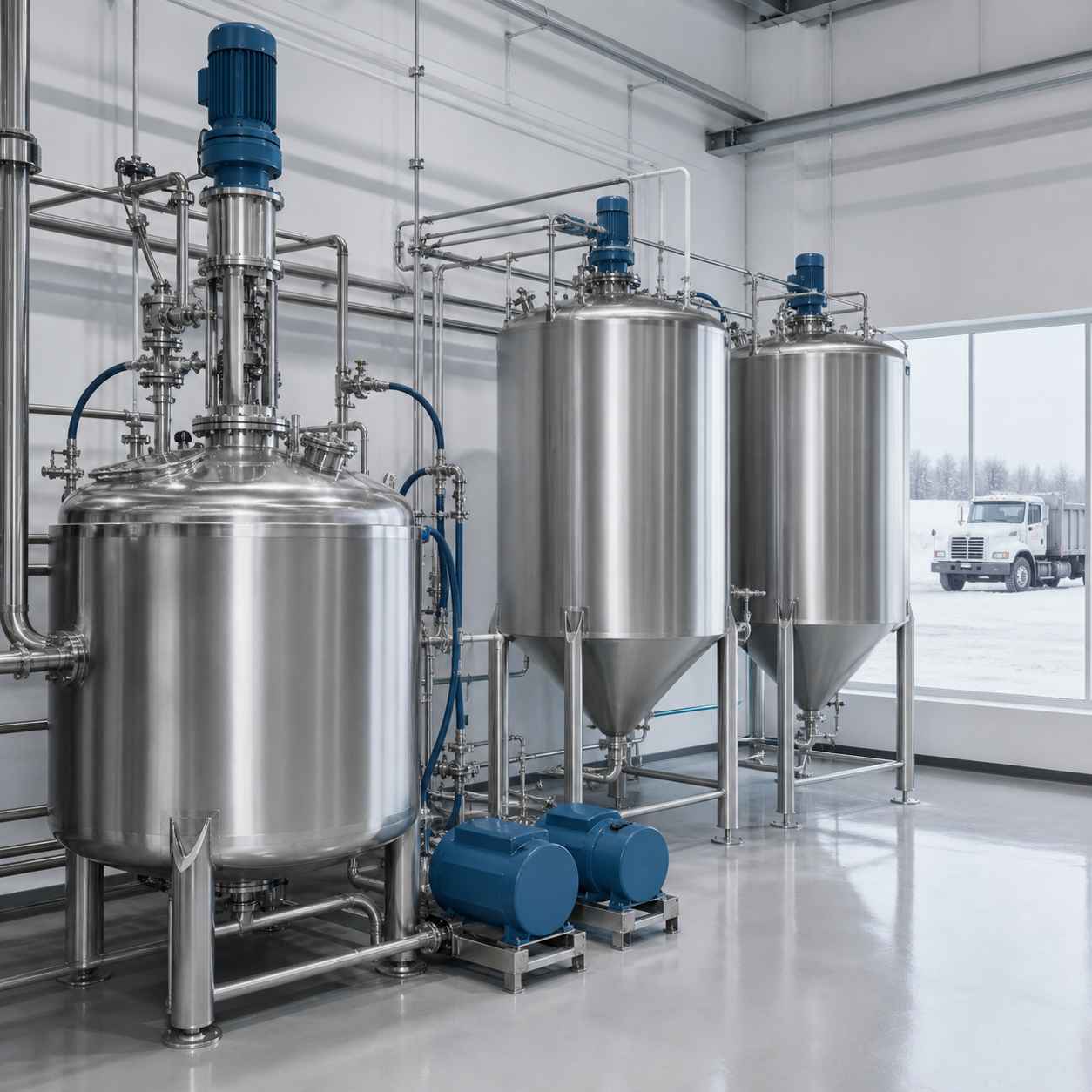
Potassium formate runway deicer is a formulated product, not simply formic acid neutralized and shipped. Producers combine qualified raw materials under controlled neutralization, then adjust concentration and add an approved corrosion-inhibitor package before performance and compatibility testing. Formic acid feed quality affects mass balance, water load, color, residue and consistency, while the final deicer must meet customer and aviation-industry requirements. Seasonal demand, storage capacity and airport delivery windows make supply planning as important as assay. A formic acid supplier can support reliable feedstock, but the deicer manufacturer remains responsible for formulation, testing, approvals and instructions for airside use. Incoming-acid reserves, finished-fluid inventory and carrier capacity should be reviewed together before winter, with documented release authority for every final batch and no assumption that feedstock conformity replaces airside product approval.
Translate final-product demand into acid demand
Forecast potassium formate sales by concentration, package and delivery month, then calculate formic acid requirements on an active basis. Include neutralization yield, water balance, process loss, retained inventory and peak-week capacity. Seasonal planning should use realistic airport call-off behavior rather than dividing annual demand evenly.
Separate feedstock and formulation specifications
The formic acid purchase specification should cover assay, water, color, residue and relevant impurities. The final runway fluid requires its own density, freezing performance, inhibitor, corrosion, storage and application controls. Passing the raw-material COA does not certify the formulated deicer.
Control neutralization safely
Neutralization releases heat and requires engineered addition rate, mixing, cooling, venting and interlocks. Validate the base concentration and raw-material temperature. Closed charging and accurate mass measurement improve both worker protection and batch repeatability.
Verify reaction completion and balance
Use approved analytical methods to confirm residual acidity or alkalinity, formate concentration, density and batch uniformity. Reconcile actual acid and base additions with theoretical demand. Large corrections at the end of a batch often indicate weighing, concentration or mixing problems that should be investigated.
Integrate the inhibitor package
Runway products use formulated corrosion-inhibitor systems to address aircraft and infrastructure compatibility requirements. The inhibitor must be added and tested under the manufacturer’s controlled procedure. Trace impurities from acid, base, water or equipment can affect color, stability or corrosion results.
Manage water and low-temperature performance
Water enters with raw materials and formulation adjustments. Track it through the batch because it affects final concentration and freezing behavior. Use calibrated density and analytical testing across the intended temperature range; density alone cannot prove every performance property.
Follow aviation customer requirements
FAA material notes distinguish formate or acetate salts and discuss corrosion-inhibited products used for airside applications. The FAA winter-operations draft guidance provides context, while current airport specifications and applicable industry standards control procurement and approval.
Build traceability from acid lot to airport batch
Record acid lot, base lot, inhibitor lot, water source, batch data, final tests and shipment. Retain samples under defined conditions. If an airport reports a problem, complete traceability allows the producer to separate raw-material variation from blending, storage or application factors.
Plan seasonal supply resilience
Prequalify a backup acid source and transport route before winter. Match bulk deliveries to tank capacity, weather risk and carrier availability. Require change notification and compare multiple COAs so emergency purchases do not introduce an untested impurity profile.
Issue a deicer-feedstock RFQ
State assay, water, color, residue and critical impurities; test methods; monthly peak volume; delivery mode; destination; COA and SDS needs; and change control. Review the Hiacid formic acid page and the descaling guide, then contact Hiacid.
Related formic acid resources
- Formic Acid for Industrial Descaling and Metal Cleaning
- Formic Acid in Peroxyformic Pulp Processing
- Formic Acid for Oilfield Well Stimulation Programs
Frequently asked questions
Is formic acid itself a runway deicer?
No. Potassium formate runway fluid is a formulated and tested salt solution with required performance and inhibitor controls.
Why is seasonal forecasting important?
Airport demand can peak rapidly during winter weather, so raw-material and transport capacity must be reserved in advance.
Does a raw-material COA approve the final deicer?
No. The manufacturer must test and release the completed formulation against customer and applicable requirements.
Which acid properties matter to a deicer producer?
Assay, water, color, residue, relevant impurities, lot consistency and supply reliability should be controlled.