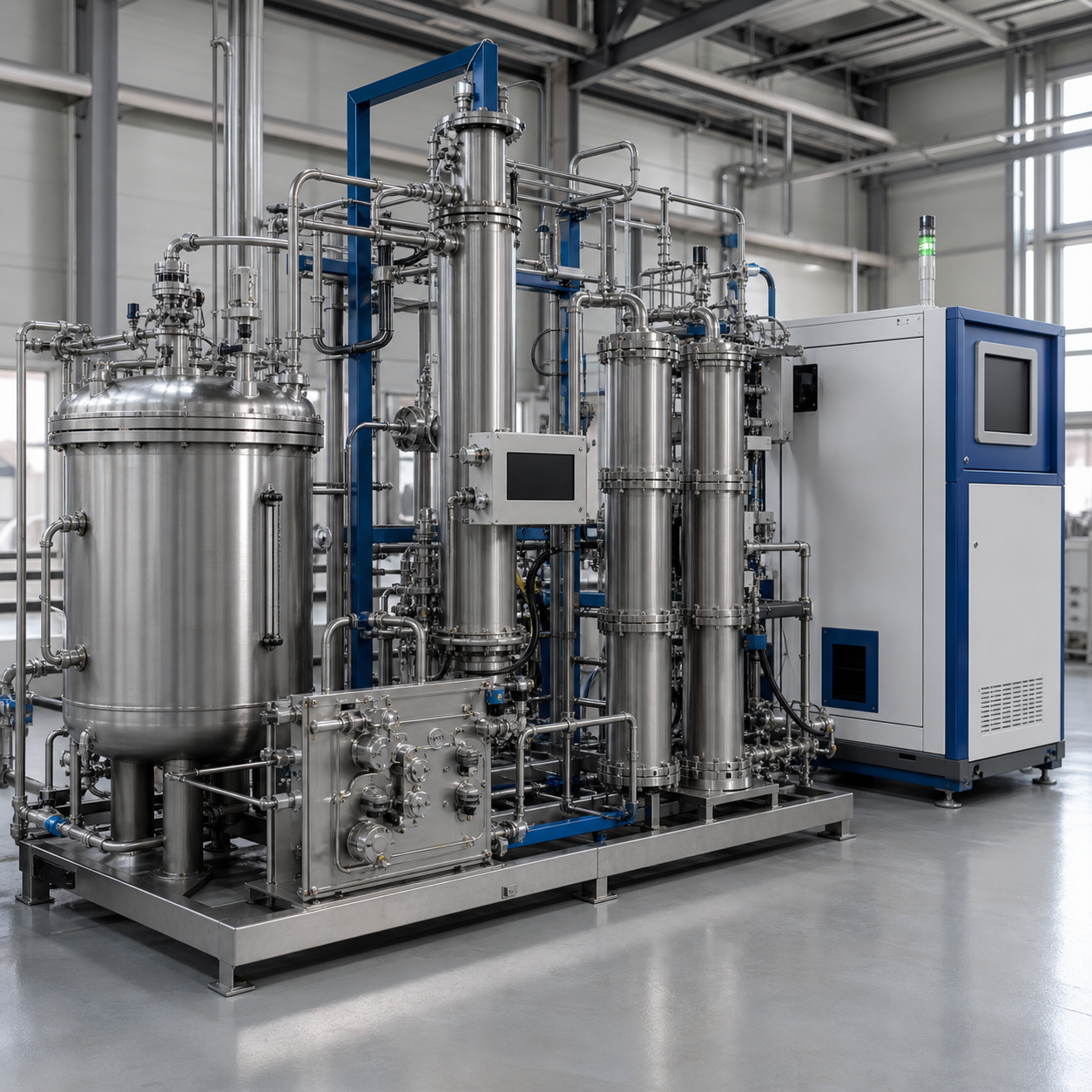
Formic acid is being studied as a liquid hydrogen carrier and as a fuel for direct formic acid fuel cells. In hydrogen-release concepts, catalysts promote decomposition toward hydrogen and carbon dioxide, while unwanted carbon monoxide can affect downstream purification or fuel-cell performance. In direct electrochemical systems, acid composition and catalyst compatibility influence output and durability. These are development and pilot applications, not evidence that every industrial grade is suitable. Project teams should define purity, water, metals, halides, residue and organic contaminants from catalyst testing, then qualify several lots. Procurement also needs a scale-up path that preserves experimental control when moving from bottles to drums, IBCs or bulk supply. The scale-up protocol should lock sampling, container preparation, transfer materials and storage time, since a larger package can introduce new contamination routes that were absent from sealed laboratory containers. Each new delivery format should pass a documented engineering and performance review.
Define the technology pathway
Separate hydrogen release, electrochemical formic-acid synthesis and direct formic acid fuel-cell work. Each pathway has different concentration, catalyst, membrane, gas-purity and water requirements. State the feed point and test objective before writing a specification.
Set measurable performance endpoints
Track conversion, hydrogen yield, carbon monoxide, carbon dioxide, energy use, catalyst productivity and stability. For a direct fuel cell, include voltage, power density, crossover and degradation. A feed lot should be compared against these endpoints, not only against an assay certificate.
Identify catalyst-sensitive impurities
Metals, sulfur species, halides, nonvolatile residue and organic contaminants may affect catalysts or membranes, but relevant limits depend on the system. Screen candidate grades with analytical data and controlled catalyst tests. Avoid demanding every trace limit without evidence, because unnecessary purity can make scale-up uneconomic.
Control water deliberately
Water may be part of the feed or reaction environment and can influence separation and electrochemistry. Define whether concentration is reported by mass, how samples are stored and how water is measured. Keep atmospheric moisture and cleaning carryover from changing small pilot inventories.
Protect the gas and carbon balance
Hydrogen-release experiments should quantify all major gas and liquid products, including carbon monoxide. Calibrate instruments and perform blanks. Unclosed balances can make an apparent catalyst improvement disappear during scale-up.
Plan purification as part of the system
If hydrogen feeds a fuel cell, downstream gas quality is a system requirement. Select membranes, sorbents or other purification based on measured contaminants and flow. The acid supplier does not certify final hydrogen unless a separate tested specification and process agreement exists.
Scale supply without losing traceability
Move from laboratory containers to larger packages only after validating materials, transfer, sampling and storage. One bulk lot can support longer trials, but it also increases the impact of contamination. Connect every experiment to acid lot, package, opening date and storage condition.
Apply industrial safety controls early
NIOSH lists formic acid exposure hazards, incompatibilities and emergency information. Pilot teams should implement closed feed, ventilation, containment, compatible equipment and emergency facilities before scale-up. The SDS and institutional process-safety review govern handling.
Use research evidence as context
A Pacific Northwest National Laboratory report describes work on hydrogen storage and delivery using electrochemically generated formic acid. It shows active development, not universal commercial readiness or a commodity-grade specification.
Prepare a pilot-material RFQ
State concentration, catalyst-sensitive impurity limits, methods, trial volume, package, storage, destination, COA, SDS and change notification. Review the Hiacid formic acid product record and supply page, then request samples and scale-up options.
Related formic acid resources
- Formic Acid for Industrial Descaling and Metal Cleaning
- Formic Acid in Peroxyformic Pulp Processing
- Formic Acid for Oilfield Well Stimulation Programs
Frequently asked questions
Is every industrial formic acid grade suitable for fuel-cell research?
No. Catalyst and membrane sensitivity must be evaluated against a project-specific impurity specification.
Why monitor carbon monoxide?
It can indicate an unwanted pathway and may affect downstream hydrogen purification or fuel-cell catalysts.
Should a pilot use the highest available purity?
Use evidence-based purity: test the impurities that affect performance and balance benefit against scale-up cost.
What changes when moving to bulk supply?
Materials, transfer cleanliness, sampling, storage time and lot traceability become more important and must be revalidated.