Acetic acid can be used in selected natural rubber latex processing operations to lower pH and support controlled coagulation. Performance depends on latex source, dry rubber content, ammonia or preservative level, temperature, dilution, mixing, addition profile and target rubber grade. Glacial acetic acid should not be applied directly without an engineered and validated dilution and dosing system. Local concentrated contact can create uneven coagulum, trapped serum, color variation or excessive acid residues. A processor should characterize incoming latex, define the target pH and maturation time, and connect acid use to washing, drying and finished-rubber properties. Procurement must specify assay, color and process-relevant impurities while operations control dilution water, dose calculation and mixing. Supplier qualification should compare several acid lots under representative production conditions.
For B2B implementation of Glacial Acetic Acid for Natural Rubber Latex Coagulation, assign ownership across purchasing, quality, production, engineering, logistics and EHS before the first delivery. Approve receiving tests, compatible handling, deviation response, retained samples and supplier change control in writing. This shared plan helps separate raw-material variation from equipment or operating changes and provides objective evidence for investigations. Record approved concentration, lot identity, shipment condition and receiving results before transfer. During qualification, compare at least several representative lots and document the criteria for full approval, conditional use, quarantine and rejection. Train the people who authorize unloading and recipe changes so commercial urgency cannot bypass the technical control plan.
Characterize incoming latex
Measure dry rubber content, pH, alkalinity or ammonia, temperature, mechanical stability and relevant contamination. Plantation, season, storage time and transport can change acid demand. Use representative data to set dose ranges rather than a fixed volume for every batch.
Define finished-rubber objectives
Set coagulum structure, washing efficiency, color, dirt, ash, volatile matter and mechanical-property targets for the grade. Coagulation is an intermediate step; acceptable pH alone does not prove that the rubber meets customer requirements.
Engineer dilution and addition
Design dilution order, heat management, compatible tank, agitation and transfer through formal review. Use controlled water quality because hardness, metals or microbiological contamination can affect latex and product. Label dilute solutions with concentration and preparation time.
Distribute acid uniformly
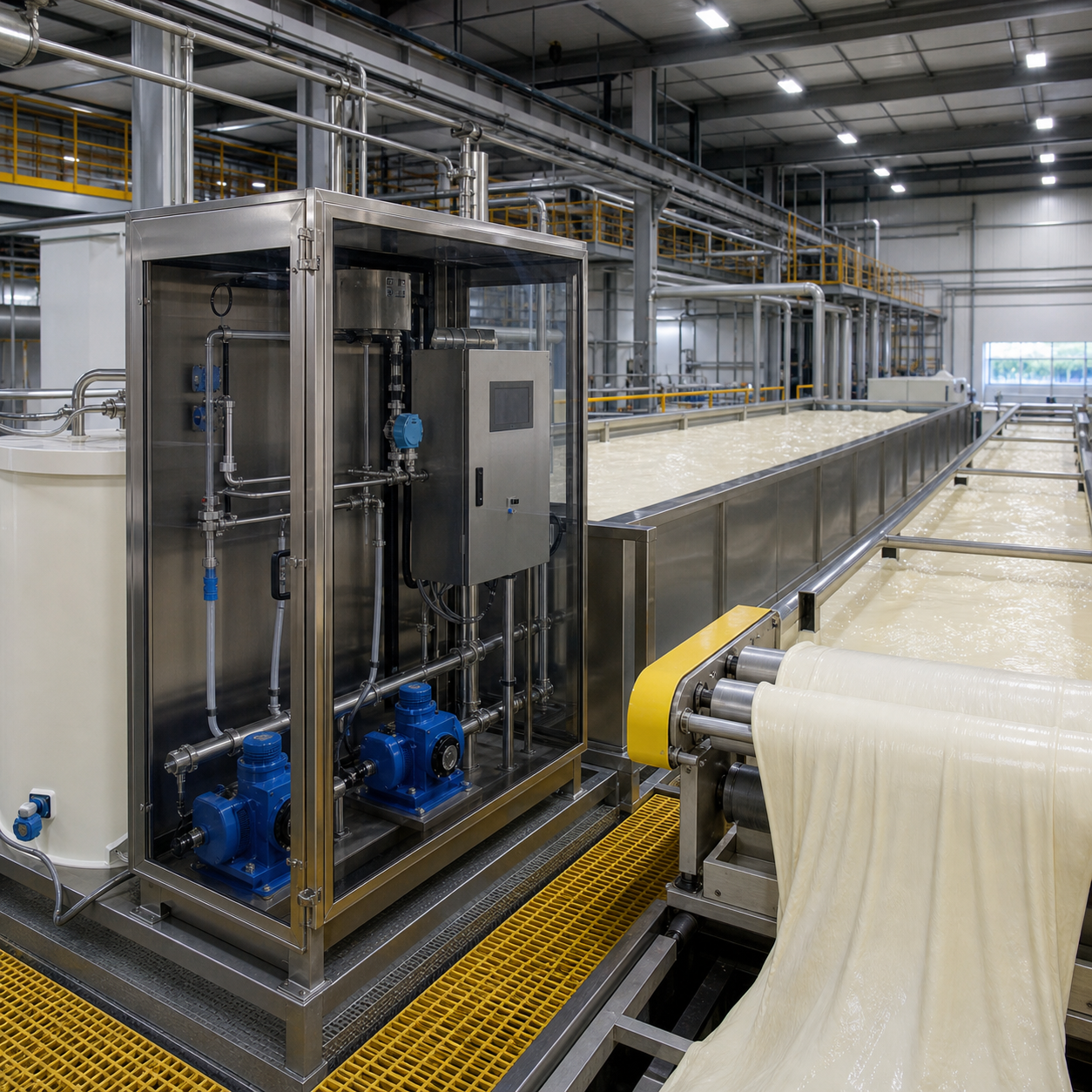
Add diluted acid through a validated manifold, dosing point or moving system that avoids local over-acidification. Confirm mixing without mechanically damaging the latex. Record addition rate, batch volume, temperature and pH response.
Control maturation and serum removal
Define coagulation time and endpoint before cutting or milling. Incomplete maturation can create weak or uneven coagulum, while extended acidic contact may affect quality. Manage serum drainage and wash water under the site’s wastewater controls.
Verify washing and drying
Wash until validated residual and cleanliness criteria are achieved. Control mill settings, crumb size, dryer temperature and residence time. Trend acid lot with drying behavior, color and final rubber properties to identify meaningful variation.
Specify incoming acetic acid
Set assay, water, color, residue and any application-sensitive impurity limits with methods. Correlate supplier and plant testing. A stronger or weaker concentration changes both dose and dilution water, so substitutions require recalculation and approval.
Protect workers and equipment
Glacial acetic acid is corrosive and combustible. Use closed transfer, ventilation, compatible materials, containment and emergency facilities. The NIOSH acetic acid entry provides exposure and flammability context; the current SDS remains mandatory.
Qualify changes and continuity
Review production site, analytical controls, packaging, traceability and change notification. Trial alternate sources before a seasonal disruption. Preserve retained samples and batch records for complaint or property investigations.
Prepare a latex-processing RFQ
Provide application, assay range, monthly demand, package, delivery schedule, COA, SDS language and change-control expectations. Review the Hiacid glacial acetic acid supply page and acetate processing guide, then discuss your latex specification.
Related glacial acetic acid resources
- Glacial Acetic Acid for Monochloroacetic Acid Production
- Glacial Acetic Acid for Industrial Acetate Salts Manufacturing
- Food-Grade Glacial Acetic Acid Supply and Quality Control
Frequently asked questions
Can glacial acetic acid be added directly to latex?
A validated dilution and dosing system is needed to avoid local over-acidification and unsafe handling.
Why does acid demand vary between batches?
Latex solids, ammonia, source, age and temperature can change neutralization demand.
Is target pH the only acceptance criterion?
No. Coagulum, washing, drying and finished-rubber properties must also be verified.
Why control dilution water?
Water hardness, metals or contamination can affect latex behavior and product quality.