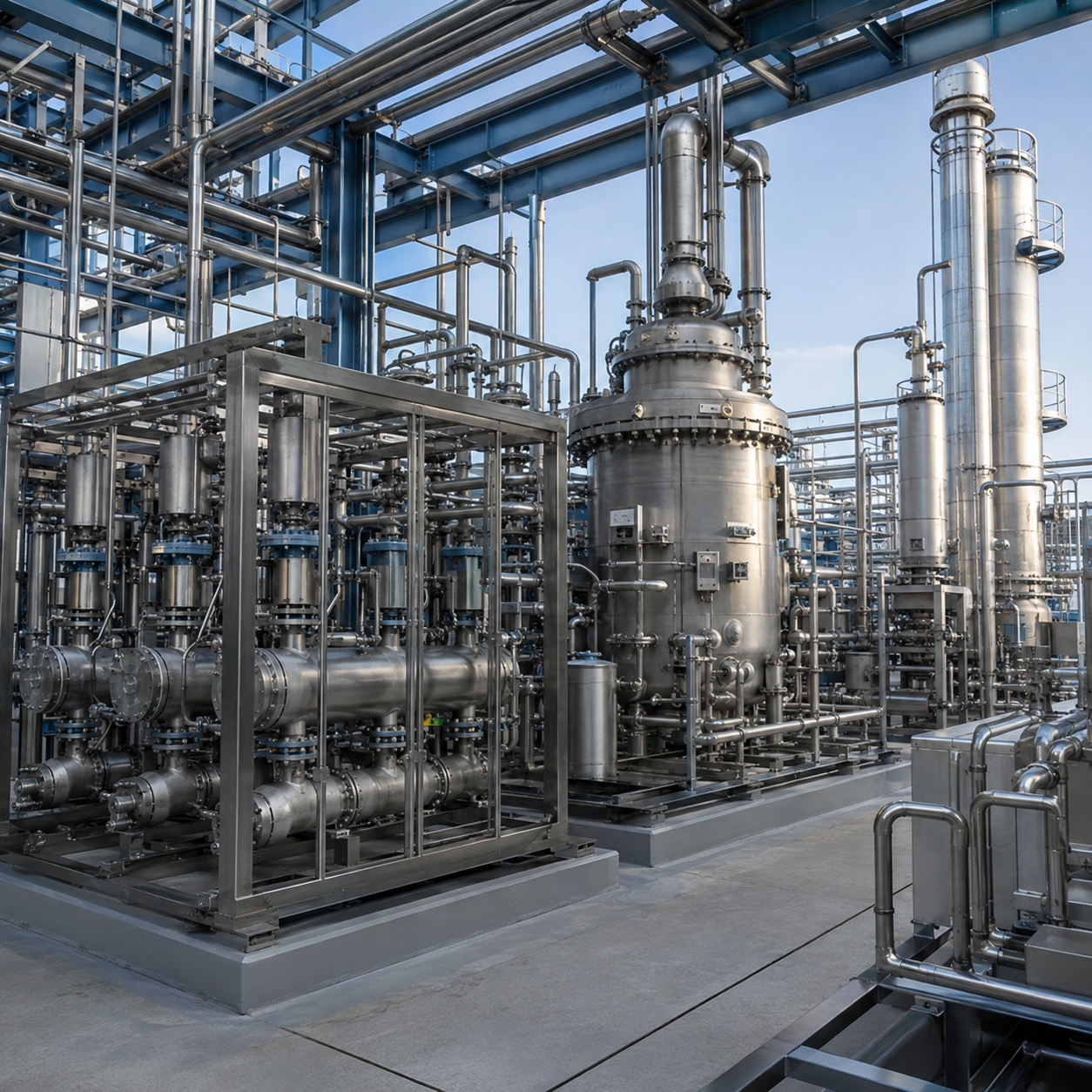
Nitrobenzene is commonly produced by nitrating benzene with nitric acid in the presence of sulfuric acid. Modern continuous plants integrate acid metering, reaction, phase separation, washing, acid reconcentration, heat recovery and off-gas control. Because nitration is highly exothermic and the reactants are hazardous, nitric acid feed must remain inside a validated composition window and a tightly managed transfer system. Procurement should align concentration and impurity limits with the licensed process, materials of construction and recovery loop. This is supply-chain guidance, not a formula or operating procedure. Only qualified facility personnel may define ratios, temperatures, residence times, startup sequences and emergency actions.
For B2B implementation, assign purchasing, production, quality, engineering and EHS ownership before the first delivery. Approve receiving tests, sampling tools, storage, transfer, deviation response and retained-sample period in writing. During qualification, compare several representative acid lots under the same operating conditions and record mass balance, product quality, waste load and equipment observations. This control plan helps separate raw-material variation from operating or analytical changes and provides objective evidence for buyer-supplier investigations. Review transportation, package integrity and unloading alongside laboratory results because contamination can enter after the supplier’s final test. Define who can approve a deviation, what evidence is required before release and which changes trigger requalification. Review complaint response, shelf-life evidence, emergency contacts and delivery scheduling during the same approval. Close each trial with an authorized report, an updated specification, assigned follow-up actions and a clear decision on routine monitoring.
Specify feed for the complete acid loop
Define nitric acid strength, nitrous content, sulfuric acid or sulfate, chloride, metals and residue with agreed test methods. Consider how incoming water affects mixed-acid composition and reconcentration energy. Confirm whether feed is fresh acid, recovered acid or a controlled blend.
Use redundant verification for critical variables
Compare supplier COA with receiving analysis and online density or concentration measurement where justified. Establish rules for instrument disagreement, quarantine and retest. Trace tanks and transfer lines to prevent an incorrect chemical connection.
Protect metering and thermal control
Feed pumps, flowmeters, control valves and interlocks must cover the approved range and failure modes. Variability in concentration changes molar feed and heat release even when volumetric flow appears stable. Review any acid-grade change through formal management of change.
Keep organics out of acid storage
Nitric acid is a strong oxidizer. Use dedicated equipment, compatible seals and verified cleanliness. Backflow prevention and physical segregation are essential because organic contamination can create severe reaction hazards.
Manage separation and acid recovery
Monitor acid and organic phases, dissolved nitrobenzene, water and byproducts through separation and washing. Acid recovery should have analytical limits for accumulation and purge. Feed qualification must consider what the recycle loop returns to the reactor.
Use process literature as engineering context
A patent describing continuous nitrobenzene production illustrates integration of nitric-acid nitration with sulfuric-acid concentration and heat recovery. It does not replace a licensor package, hazard study or site procedure.
Connect acid quality to final product
Correlate acid lots with conversion, byproducts, crude separation, product color, water and downstream aniline performance. Use campaign-level data and retained samples rather than attributing every change to one delivery.
Plan analytical governance
Use calibrated methods, blanks, reference materials and documented sampling. Nitric acid concentration and trace impurities may require different techniques. Define uncertainty and rounding so supplier and buyer results can be compared fairly.
Control exposure, emissions and transport
Use closed transfer, ventilation, gas detection where required, containment and emergency facilities. Manage NOx and acid mist through the approved capture system. Follow SDS, carrier segregation and trained unloading practices.
Prepare a nitrobenzene supply inquiry
Provide acid strength, critical impurities, methods, monthly volume, tanker or package needs, destination, COA, SDS and change notification. Review the Hiacid supply overview and nitric acid page, then request technical and commercial documents.
Related nitric acid resources
- Nitric Acid for Ammonium Nitrate Fertilizer Production
- Nitric Acid in Adipic Acid and Nylon 6,6 Supply Chains
- High-Purity Nitric Acid for ICP-MS Sample Preparation
Frequently asked questions
Why is volumetric flow alone insufficient?
A concentration change alters nitric acid molar feed and water balance even if the same volume is metered.
Can recovered acid be treated like fresh acid?
No. Recovered acid can carry water, organics, metals and other accumulated components that need separate controls.
What is the most important unloading safeguard?
Use a verified connection, dedicated compatible equipment, physical segregation and a written authorization process.
Does a patent define safe operating conditions?
No. It is technical context; the licensed design, hazard analysis and site procedures govern operation.