Nitric acid is used in selected precious-metal refining routes to dissolve responsive base metals or silver while leaving or separating valuable components for downstream recovery. Performance depends on alloy composition, particle form, chloride, acid strength, temperature, mass transfer and the complete recovery flowsheet. The work can release toxic nitrogen oxides and involves highly corrosive oxidizing solutions, valuable inventories and metal-bearing waste. It belongs in enclosed, engineered industrial equipment with trained personnel and permitted gas and effluent treatment. This article deliberately avoids recipes and operating quantities. Its purpose is to help B2B buyers connect acid specification, analytical control and supplier documentation to an approved refining process.
For B2B implementation, assign purchasing, production, quality, engineering and EHS ownership before the first delivery. Approve receiving tests, sampling tools, storage, transfer, deviation response and retained-sample period in writing. During qualification, compare several representative acid lots under the same operating conditions and record mass balance, product quality, waste load and equipment observations. This control plan helps separate raw-material variation from operating or analytical changes and provides objective evidence for buyer-supplier investigations. Review transportation, package integrity and unloading alongside laboratory results because contamination can enter after the supplier’s final test. Define who can approve a deviation, what evidence is required before release and which changes trigger requalification. Review complaint response, shelf-life evidence, emergency contacts and delivery scheduling during the same approval. Close each trial with an authorized report, an updated specification, assigned follow-up actions and a clear decision on routine monitoring.
Characterize the feed before selecting acid
Assay gold, silver, copper, platinum-group metals, zinc, tin, lead and other constituents using representative sampling. Different doré, scrap or anode-slime feeds can behave differently. Segregate unknown or incompatible material until metallurgical review is complete.
Define the metallurgical objective
Specify which metals should dissolve, which should remain, target recovery and acceptable impurity in each stream. Measure both residue and liquor. Apparent mass loss is not a reliable recovery result without a reconciled metal balance.
Specify acid for controlled dissolution
Define concentration, chloride, metals, residue and other process-sensitive impurities with agreed methods. Chloride can materially change precious-metal chemistry, so its limit and sampling require particular care where relevant.
Validate lot changes at controlled scale
Compare multiple supplier lots in an approved pilot or laboratory system with proper ventilation and containment. Track dissolution behavior, filtration, product purity, gas load and waste treatment. Do not experiment outside the site’s authorized procedure.
Engineer NOx capture and closed handling
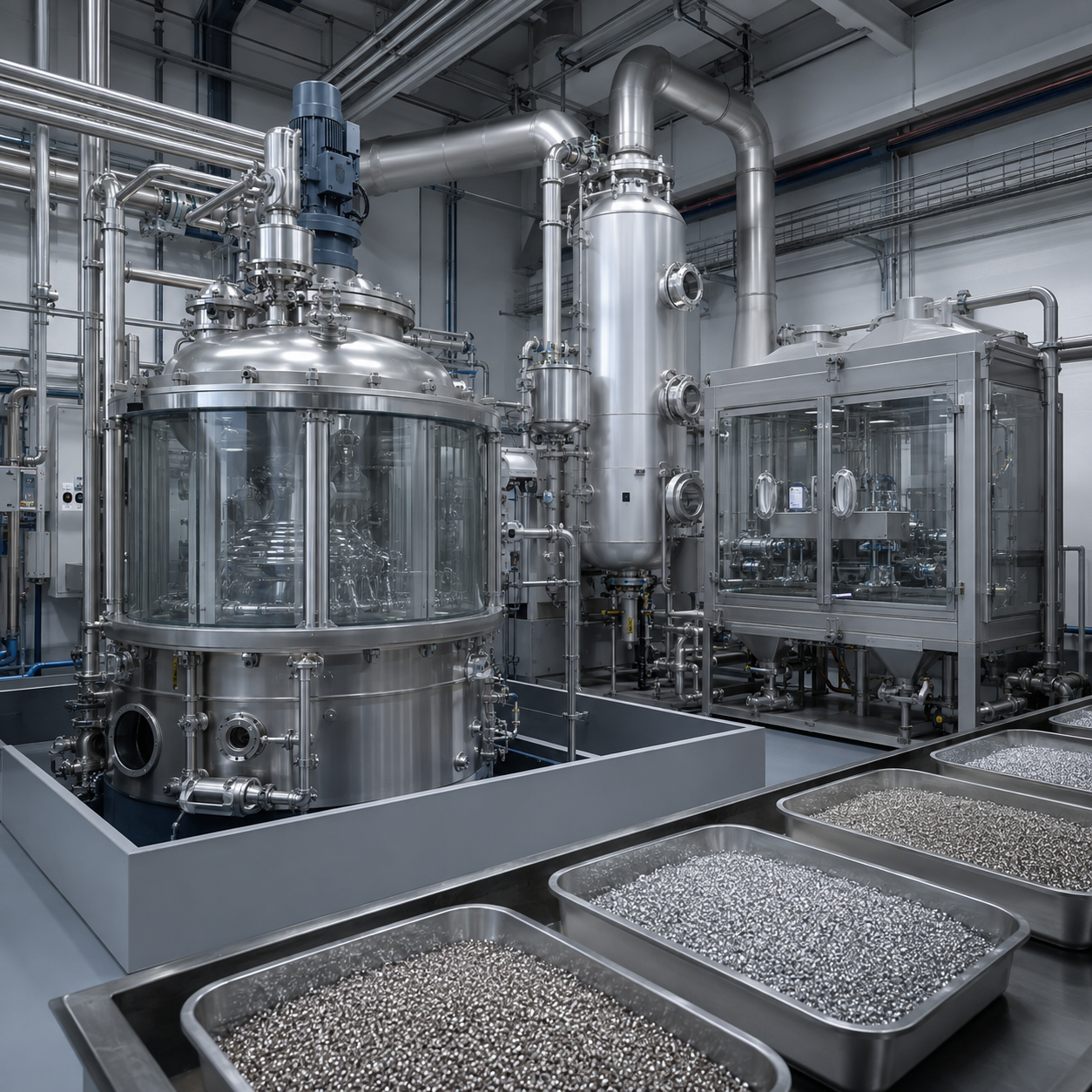
Nitrogen oxides must be contained and treated by a validated scrubber or recovery system. Design transfer, reactor, condenser, filtration and emergency controls for the maximum credible gas and heat load. Open-vessel artisanal processing is not acceptable.
Use patent literature only as context
A precious-metal refining patent describes nitric-acid parting in a defined alloy route. It is evidence of industrial use, not permission or instruction to reproduce the process without engineering, licensing and regulatory review.
Recover value from every process stream
Analyze filtrate, washes, residues, scrubber liquor and dust for precious metals. Define recovery and recycle before production. Valuable inventory can be lost in wash water or filters if sampling and reconciliation are weak.
Control contaminants and cross-mixing
Dedicated compatible equipment and documented cleaning prevent chloride, organics or other metals from entering the circuit. Verify labels, connections and tank identity before unloading or transfer. Quarantine unexplained materials.
Plan environmental compliance and worker safety
Characterize acidic nitrate liquor, metal-bearing solids and scrubber solution under local rules. Use containment, ventilation, compatible PPE, emergency showers and trained response. The current SDS and formal hazard analysis govern handling.
Issue a refinery supply request
Provide approved acid strength, impurity limits, methods, batch and annual quantity, package, destination, traceability, COA, SDS and change control. Review the Hiacid nitric acid supply page and product information, then request a specification-based quotation.
Related nitric acid resources
- Nitric Acid for Ammonium Nitrate Fertilizer Production
- Nitric Acid in Adipic Acid and Nylon 6,6 Supply Chains
- Nitric Acid Feed for Continuous Nitrobenzene Production
Frequently asked questions
Does nitric acid dissolve every precious metal?
No. Response depends on the metal, alloy composition and process chemistry, which must be established by qualified metallurgists.
Why is chloride control important?
Chloride can change dissolution and complexation behavior and interfere with some selective parting routes.
Can refining be done in an open vessel?
No. Corrosive acid, heat and toxic NOx require enclosed engineered equipment and validated emissions control.
What must a metal balance include?
Include feed, product, residue, filtrate, washes, scrubber liquor, filters and other potential loss streams.