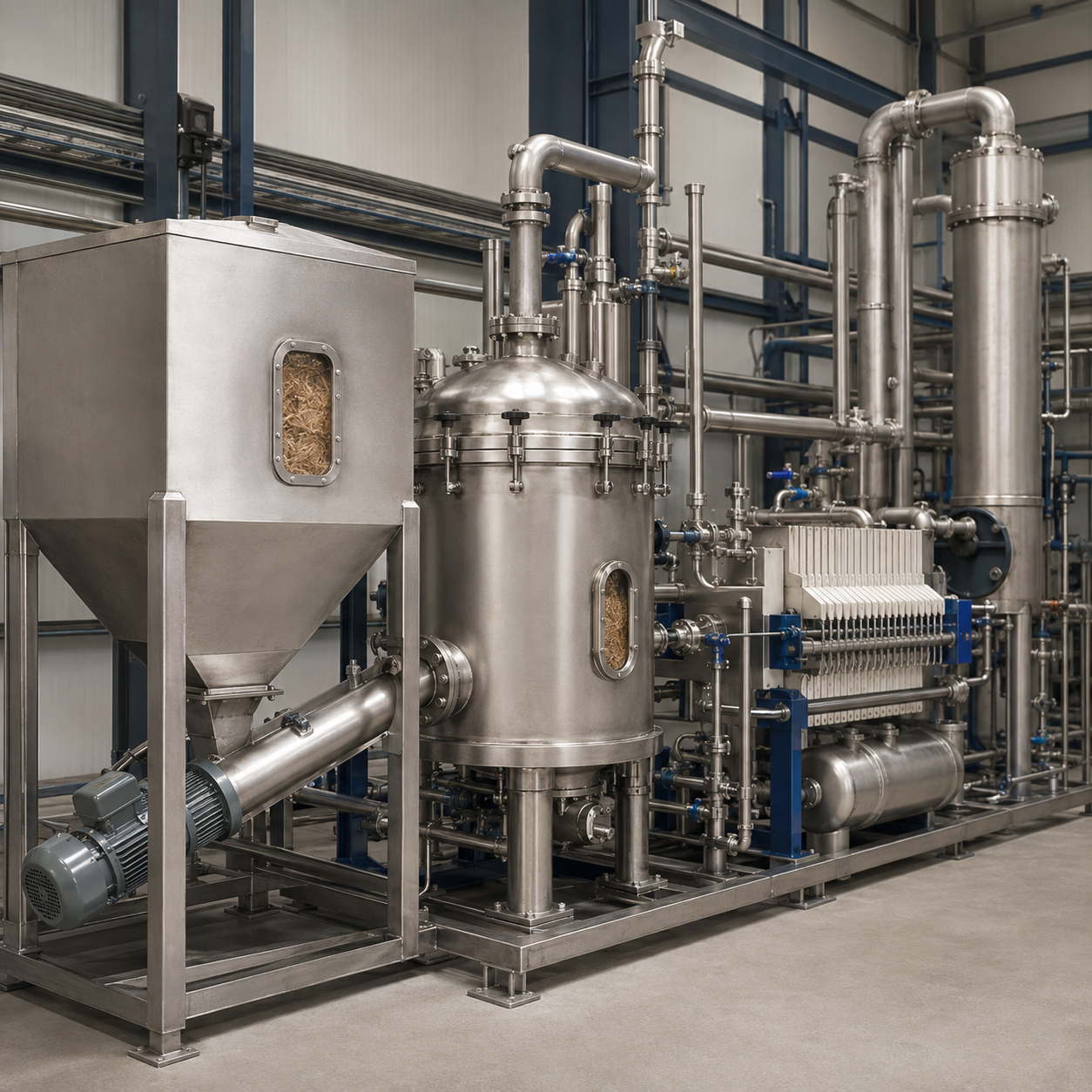
Formic acid has been studied as a fractionation medium for lignocellulosic materials, separating a cellulose-rich solid from lignin and hemicellulose-derived streams under selected conditions. The outcome depends on biomass species, harvest and storage history, particle size, moisture, ash, acid concentration, water balance, temperature, residence time and recovery design. Published work on corn cob and other feedstocks demonstrates technical potential, but each biorefinery must validate its own feedstock and product targets. This article covers B2B acid qualification and scale-up controls rather than a process recipe.
For B2B qualification, assign purchasing, quality, engineering, production, logistics and EHS ownership before the first delivery. Approve the specification, analytical methods, sampling point, retained-sample period, storage conditions, transfer equipment, deviation response and release authority in writing. Compare several representative lots under controlled operating conditions and record process performance, mass balance, waste, equipment observations and final quality. This approach separates raw-material variation from water, equipment, operator or analytical changes. Review the chain from supplier release through carrier, package, receiving connection and day tank because contamination or misidentification can occur after final analysis. Reconcile ordered, received, stored and consumed quantities and investigate unexplained differences. Supplier scorecards should include documentation accuracy, delivery condition, corrective-action quality and change notification as well as price. Qualify an alternate source before a disruption, using the same methods and process criteria. When buyer and supplier results differ, review sample representativeness, temperature, calibration, detection limits and uncertainty before deciding disposition. Confirm emergency contacts, unloading hours, holiday coverage and stop-work authority for every shipment. Include maintenance and warehouse teams in post-trial review because they often identify seal, vent, hose or handling issues not visible in a certificate of analysis. Close qualification with an authorized report, updated specification, approved supplier status and a defined routine-monitoring plan.
Define the feedstock and product slate
Characterize cellulose, hemicellulose, lignin, ash, extractives, moisture and contaminants across representative seasons and suppliers. State whether the project values pulp, fermentable sugars, recovered lignin or all three.
Set balanced performance metrics
Measure delignification, hemicellulose removal, cellulose recovery, degree of polymerization, enzymatic digestibility, inhibitor formation and total mass balance. Optimizing only one fraction can damage the value of another.
Establish acid and water requirements
Formic acid concentration influences solubility, reaction and recovery duty. Define concentration by mass, qualify dilution water and confirm sampling temperature. Compare acid grades on usable formic acid rather than delivered tonnes alone.
Test realistic process variability
Run designed trials across moisture, particle size and feedstock variability. A result from dry, milled laboratory material may not predict chips, straw or residues entering a continuous plant.
Protect recovered product quality
Metals, color and nonvolatile residue can follow into lignin or cellulose streams. Set impurity limits only where trials show an effect and monitor supplier lots alongside product analysis.
Use research evidence appropriately
A Biomass and Bioenergy study examined corn-cob fractionation with formic acid and characterized cellulose-rich solids and recovered lignin. Plant-specific validation and economic assessment remain essential.
Integrate acid recovery and corrosion
Model evaporation, condensation, recycle, purge and water removal before scaling. Recycled acid accumulates impurities unless purge and quality controls are defined. Evaluate alloys, seals and coatings against fresh and recycled liquor.
Close environmental balances
Characterize volatile losses, wastewater, dissolved organics, salts and solid residue. Recovery percentage, energy demand and waste treatment can determine whether the route is commercially viable.
Build a pilot-to-commercial supply plan
Qualify package, storage, transfer and retained-sample procedures at pilot scale. Forecast commercial demand with recovery rate, inventory and campaign schedule rather than laboratory consumption alone.
Prepare a biomass-process inquiry
Provide concentration, critical impurities, trial volume, package, destination, COA, SDS and scale-up outlook. Review the Hiacid formic acid product page and supply overview, then request samples and commercial options.
Related formic acid resources
- Formic Acid for Lithium Battery Black Mass Leaching
- Formic Acid for Industrial Formate Ester Manufacturing
- Formic Acid Supply for Registered Varroa Mite Treatments
Frequently asked questions
Can published corn-cob results be applied directly to wood or straw?
No. Feedstock chemistry and structure differ, so representative testing is required.
Why is acid recovery part of procurement?
Recovery efficiency changes net acid demand, impurity buildup, energy use and commercial supply volume.
Which outputs should be measured?
Track cellulose, lignin, hemicellulose products, inhibitors, acid recovery and the total mass balance.
When should recycled acid be analyzed?
At defined cycles and purge points using limits connected to process and product performance.