Hydrochloric acid is used in selected industrial cleaning programs to dissolve carbonate-rich scale and corrosion products from boilers, heat exchangers and process equipment. The acid can also attack base metal, welds and nonmetallic components, so its use requires deposit analysis, materials review, a qualified inhibitor package, closed circulation, ventilation and controlled waste treatment. The goal is not simply to remove scale quickly; it is to restore performance without unacceptable metal loss, residual chloride or damage to adjacent systems. This article supports B2B procurement and project planning. It does not provide a cleaning recipe, concentration, temperature or circulation time, which must come from qualified engineering and the approved procedure.
For reliable B2B implementation, assign purchasing, quality, engineering, operations and EHS responsibilities before the first delivery. Approve receiving tests, sample points, storage, transfer equipment, deviation response and retained-sample periods in writing. During supplier qualification, compare several representative lots under controlled conditions and record process response, finished quality, waste load and equipment observations. This plan helps separate raw-material variation from operating or analytical changes and provides objective evidence for buyer-supplier investigations. Review packaging, transport, seal integrity and unloading records with laboratory data because contamination can occur after the supplier’s final test. Define who may release a lot, what requires quarantine, what evidence resolves a dispute and which supplier changes trigger requalification. Include current COA and SDS review, emergency contacts, complaint handling, delivery continuity and document retention in the approval. Close qualification with an authorized report, a controlled specification, assigned follow-up actions and routine performance monitoring. Hydrochloric acid is corrosive and can release hazardous hydrogen chloride vapor, so all handling must remain within engineered systems and approved procedures.
Characterize the deposit before selecting chemistry
Collect representative deposit samples and identify carbonate, iron oxide, silica, sulfate, oil and process contaminants. Hydrochloric acid can be effective for some mineral scales but is not appropriate for every deposit. A mixed or poorly characterized scale may require a different staged strategy.
Review the equipment materials
Map tubes, shell, welds, gaskets, valves, instrumentation and temporary hoses. Evaluate base metal, sensitized areas and any copper alloy or galvanized component. The cleaning vendor and owner should define acceptable corrosion rate and evidence for compatibility.
Specify acid and inhibitor as a system
State HCl concentration and relevant impurity limits, then qualify the inhibitor for the actual metallurgy and approved process window. Supplier COA data supports raw-material control, but inhibitor performance must be demonstrated through project-specific evidence.
Control incoming acid quality
Verify concentration using the approved receiving method and retain a sample. Unexpected iron, color or residue can affect interpretation of the spent solution. Trace acid and inhibitor lots through the cleaning report so later corrosion or performance questions can be investigated.
Engineer a closed cleaning loop
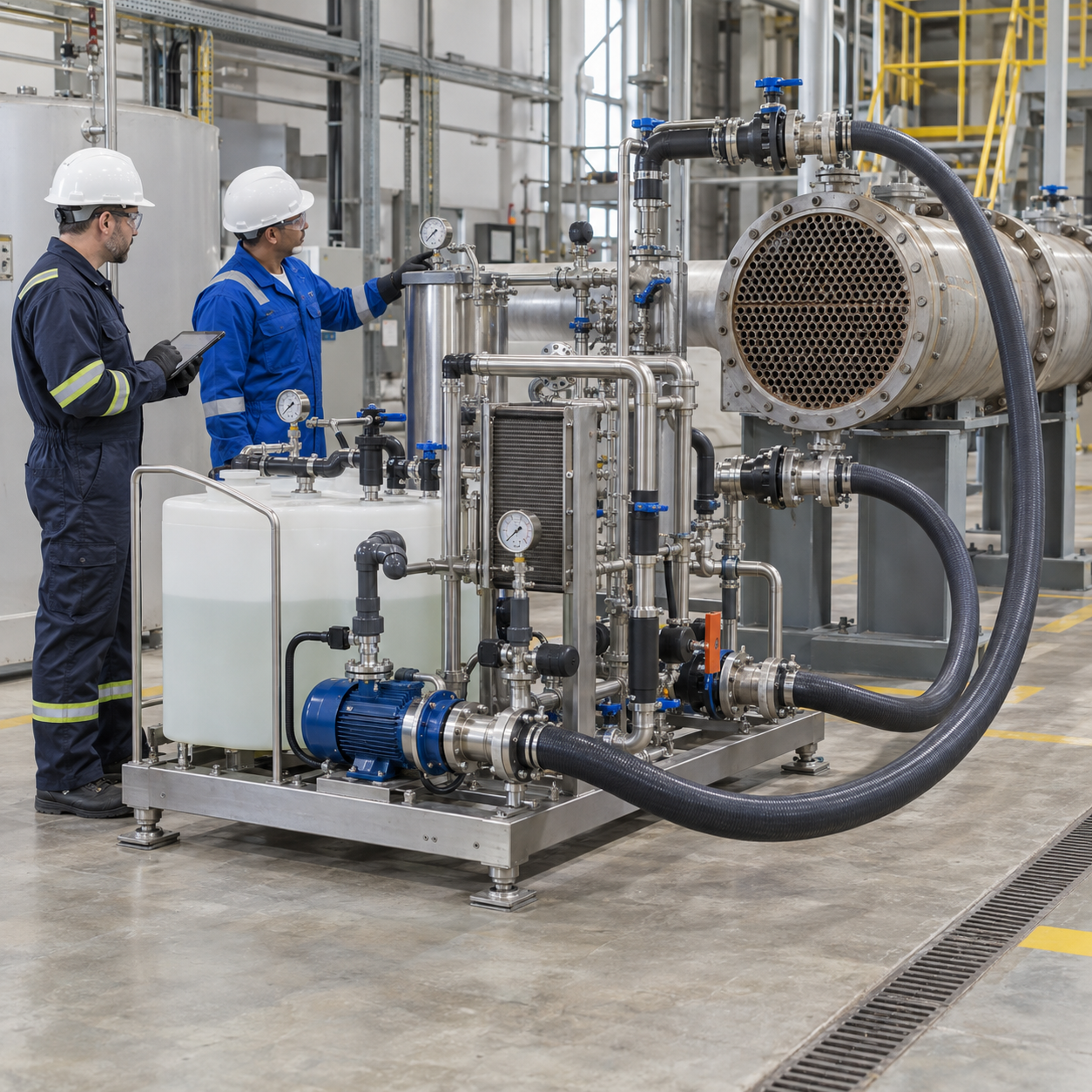
Use a designed temporary system with compatible pump, tank, hoses, isolation, vent capture, sampling and containment. Confirm that the equipment is isolated from production and that flow paths prevent acid entering an unintended system. Leak testing and line identification belong in the pre-start review.
Monitor process condition without improvisation
The approved procedure should define what data are monitored and what endpoints, limits or abnormal conditions require action. Decisions should consider deposit removal and corrosion protection together. Continuing solely because acid remains available can damage clean metal.
Plan neutralization, rinsing and passivation
Remove residual acid and chloride through the approved post-cleaning sequence, then verify cleanliness and system condition. Final rinse criteria should be tied to the equipment service and downstream sensitivity. Any passivation chemistry requires its own materials and safety review.
Treat waste as part of the project
Spent liquor may contain dissolved metals, inhibitor components and process contamination. Characterize, contain and manage it under local requirements. Include scrubber liquor, rinses, filters and solids in the waste estimate before mobilization.
Protect workers and equipment integrity
Hydrogen chloride vapor is hazardous and HCl is highly corrosive to many metals. Use closed handling, effective ventilation, emergency facilities and task-specific PPE. The NIOSH guidance provides general industrial hygiene context; the site hazard analysis controls the work.
Prepare a descaling-acid request
Provide the approved acid concentration, impurity limits, quantity, package, delivery date, destination and documentation requirements. Review the Hiacid hydrochloric acid product information and request COA, SDS and commercial terms for the qualified cleaning program.
Related hydrochloric acid resources
- Hydrochloric Acid Concentration Verification by Density and Titration
- Bulk Hydrochloric Acid Unloading Checklist for Industrial Sites
- High-Purity Hydrochloric Acid for Pharmaceutical Salt Formation
Frequently asked questions
Is hydrochloric acid suitable for every scale?
No. Deposit composition, metallurgy and the approved cleaning method determine whether HCl is appropriate.
Why is an inhibitor needed?
It can reduce attack on compatible base metal, but it must be qualified for the actual material and cleaning conditions.
What should define the cleaning endpoint?
Use the validated procedure and multiple indicators related to deposit removal and corrosion control, not elapsed time alone.
What belongs in the final report?
Record chemical lots, equipment isolation, monitoring data, samples, waste disposition, inspection results and authorization to return to service.