
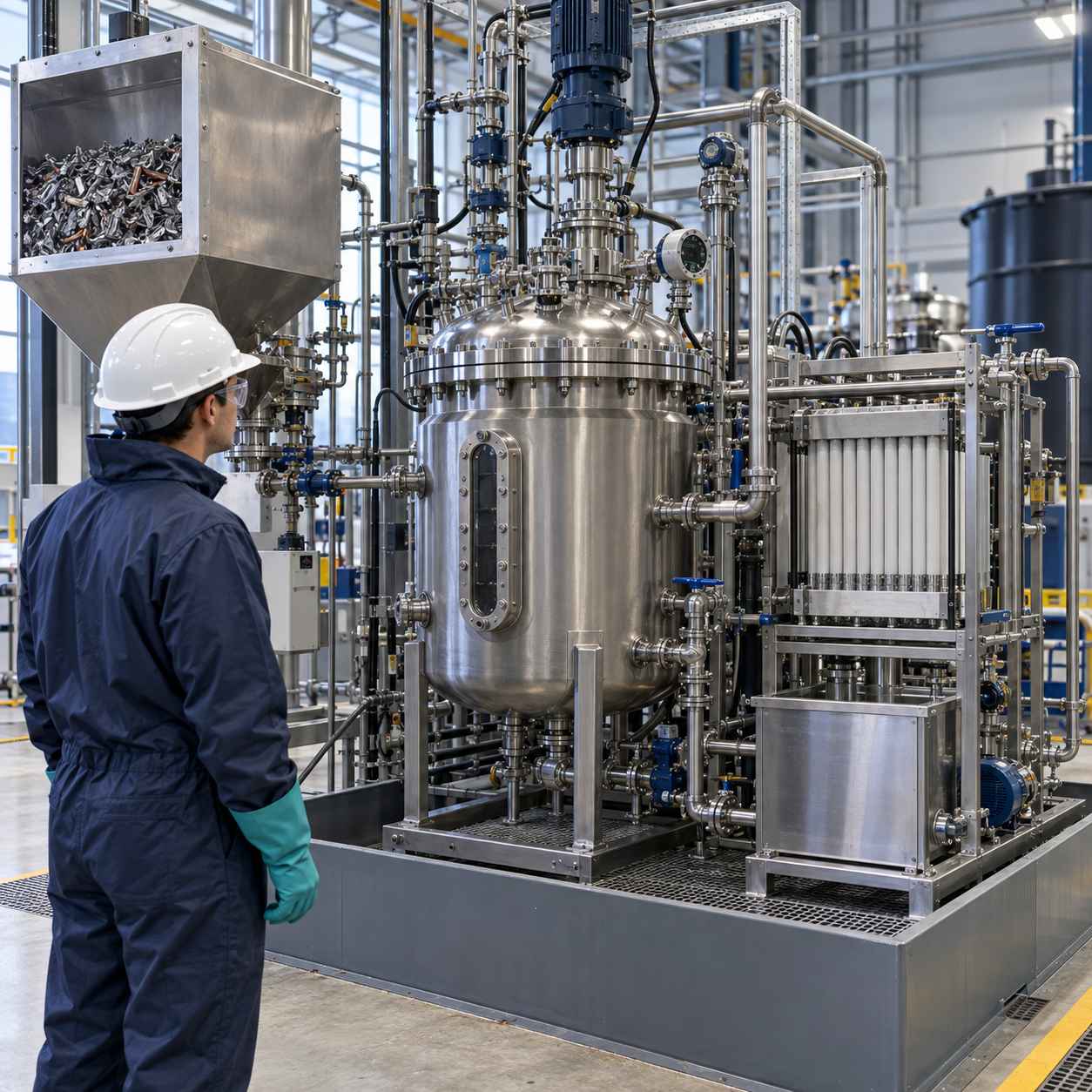
Organic acids, including formic acid, have been screened as leaching reagents for recovering rare-earth elements from end-of-life neodymium-iron-boron magnets. Published comparisons show that acid identity, concentration, solid loading, temperature and material preparation strongly affect extraction and selectivity; another organic acid may outperform formic acid in a particular study. That makes early work a screening and mass-balance exercise, not a reason to order bulk reagent immediately. This guide covers formic acid qualification and pilot supply while leaving process conditions, scale-up and environmental authorization to the recycling operator.
For B2B qualification, assign purchasing, quality, engineering, operations, logistics and EHS ownership before the first commercial delivery. Approve the specification, analytical methods, sampling point, retained-sample period, storage conditions, transfer equipment, deviation response and release authority in writing. Compare representative lots under controlled conditions and record process performance, mass balance, waste, equipment observations and final quality. This separates raw-material variation from water, equipment, operator or analytical changes. Review the chain from supplier release through carrier, package, receiving connection and day tank because contamination or misidentification can occur after final analysis. Reconcile ordered, received, stored and consumed quantities and investigate unexplained differences. Supplier scorecards should cover documentation accuracy, delivery condition, corrective-action quality and change notification as well as price. Qualify an alternate source before a disruption using the same methods and process criteria. When buyer and supplier results differ, review sample representativeness, temperature, calibration, detection limits and uncertainty before deciding disposition. Confirm emergency contacts, unloading hours and stop-work authority for every shipment. Include maintenance and warehouse teams in post-trial review because they often identify seal, vent, hose or handling issues not visible in a certificate of analysis. Close qualification with an authorized report, approved supplier status and a defined routine-monitoring plan. The NIH PubChem record for formic acid provides broad identity and use context, while the current SDS and site procedures control handling.
Characterize magnet feed before selecting acid
Determine magnet grade, coatings, oxidation state, particle preparation and concentrations of neodymium, praseodymium, dysprosium, iron, boron, nickel, copper and other contaminants. Mixed scrap can behave differently from a clean laboratory magnet.
Define recovery and selectivity together
Set targets for rare-earth extraction, iron co-dissolution, reagent consumption, residue quality and downstream separation. High extraction alone may create an uneconomic purification load or difficult waste stream.
Use comparative research as screening evidence
A peer-reviewed study comparing organic acids evaluated formic, acetic, citric and tartaric acids for rare-earth recovery from end-of-life NdFeB magnets. Its results support comparative testing rather than direct transfer of one laboratory condition.
Build a designed laboratory program
Vary only justified factors and use replicated measurements, blanks and complete mass balances. Record acid concentration, solids, water, mixing, temperature, time, sample preparation and analytical recovery. Establish stop criteria before moving to larger equipment.
Specify acid quality for the experiment
Control assay, water, nonvolatile residue and metals that could affect analytical interpretation or downstream products. Use several lots during development so a single unusually clean sample does not become the hidden baseline.
Link acid lot to every result
Record supplier lot, COA, receiving test, prepared solution and experimental run. Retain samples and use shared analytical methods when comparing suppliers or investigating an unexpected recovery result.
Design downstream recovery early
Model solid-liquid separation, washing, rare-earth purification, acid recovery, impurity purge, wastewater and residue disposition. A leach that performs well in isolation may fail when separation, recycling or environmental controls are included.
Review materials and process hazards
Evaluate reactor, filter, pumps, seals and vents for fresh and recycled liquor. Scaling changes heat removal, mixing, off-gas and exposure potential. Complete process-safety and permit reviews before closed-pilot operation.
Build a staged supply plan
Use small documented packages for screening, then forecast pilot demand from mass balances and campaign schedules. Set requalification gates before drum, IBC or bulk supply. Supplier scorecards should include documentation and change control as well as price.
Prepare a recycling-trial inquiry
Provide concentration, impurity limits, trial volume, package, destination, COA, SDS and scale-up outlook. Review the Hiacid formic acid product page, then request a documented pilot-supply proposal.
Related formic acid resources
- Formic Acid Assay, Water and Impurity Verification
- Formic Acid Crystallization and Cold-Weather Handling
- Formic Acid for Electroless Precious-Metal Plating
Frequently asked questions
Is formic acid the best leachant for every NdFeB feed?
No. Comparative testing is necessary because feed composition and process objectives determine performance.
Why measure iron co-dissolution?
Iron loading can dominate downstream purification even when rare-earth extraction appears high.
When should a project move from laboratory to pilot scale?
Only after reproducible mass balances, materials review, hazard analysis and downstream recovery planning.
Which acid attributes should be controlled?
Assay, water, residue and selected metals should be linked to analytical and process risks.