
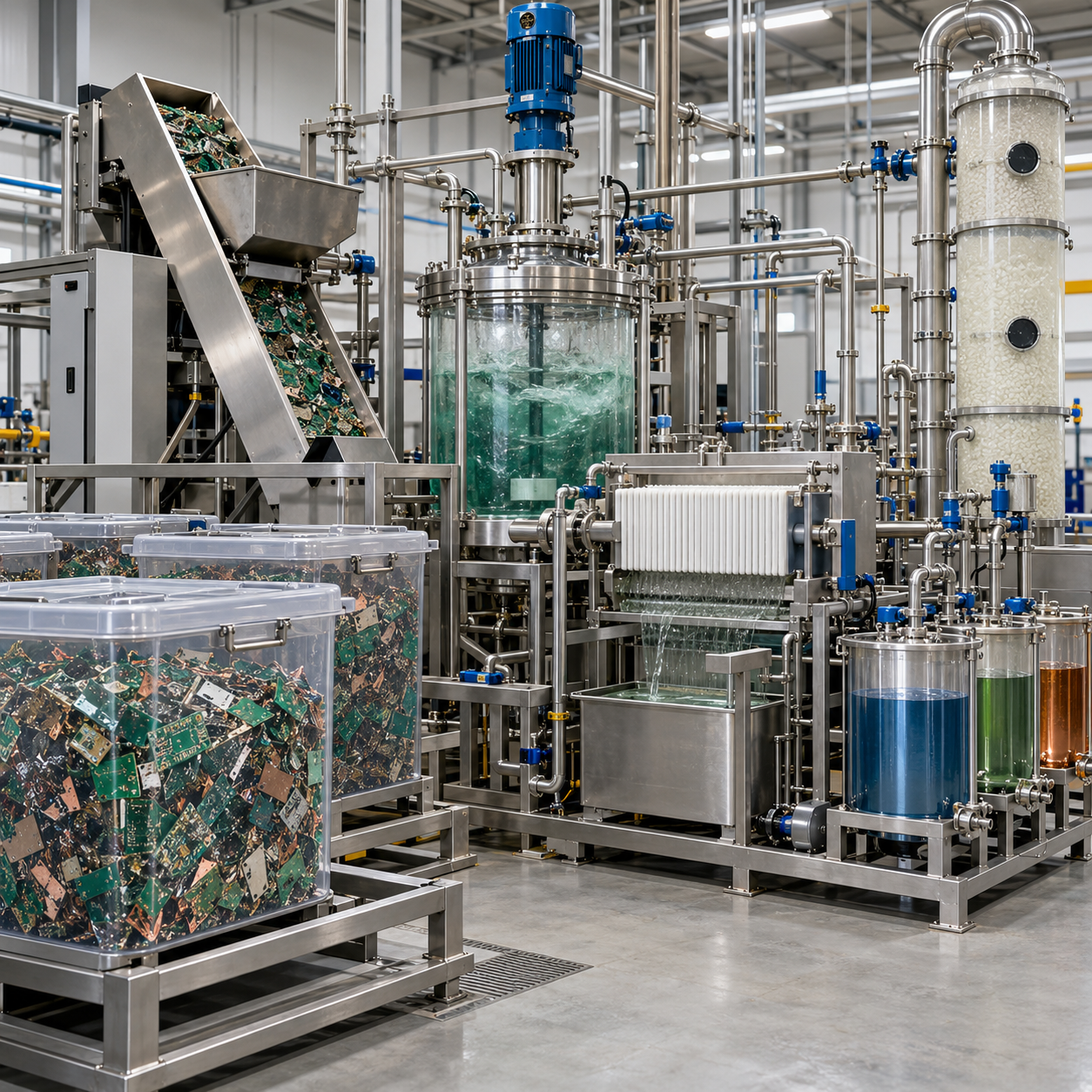
Waste printed circuit boards combine copper, tin, nickel, solder alloys, precious metals, glass fiber, ceramics and polymers. Hydrochloric acid is used or studied in selected hydrometallurgical pretreatment and leaching systems, often with another reagent or oxidation step. Feed heterogeneity, halogens, batteries and fine dust can dominate both risk and economics. A valid procurement case must therefore connect acid quality with preprocessing, metal selectivity, gas treatment, chloride recycle and final residues. This article addresses trial design and reagent governance, not dismantling or leaching instructions.
For industrial qualification, assign purchasing, quality, engineering, operations, logistics and EHS ownership before the first commercial delivery. Approve hydrochloric acid concentration, analytical methods, sampling, storage conditions, transfer equipment, deviation response and release authority in writing. Compare representative lots under controlled conditions and record acid consumption, process performance, corrosion observations, mass balance, waste and final product quality. This separates raw-material variation from changes in water, feedstock, equipment, operator or laboratory method.
Review the chain from supplier release through carrier, package, receiving connection and day tank because contamination or dilution can occur after final analysis. Reconcile ordered, received, stored and consumed quantities and investigate unexplained differences. Supplier scorecards should cover documentation accuracy, delivery condition, corrective-action quality and change notification as well as price. Qualify a contingency source before disruption using the same methods and process criteria. When buyer and supplier results differ, review sample representativeness, temperature, standards, calibration, detection limits and uncertainty before deciding disposition.
Hydrochloric acid is corrosive and can release irritating hydrogen chloride vapor or acid mist. Use the current SDS, compatible materials, segregation, ventilation, secondary containment and an approved emergency plan. The NIOSH Pocket Guide entry and NIH PubChem record provide general identity and hazard context; local law, site procedures and the process hazard review remain controlling. Confirm emergency contacts, unloading hours and stop-work authority for every shipment. Close qualification with an authorized report, approved-supplier status and a defined routine-monitoring plan.
Use published research as context
An open-access printed-circuit-board pretreatment study documents feed preparation and the use of hydrochloric acid among its hydrometallurgical reagents. Its small-scale procedure is technical context, not a plant recipe.
Translate evidence into a site-specific qualification plan
Define the feed, equipment, analytical methods, acceptance criteria and stop conditions before trials. Scale only after replicated data, a reviewed hazard assessment and documented treatment routes support the decision.
Define and segregate the incoming boards
Separate board type, production era, component density and known hazardous parts. Remove batteries and incompatible components under an approved procedure before size reduction.
Characterize metal and polymer variability
Measure copper, tin, nickel, iron, zinc, lead, precious metals, glass, bromine and moisture. Fines and coarse fractions may have different value and reaction behavior.
Link pretreatment to separation targets
Record dismantling, cutting, milling, sieving and any thermal step. Define which metals should dissolve, remain in solids or move to a later recovery stage.
Run complete mass balances
Analyze liquor, wash, residue, dust, filter media and scrubber solution. Missing metal or halogen should trigger investigation rather than an assumed recovery.
Qualify hydrochloric acid for the flowsheet
Specify concentration, iron, sulfate, residue and other impurities that affect corrosion or downstream separation. Approve sampling and methods before comparing supplier lots.
Evaluate mixtures and oxidants safely
If the process uses an oxidant or a second acid, treat the combined chemistry as a new hazard. Use calorimetry, compatibility review, controlled feed and engineered containment before scale-up.
Control dust, gas and liquid residues
Enclose shredding and powder transfer, prevent battery entry and use compatible closed reactors with ventilation and scrubbing. Characterize emissions from polymers and halogen-bearing material.
Plan chloride and metal treatment
Map acid recovery, metal recovery, rinse reuse, purge and wastewater. Confirm that recycling water does not accumulate tin, bromide, sulfate or other process-limiting ions.
Move from pilot lots to commercial supply
Base forecasts on measured net acid consumption and realistic feed variability. Require COA, SDS, transport qualification, emergency contacts, retained samples and advance change notification.
Prepare a PCB-recycling inquiry
Provide concentration, impurity limits, package, trial quantity, destination and schedule. Review the Hiacid hydrochloric acid page, then request a traceable supply proposal.
Related hydrochloric acid resources
- Hydrochloric Acid for Chitin and Chitosan Demineralization
- Hydrochloric Acid for Phosphorus Recovery from Municipal Sludge
- Hydrochloric Acid for Nickel Laterite Leaching Trials
Frequently asked questions
Can mixed electronic waste be treated as one PCB feed?
No. Devices, boards and components differ in metals, polymers, batteries and hazardous constituents.
Why analyze scrubber liquor?
Volatile or entrained material can transfer metals and halogens into the gas-treatment system.
Does hydrochloric acid recover every valuable metal?
No. Recovery depends on feed and the complete multi-stage flowsheet; selectivity and downstream purification must be validated.
What should a supplier change notice cover?
Manufacturing site, concentration, purification, analytical method, packaging and logistics changes that could affect qualified performance.