
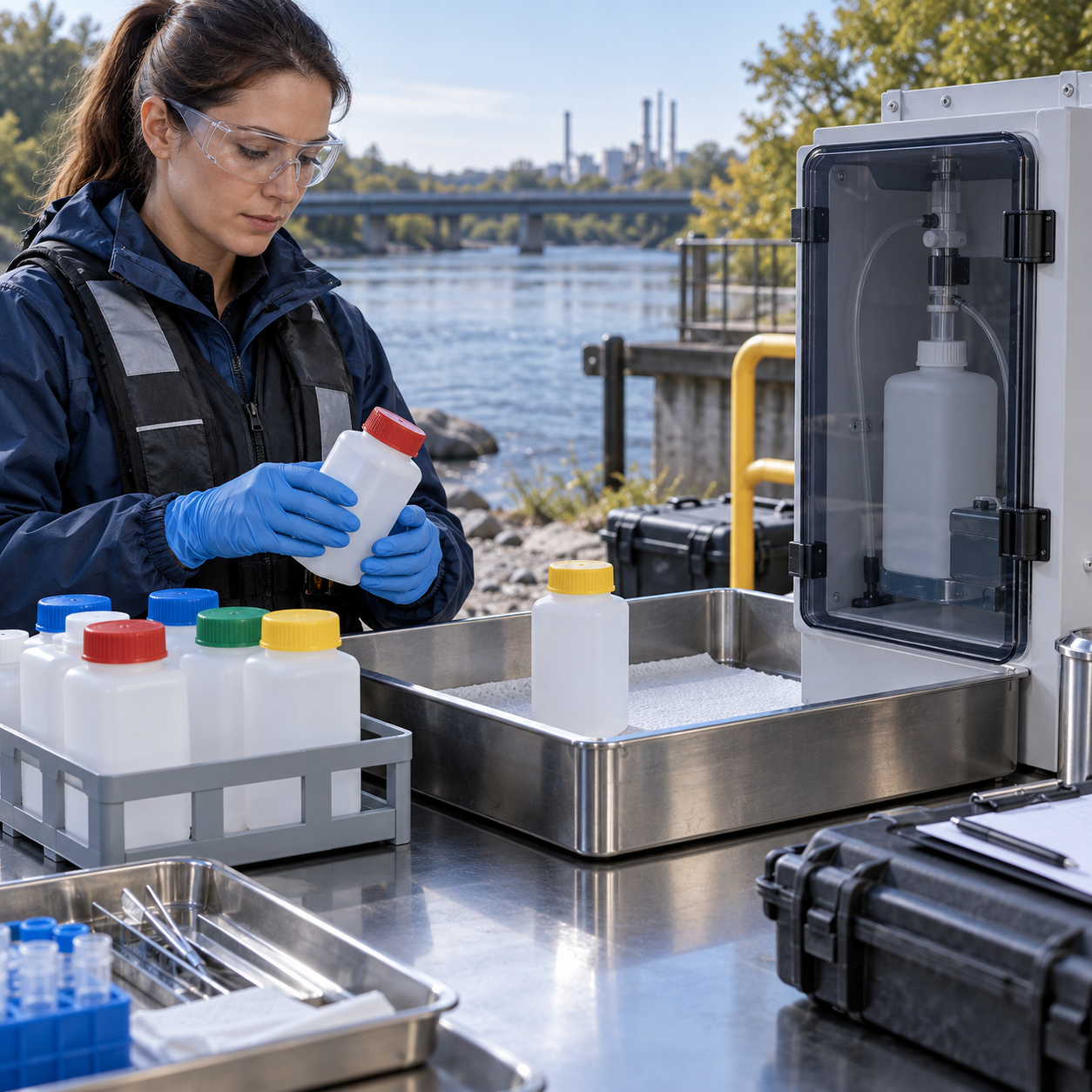
Nitric acid is widely used to preserve water samples intended for dissolved or total-recoverable metals analysis. Preservation is not simply an acid addition: results can be compromised by reagent contamination, dirty bottles, incorrect sample fraction, unrecorded field handling or a mismatch between the laboratory method and the sampling plan. A purchasing specification therefore has to connect acid purity with collection containers, blanks, traceability and the laboratory reporting limit. This guide explains how environmental laboratories, monitoring contractors and industrial sites can qualify nitric acid supply without replacing an approved analytical method or field safety procedure.
Industrial nitric acid qualification should assign purchasing, quality, engineering, operations, logistics and EHS ownership before the first delivery. Approve concentration, analytical methods, sampling, storage, compatible transfer equipment, deviation response and release authority in writing. Compare representative lots under controlled conditions and record performance, mass balance, emissions-control operation, waste, equipment observations and final product quality. This separates raw-material variation from changes in feedstock, water, equipment, operator or analytical method. Review the chain from supplier release through carrier, package, receiving connection and day tank because contamination or dilution can occur after final analysis. Reconcile ordered, received, stored and consumed quantities and investigate unexplained differences. Supplier scorecards should cover documentation accuracy, delivery condition, corrective-action quality and change notification as well as price. Qualify a contingency source using the same methods before a disruption. When buyer and supplier results differ, review sample representativeness, temperature, standards, calibration, detection limits and measurement uncertainty before disposition. Confirm emergency contacts, unloading hours and stop-work authority for every shipment. Nitric acid is a strong oxidizer and corrosive chemical that can release toxic nitrogen oxides; use the current SDS, compatible segregation, ventilation, containment and an approved emergency plan. The NIOSH Pocket Guide entry and NIH PubChem record provide general hazard and identity context, while local law and site procedures remain controlling. Close qualification with an authorized report, approved-supplier status and a defined routine-monitoring plan.
Start with the analytical program
List the required analytes, expected concentration range, filtered or unfiltered fraction, laboratory method, container, holding time and reporting limit. Confirm the preservation step with the receiving laboratory before procurement. A generic instruction for “metals samples” is not enough when mercury, chromium speciation or ultra-trace work may require different containers, preservatives or dedicated protocols.
Translate the method into a reagent specification
Define nitric acid grade, target trace-metal limits, concentration, packaging, lot documentation and maximum blank contribution. Ask the laboratory to identify elements that are most sensitive to the preservative lot and to provide a practical acceptance test before field deployment.
Use authoritative procedures as the baseline
The USGS hard-rock mine-waste and mine-water sampling protocol specifies nitric-acid preservation for selected raw and filtered metals samples and pairs it with blanks and duplicates. Project-specific methods and permits remain controlling.
Build preservation into the sampling plan
Document whether preservation occurs in the field or laboratory, who is authorized to perform it, how bottles are labeled, how preservative volume is recorded and how samples are transported. Separate acid containers from sample bottles during shipment and provide compatible secondary containment.
Control contamination before the sample is collected
Approve bottles, caps, filters, tubing and cleaning procedures for the analytes of interest. Verify that lot blanks remain below the project acceptance limit. High-purity nitric acid cannot compensate for contaminated filters, dusty work surfaces or reused containers that were not qualified.
Use field blanks, equipment blanks and duplicates
Assign each quality-control sample a purpose and acceptance criterion. Field blanks reveal contamination introduced during handling, equipment blanks test reusable sampling systems, and duplicates show sampling variability. Trend results by acid lot, bottle lot, team and site rather than reviewing each event in isolation.
Protect sample identity and chain of custody
Record sample ID, fraction, preservation status, time, operator, acid lot, bottle lot, temperature and any deviation. Use tamper-evident custody where required. A preserved sample without reliable genealogy may be analytically sound yet unusable for compliance or commercial decisions.
Verify receipt and laboratory preparation
The laboratory should inspect condition, preservation evidence, custody and requested method before analysis. Establish a hold-and-contact rule for damaged, frozen, leaking, mislabeled or incorrectly preserved samples rather than silently changing the preparation route.
Qualify supply for field reliability
Choose package sizes that reduce repeated opening while avoiding long storage of partially used bottles. Confirm compatible caps, dispensing controls, transport classification, shelf-life policy, lot COA and advance change notification. Retain a reference sample from important reagent lots when the quality system requires it.
Prepare a water-monitoring inquiry
Provide grade, concentration, critical trace limits, package size, annual demand, destination and documentation requirements. Review the Hiacid nitric acid product page, then request a specification-based quotation for the approved monitoring program.
Related nitric acid resources
- Nitric Acid for Cellulose Pulp Feedstock Qualification
- Nitric Acid for Spent Hydrodesulfurization Catalyst Recovery
- Nitric Acid for Trace-Metals Labware Decontamination
Frequently asked questions
Does every water sample require nitric acid preservation?
No. The analyte, sample fraction and approved method determine the container, preservative and holding conditions.
Why does acid purity matter at trace levels?
Metals already present in the reagent can raise blanks, bias results and consume the project contamination allowance.
Should samples be filtered before or after preservation?
Follow the approved method and sampling plan; changing the order can change which fraction is reported.
What documents should accompany the acid?
Buyers commonly request a COA, SDS, lot identity, specification, package information and change-notification commitment.