
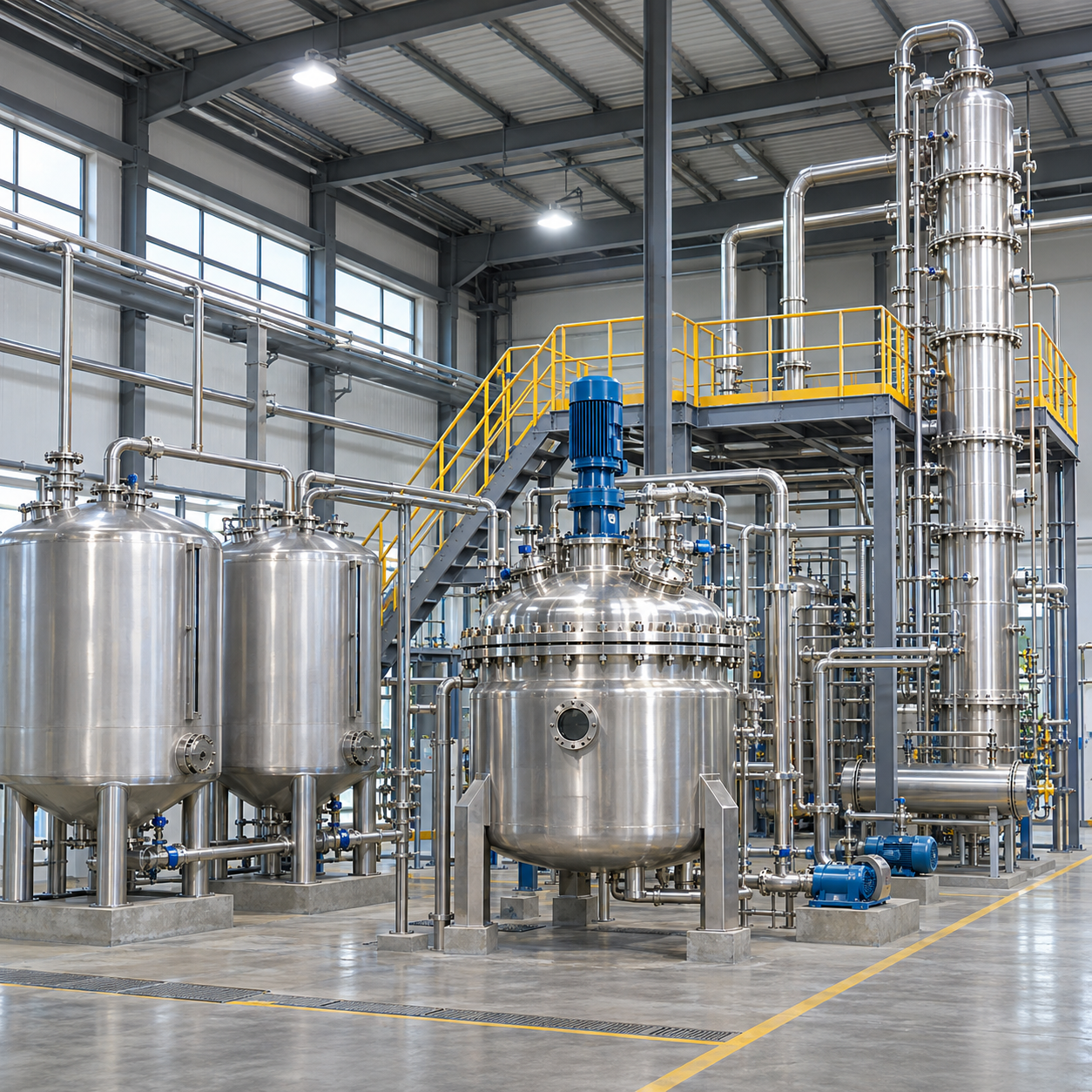
Triacetin, or glycerol triacetate, is produced by acetylating glycerol and is used in specialty formulations, plasticization and fuel-additive systems. Published work demonstrates esterification of purified glycerol with acetic acid, including reactive-distillation and heterogeneous-catalyst routes. For a producer, glacial acetic acid is more than a stoichiometric input: its water, related organics, metals and nonvolatile residue influence equilibrium, catalyst service, color, separation load and recycle behavior. Procurement should connect the acid specification to mass balance, conversion, acetin distribution and finished-product quality rather than approving material on assay alone.
For industrial qualification, assign purchasing, quality, engineering, operations, logistics and EHS ownership before the first commercial delivery. Approve assay, impurity limits, analytical methods, sampling, storage, dilution or dosing equipment, deviation response and release authority in writing. Compare multiple representative lots under controlled conditions and record process performance, mass balance, waste, equipment observations and final product quality. This separates raw-material variation from changes in water, feedstock, equipment, operator or laboratory method.
Review the chain from supplier release through carrier, package, receiving connection and point of use because contamination or dilution can occur after final analysis. Reconcile ordered, received, stored and consumed quantities and investigate unexplained differences. Supplier scorecards should cover documentation accuracy, delivery condition, corrective-action quality and change notification as well as price. Qualify a contingency source before disruption using the same methods and process criteria. When buyer and supplier results differ, review sample representativeness, temperature, standards, calibration, detection limits and uncertainty before disposition.
Glacial acetic acid is corrosive and combustible and has a pungent vapor. Its freezing point is near ordinary cool-weather conditions, so crystallization can disrupt delivery or measurement if not controlled. Use the current SDS, compatible materials, ventilation, ignition control, secondary containment and an approved emergency plan. The OSHA acetic acid data page and NIH PubChem record provide general hazard context; local law and site procedures remain controlling.
Use published evidence as context
A 2024 Chemical Engineering Journal study describes conversion of industrially derived purified glycerol into triacetin by esterification with acetic acid and reports that feed water affects equilibrium. The evidence supports qualification planning but is not a plant recipe: peer-reviewed triacetin study.
Translate evidence into site qualification
Define feed, equipment, analytical methods, acceptance criteria and stop conditions before trials. Scale only after replicated data, a reviewed hazard assessment and documented product and waste routes support the decision. Close qualification with an authorized report, approved-supplier status and routine monitoring.
Translate triacetin grade into acid limits
Define target triacetin assay, monoacetin and diacetin limits, acidity, water, color, metals, odor and application-specific impurities. Map each finished-product limit to glycerol, acid, catalyst and recycle streams.
Control water as a process variable
Water arrives with both feeds and is formed by esterification. Reconcile every source and trend reaction and separation load instead of treating water only as a final-product test.
Qualify feedstocks as a matched system
Characterize glycerol assay, water, ash, soaps, methanol and organic non-glycerol matter alongside acid assay, water, formic acid, metals and residue.
Use representative glycerol lots
A single clean laboratory lot cannot establish performance for a commercial feed envelope. Include normal and challenging lots and retain matched feed and product samples.
Evaluate reaction and purification together
Compare conversion, acetin distribution, catalyst performance, phase behavior, energy demand, column stability, recycle composition and product color.
Distinguish equilibrium from contamination
Low triacetin selectivity may reflect water, glycerol impurities, catalyst condition, residence distribution or separation. Review the full balance before blaming the acid.
Protect materials and closed-system safety
Use compatible storage, metering, reactor and vapor-handling equipment with ventilation, containment, pressure protection and reviewed emergency response.
Manage off-spec and recycle inventory
Define how recovered acid, water-rich cuts and off-spec acetins are held, reworked or removed. Prevent uncontrolled accumulation of heavies and color bodies.
Build supplier and change governance
Require COA, SDS, lot traceability, retained samples and advance notice of feedstock, purification, site, method, package or carrier changes.
Prepare a triacetin-feed inquiry
Provide acid limits, package or bulk mode, annual demand, forecast and destination.
Review the Hiacid glacial acetic acid page, then request a specification-led quotation. Include end use, grade, analytical limits, annual volume, package, delivery profile, destination and required documentation so the supplier can respond on a technically comparable basis.
Related glacial acetic acid resources
- Glacial Acetic Acid for Catalytic Acetone Production
- Glacial Acetic Acid for Chitin Demineralization
- Food-Grade Glacial Acetic Acid for Casein Precipitation
Frequently asked questions
Why does water matter in triacetin production?
It shifts esterification equilibrium, increases separation duty and can change catalyst and recycle performance.
Can acid assay alone approve a feed lot?
No. Water, organics, metals, residue, logistics cleanliness and production evidence should also be reviewed.
Should glycerol and acid be qualified separately?
They need individual specifications, but final approval should evaluate them as a matched feed system.
Does this guide provide operating conditions?
No. It is a procurement and qualification framework for engineered plants.