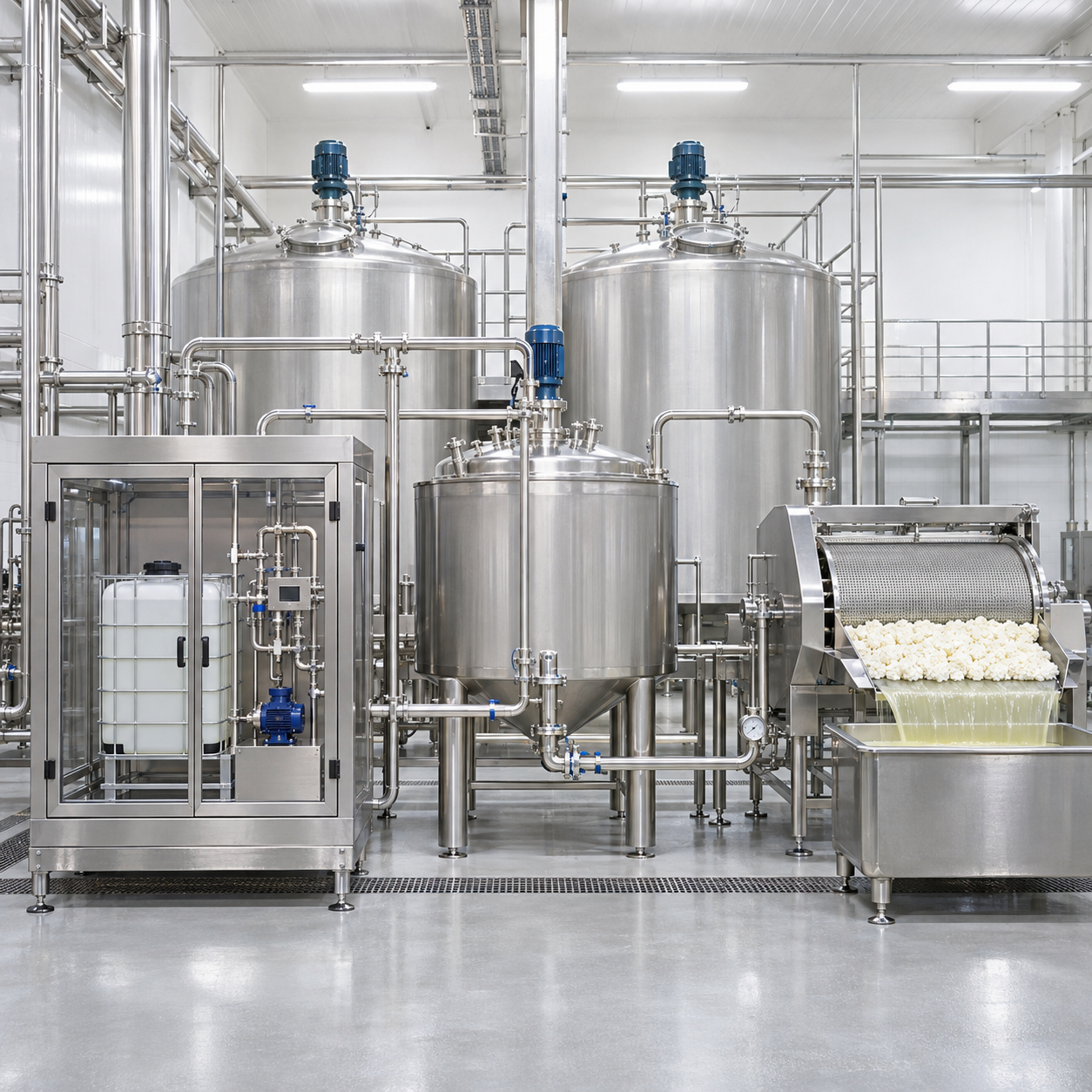
Casein micelles can be destabilized near their isoelectric region, causing protein to precipitate while soluble components remain in acid whey. Acetic acid is used in laboratory and specialty separation work and may be evaluated for controlled food-ingredient or biotechnology processes. Commercial use requires much more than reaching a nominal pH: milk composition, temperature, mixing, acid addition, residence time, curd handling, washing, whey solids, microbiology and sensory quality all influence yield and function. Only approved food-grade acid, a hygienic delivery chain and a validated process should be used where product enters food or feed commerce.
For industrial qualification, assign purchasing, quality, engineering, operations, logistics and EHS ownership before the first commercial delivery. Approve assay, impurity limits, analytical methods, sampling, storage, dilution or dosing equipment, deviation response and release authority in writing. Compare multiple representative lots under controlled conditions and record process performance, mass balance, waste, equipment observations and final product quality. This separates raw-material variation from changes in water, feedstock, equipment, operator or laboratory method.
Review the chain from supplier release through carrier, package, receiving connection and point of use because contamination or dilution can occur after final analysis. Reconcile ordered, received, stored and consumed quantities and investigate unexplained differences. Supplier scorecards should cover documentation accuracy, delivery condition, corrective-action quality and change notification as well as price. Qualify a contingency source before disruption using the same methods and process criteria. When buyer and supplier results differ, review sample representativeness, temperature, standards, calibration, detection limits and uncertainty before disposition.
Glacial acetic acid is corrosive and combustible and has a pungent vapor. Its freezing point is near ordinary cool-weather conditions, so crystallization can disrupt delivery or measurement if not controlled. Use the current SDS, compatible materials, ventilation, ignition control, secondary containment and an approved emergency plan. The OSHA acetic acid data page and NIH PubChem record provide general hazard context; local law and site procedures remain controlling.
Use published evidence as context
A Journal of Dairy Science study compared casein-removal methods during isolation of milk extracellular vesicles and found acetic-acid precipitation effective in that research context. It illustrates separation behavior, not a universal dairy formula: peer-reviewed milk fractionation study.
Translate evidence into site qualification
Define feed, equipment, analytical methods, acceptance criteria and stop conditions before trials. Scale only after replicated data, a reviewed hazard assessment and documented product and waste routes support the decision. Close qualification with an authorized report, approved-supplier status and routine monitoring.
Define the intended casein fraction
Specify protein, moisture, ash, calcium, fat, lactose, acidity, color, microbiology and functional tests such as solubility or emulsification.
Treat end use as the release standard
Food, nutrition, biotechnology and technical applications require different evidence. Validate representative customer formulations.
Control milk and acid inputs
Record milk source, season, heat history, fat, protein, calcium, microbiology and storage time. Require food-grade acid identity, assay, water, metals and traceability.
Prepare dilution hygienically
Use water meeting the food standard, a dedicated sanitized vessel, verified mass and controlled hold time. Prevent cross-contact with non-food chemicals.
Validate precipitation and separation
Trend addition accuracy, pH profile, mixing, curd formation, separation, wash efficiency, solids recovery and whey composition.
Avoid controlling on one pH reading
Sampling location, probe calibration, temperature and local acid gradients can mislead. Pair representative measurement with yield and quality evidence.
Protect curd and whey quality
Define maximum hold time, hygienic transfer, washing, dewatering and drying controls. Test whey for recoverable nutrients and treatment load.
Establish microbiological safeguards
Acidification is not a substitute for pasteurization, sanitation, environmental monitoring and cold-chain or drying controls.
Govern food-supply documentation
Require food-grade declaration, COA, SDS, allergen and GMO statements where relevant, traceability, transport cleanliness and change notification.
Prepare a dairy-ingredient inquiry
Provide food-grade specification, package, annual volume, destination and required certificates.
Review the Hiacid glacial acetic acid page, then request a specification-led quotation. Include end use, grade, analytical limits, annual volume, package, delivery profile, destination and required documentation so the supplier can respond on a technically comparable basis.
Related glacial acetic acid resources
- Glacial Acetic Acid for Triacetin Manufacturing
- Glacial Acetic Acid for Catalytic Acetone Production
- Glacial Acetic Acid for Chitin Demineralization
Frequently asked questions
Can technical-grade acid be used for food casein?
No. Use approved food-grade material and a regulated food-safety system.
Is pH the only critical control?
No. Milk composition, mixing, addition profile, separation, washing and microbiology also matter.
Why test the acid whey?
It confirms material balance, reveals protein losses and supports recovery or treatment planning.
Does this guide replace dairy process validation?
No. It is a raw-material and supplier-qualification framework.