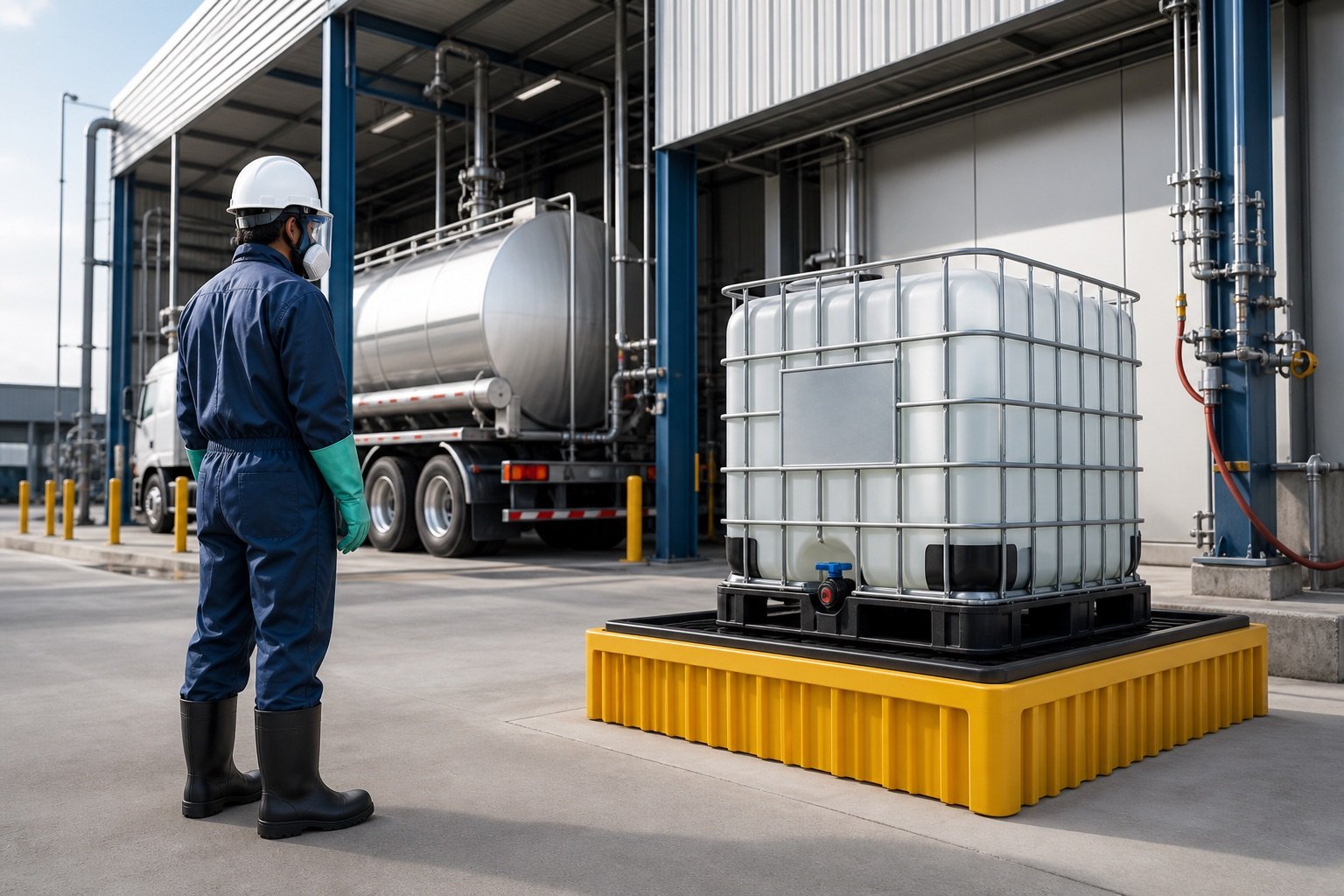
Glacial acetic acid is corrosive and combustible, and its vapors can be harmful. Safe handling requires a site-specific risk assessment, trained personnel, compatible equipment and compliance with the safety data sheet and local regulations. This overview is for general industrial awareness and does not replace professional safety instructions.
Review the current safety data sheet
Before receipt, confirm that the site has the latest SDS in a language understood by responsible personnel. Use it to establish hazards, exposure controls, first-aid measures, firefighting precautions, spill response, storage conditions and transport classification.
Storage area fundamentals
Store containers in a cool, well-ventilated, designated chemical area away from ignition sources and incompatible materials. Protect packaging from physical damage and unauthorized access. Secondary containment should be sized and constructed according to local requirements and the stored volume.
Temperature deserves attention because concentrated acetic acid can crystallize in cool conditions. A freezing event does not necessarily mean the product is out of specification, but thawing must use an approved controlled method. Never improvise with open flames or unsafe heating.
Materials compatibility
Tanks, gaskets, hoses, pumps and valves must be selected by qualified engineers using concentration, temperature and service conditions. Materials that perform in dilute acetic acid may not be appropriate for glacial material. Inspect transfer equipment and connections before each operation.
Personal protective equipment
The required PPE follows the risk assessment and SDS. Chemical-resistant gloves, eye and face protection, protective clothing and suitable footwear are commonly considered. Respiratory protection may be required under specific conditions and must be part of a compliant respiratory-protection program.
Receiving and transfer
- Verify product, batch, container condition and seals.
- Confirm that the receiving tank has capacity and correct identification.
- Control access and secure the transfer area.
- Use compatible, inspected connections and prevent overfilling.
- Maintain communication and emergency shutdown readiness.
Transport planning
Glacial acetic acid is regulated for transport. Classification, packaging, marking, documentation, vehicle requirements and trained personnel must comply with the applicable mode and jurisdiction. Work with competent dangerous-goods specialists and confirm destination requirements before dispatch.
Emergency preparedness
Sites should have alarms, eyewash and safety-shower access, spill-control materials, evacuation procedures and trained responders appropriate to the hazards. Personnel should know how to raise an alarm and obtain medical assistance. Do not enter a release area without the required training and protective equipment.
For available commercial packaging, visit our glacial acetic acid supply page. Procurement teams may also use the buying checklist.
Frequently asked questions
Can glacial acetic acid be stored outdoors?
Only when the engineered storage system, climate protection, containment and local regulations permit it. Obtain professional site-specific advice.
What should be done if the product crystallizes?
Follow the supplier’s written guidance and the site’s approved controlled-thawing procedure. Do not use open flames or unapproved heating methods.
Which materials are compatible?
Compatibility depends on concentration, temperature and equipment design. Consult the SDS, supplier data and a qualified materials engineer.
For shipment documentation and packaging questions, contact Hiacid Chemical.