Safe phosphorous acid storage begins with the current supplier safety data sheet, a site-specific risk assessment and trained personnel. The material is corrosive, so storage and transfer systems must control contact, leakage and incompatible reactions. The following guidance is a procurement and facility-planning overview; the SDS and local regulations remain controlling.
Plan a dedicated storage area
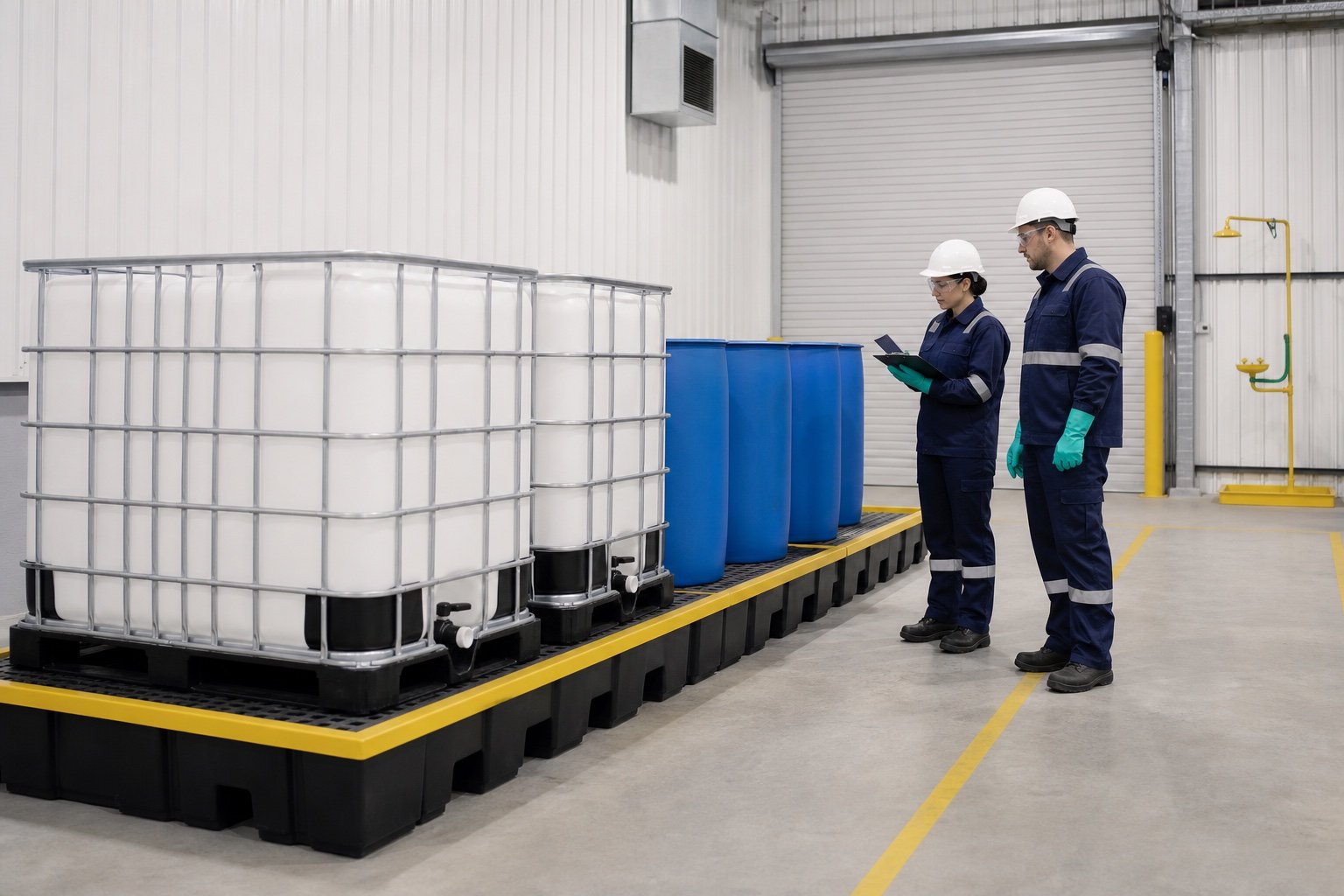
Store packages in a cool, dry, well-ventilated area protected from physical damage and unauthorized access. Keep containers tightly closed and clearly identified. The floor and containment system should resist the stored product and hold a credible spill volume without allowing material to enter drains or soil.
Use barriers or curbs to protect drums and IBCs from vehicle impact. Establish receiving, quarantine and released-stock zones so damaged or unverified packages cannot enter normal production inventory.
Segregate incompatible materials
Follow the SDS incompatibility section and the facility chemical-segregation plan. Keep phosphorous acid away from incompatible bases, oxidizing materials and any substances identified by the supplier. Do not base segregation decisions only on warehouse convenience or package appearance.
Confirm material compatibility
Tanks, drums, transfer lines, pumps, gaskets, valves and sampling tools must be suitable for the supplied form and concentration. Compatibility can change with temperature, impurities and exposure time. Obtain written guidance from equipment and material suppliers before building or modifying a system.
Inspect packages at receipt for corrosion, bulging, wetness, broken seals or labeling damage. Record the batch and package condition, and isolate any suspect unit for qualified evaluation.
Control transfer and personal exposure
Design transfer operations to minimize splashing and open handling. Use closed connections where practical, secure hoses, verify valve positions and provide emergency isolation. Operators should be trained on the written procedure before working independently.
PPE and emergency equipment
Select chemical-resistant gloves, protective clothing, eye and face protection, footwear and respiratory protection through a documented hazard assessment. Ensure that eyewash and emergency shower facilities are accessible and inspected. Workers must know how to raise an alarm and obtain medical assistance.
Prepare for spills and package damage
A spill plan should define evacuation, area isolation, PPE, compatible containment materials, waste collection and notification responsibilities. Only trained responders should handle a release. Do not neutralize or wash material to a drain unless a site procedure and applicable law specifically permit it.
Keep an inventory of response equipment sized for the credible scenario. Review incidents and near misses, and update the procedure when packaging, concentration or storage volume changes.
Shipping and documentation checks
Transport requirements depend on the actual product, concentration, packaging, mode and route. Verify the proper shipping description, labels, marks and documents against the current SDS and carrier requirements. The phosphorous acid product page is a starting point for a commercial enquiry, and the buying guide covers packaging approval.
Frequently asked questions
Can phosphorous acid be stored in any chemical tank?
No. Tank, lining, gasket and accessory compatibility must be verified for the exact product, concentration, temperature and service conditions.
What should I inspect when receiving a shipment?
Check package integrity, seals, labels, batch identification, quantities, transport condition and accompanying documents. Quarantine damaged or mismatched material.
Which PPE is required?
The required PPE comes from the supplier SDS and a task-specific risk assessment. Eye and face protection, chemical-resistant gloves and protective clothing are typical considerations, but the final selection must reflect the exposure scenario.
How do I obtain the current SDS and packaging details?
Submit the intended grade, quantity, packaging and destination through the Hiacid contact page. Also review how to choose a phosphorous acid supplier with strong documentation controls.