
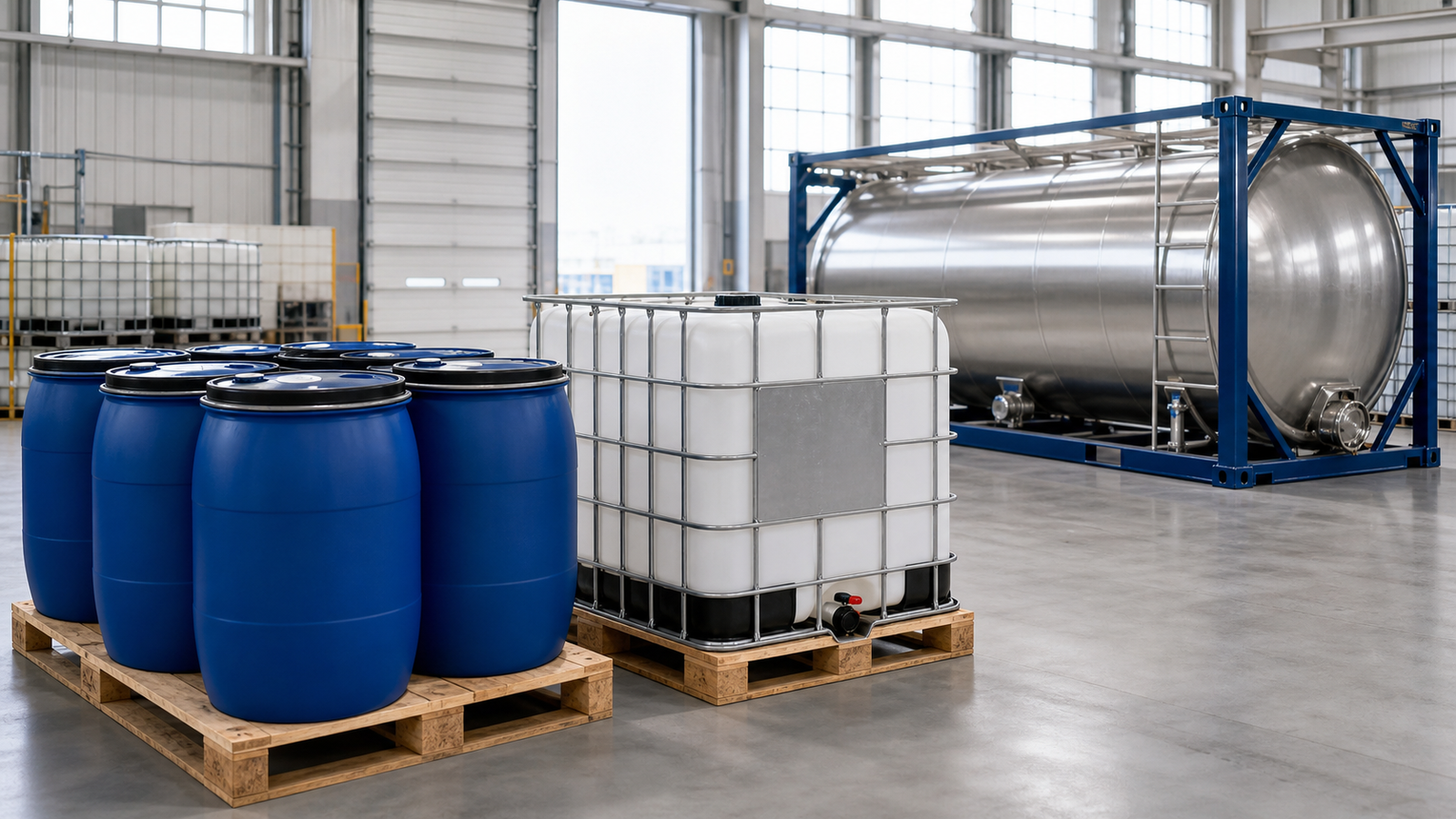
The best glacial acetic acid package depends on shipment volume, approved materials, transport rules, climate, storage capacity and the buyer’s unloading system. Drums, intermediate bulk containers and ISO tanks each change handling risk, freight utilization, residual product and return logistics. Package selection should be made jointly by procurement, engineering, quality, logistics and EHS teams. A package that works for a short inland move may still be unsuitable for ocean transit, extended storage or the receiving site’s connection and containment arrangements. Buyers should also consider batch segregation, incoming sampling, quarantine space and how damaged or partly used packages will be isolated and managed.
Use drums for flexible smaller lots
Drums can support trial orders, separated batches and customers without bulk unloading systems. Buyers should confirm container material, closure design, net mass, pallet pattern, seal identification and transport approval. More individual packages mean more handling points, inspections and residual containers.
Inspect every pallet and closure
Define acceptance checks for deformation, leakage, cap condition, seals, labels, pallet integrity and stretch wrapping. Confirm how lot numbers are distributed across pallets and whether mixed lots are allowed. Allow safe space for unloading and quarantine.
Use IBCs for intermediate demand
IBCs can reduce the number of handling units and connect to controlled transfer equipment. Suitability depends on the inner container, valve, gasket, frame, service life and regulatory approval for the concentration and route. A package described generically as an IBC is not automatically compatible.
Review the buyer’s unloading connection
Confirm valve type, adapter, hose, pump, grounding or bonding requirements, ventilation and secondary containment before shipment. The receiving team should be able to isolate the package and manage residual pressure or product without improvisation.
Use ISO tanks for larger bulk shipments
ISO tank delivery can reduce packaging waste and manual handling for larger, regular demand. It requires sufficient storage capacity, compatible unloading equipment, a defined arrival window and experienced dangerous-goods logistics. Tank cleanliness, previous cargo controls and inspection records may be part of qualification.
Compare total landed and handling cost
Normalize net delivered quantity, freight, surcharges, detention, demurrage, cleaning, package return, unloading labor, residual loss and inventory impact. The lowest package price is not always the lowest total cost or lowest operational risk.
Specify packaging in the RFQ
State the requested package, net quantity, shipment size, destination, unloading connection, pallet or seal requirements and any return arrangement. Review the shipping-document checklist, see the Hiacid glacial acetic acid page and request a quotation.
Related glacial acetic acid resources
- Glacial Acetic Acid in Vinyl Acetate Monomer Production
- Glacial Acetic Acid for Acetate Ester Manufacturing
- How to Dilute Glacial Acetic Acid in Industrial Systems
Frequently asked questions
Which package is best for glacial acetic acid?
The best option depends on volume, material compatibility, route approval, unloading equipment, storage and total landed cost.
Are all IBCs compatible?
No. The inner container, valve, gasket, approval and service history must suit the product concentration and route.
When does an ISO tank make sense?
It can suit larger recurring volumes when the buyer has compatible storage, unloading capacity and reliable scheduling.
What should a packaging specification include?
Include material, closure, net mass, palletization, seals, labels, inspection criteria, shipment size and unloading interface.