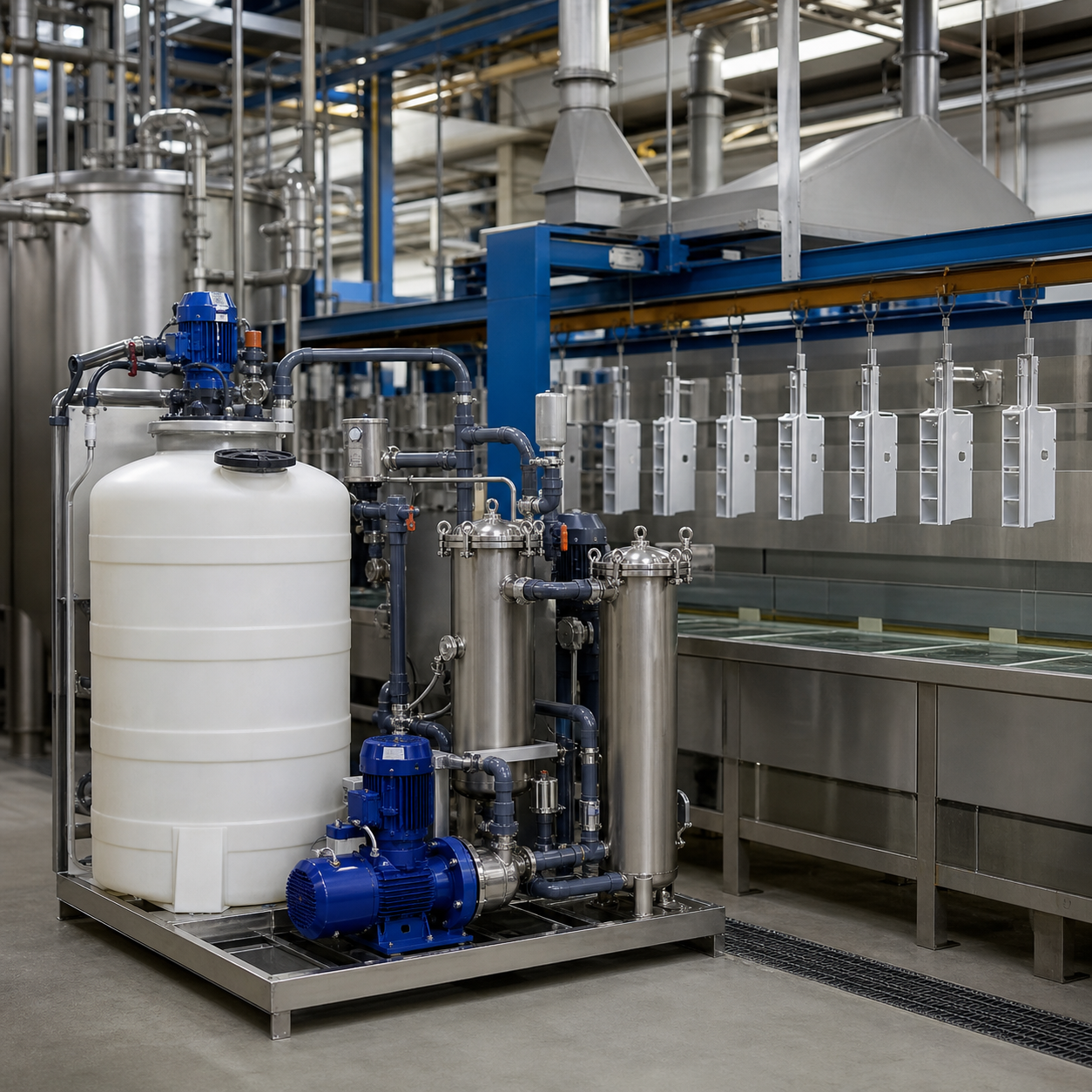
Oxalic-acid anodizing is a specialized electrolytic treatment that forms an oxide layer on aluminum under controlled electrical and bath conditions. Coating properties depend on alloy, pretreatment, acid concentration, dissolved aluminum, temperature, current density, time, agitation and sealing. An anodizing plant should therefore qualify oxalic acid as one input to a validated process rather than assume that a high assay alone guarantees coating performance. Procurement teams need a clear specification for oxalic acid dihydrate or another approved form, including assay, water or crystal form, iron, residue and particle condition. The bath team must then verify make-up calculations, analysis and replenishment through production data. Approval should cover several acid lots and different production loads, because stable laboratory coupons do not prove uniform performance on complex parts, high rack density or long operating campaigns. Bath life, drag-out and rinse contamination should be reviewed before changing the incoming grade.
For B2B implementation of Oxalic Acid for Aluminum Anodizing and Process Control, define ownership across purchasing, production, quality, engineering and EHS before the first delivery. Approve the receiving test, sampling tools, storage method, dosing basis, deviation response and retained-sample period in writing. This shared control plan helps separate raw-material variation from equipment or operating changes and gives both buyer and supplier objective evidence when investigating performance.
Define the coating requirement
Specify the alloy, part geometry, target thickness, color, hardness, electrical or thermal property and final seal. Different aluminum alloys and fabrication histories can produce different appearances in the same bath. Use representative production parts during qualification instead of relying only on a flat laboratory coupon.
Establish the electrical operating window
Validate current density, voltage response, ramp, temperature and time for each product family. Track load area accurately because amperage per part is not a transferable control. Record contact quality and rack condition; poor electrical contact can look like a bath-chemistry problem.
Control bath composition
Measure oxalic acid using an approved method and trend dissolved aluminum, contamination and solution volume. Evaporation, drag-out, rinsing carryover and replenishment change the bath. A simple mass addition without analysis can slowly move the process outside its qualified window.
Manage filtration and agitation
Filtration removes particles that may cause surface defects, while circulation supports temperature and concentration uniformity. Confirm that filters, pumps and seals are compatible with the actual bath. Inspect dead zones and maintain heat-exchanger performance rather than compensating for poor circulation with wider chemistry limits.
Specify incoming oxalic acid
State assay, crystal form, iron, chloride, sulfate, nonvolatile or insoluble matter and any coating-sensitive impurities with test methods. Do not impose every possible limit without process evidence. Review several recent COAs and validate more than one lot before approving a supplier.
Protect dry-material handling
Oxalic acid is commonly supplied as powder or granules. Use enclosed transfer or dust capture, dry storage and controlled dissolution. Prevent foreign particles, wrong chemical addition and damp caking. Lot identity should follow material from warehouse through bath make-up.
Link bath data to coating results
Trend acid concentration, aluminum, temperature, current, thickness, color and seal-test results together. When performance shifts, review pretreatment, alloy lot, rack contact and rinsing before changing the bath. A complete data set prevents unnecessary dumping or supplier rejection.
Use reliable technical context
A NASA technical report compares sulfuric- and oxalic-acid anodized aluminum for thermal-control applications. It illustrates specialized use, but each commercial line needs its own approved process and customer requirements.
Build safe replenishment and supply
The NIOSH Pocket Guide identifies dust exposure, eye and skin hazards and incompatibilities. Use current SDS guidance, ventilation, PPE, emergency facilities and trained make-up procedures.
Issue an anodizing RFQ
State form, assay, impurity limits, methods, annual volume, shipment size, package, destination, COA and change notification. Review the Hiacid oxalic acid supply page and product record, then request a specification-based quotation.
Related oxalic acid resources
- Oxalic Acid for Wood Iron-Stain Removal and Brightening
- Oxalic Acid in Lithium-Ion Battery Recycling Processes
- Oxalic Acid for Heavy-Metal Wastewater Precipitation
Frequently asked questions
Is oxalic-acid anodizing suitable for every aluminum part?
No. Alloy, geometry, coating requirement and customer approval determine whether the process is suitable.
Why track dissolved aluminum?
It changes as the bath operates and can affect conductivity, coating behavior and replenishment decisions.
Can assay alone qualify oxalic acid?
No. Crystal form, relevant impurities, particle condition, consistency and production trials also matter.
What should be checked after a coating shift?
Review bath analysis, temperature, current, alloy, pretreatment, rack contact, rinsing and sealing together.