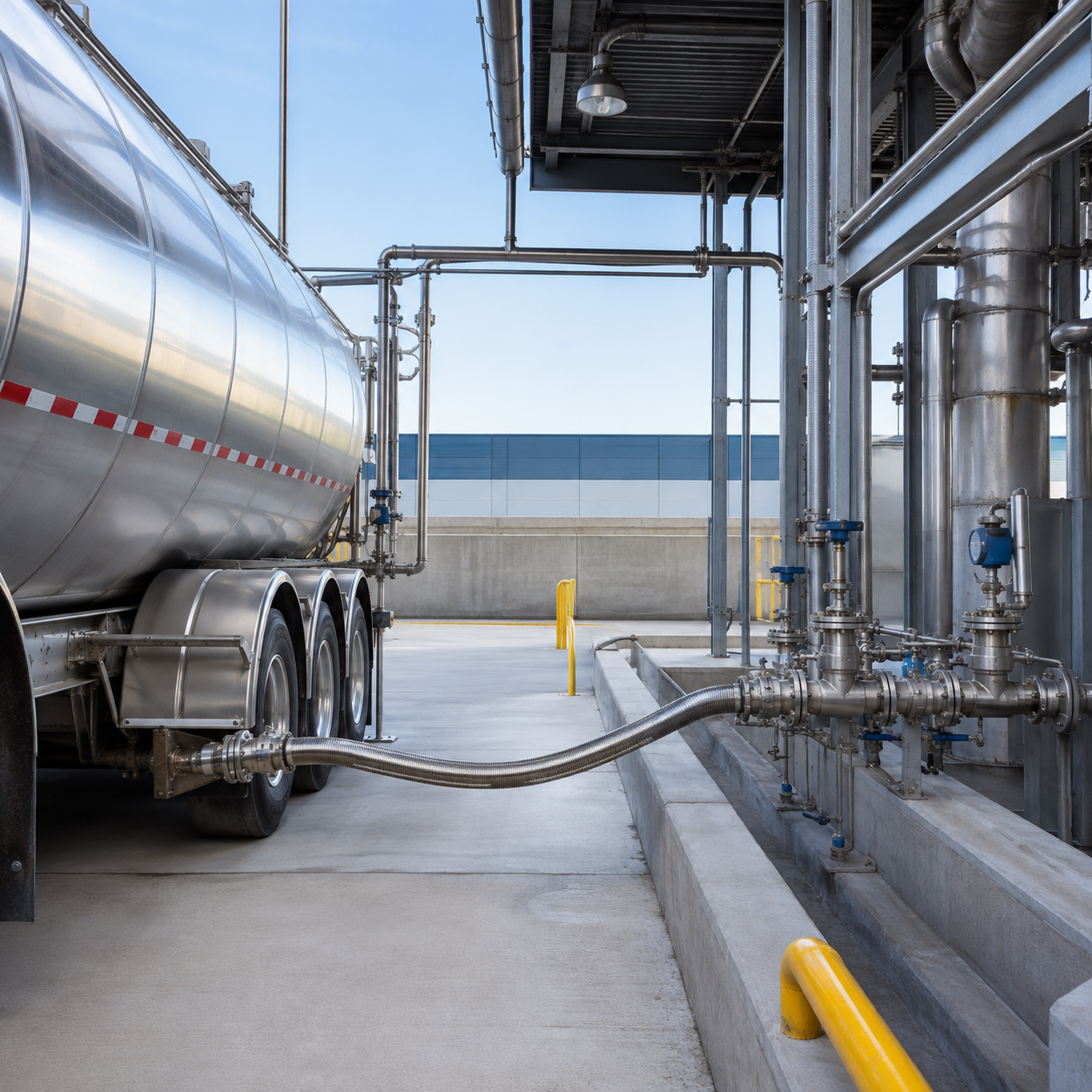
Bulk formic acid unloading joins the supplier’s transport system to the buyer’s storage and process equipment. Wrong-product connection, inadequate tank capacity, unsuitable hoses, blocked venting or loss of communication can cause serious corrosive, vapor and fire hazards. A safe transfer begins before the vehicle arrives, with an agreed product, connection, receiving tank, delivery window and stop-work authority. The buyer and carrier should hold a documented pre-transfer briefing, identify the person in charge on each side and confirm how an emergency stop will be communicated. This checklist supports planning by trained industrial sites; it does not replace the current SDS, carrier instructions, site procedure, engineering controls or local dangerous-goods rules.
For B2B qualification, assign purchasing, quality, engineering, production, logistics and EHS ownership before the first delivery. Approve the specification, analytical methods, sampling point, retained-sample period, storage conditions, transfer equipment, deviation response and release authority in writing. Compare several representative lots under controlled operating conditions and record process performance, mass balance, waste, equipment observations and final quality. This approach separates raw-material variation from water, equipment, operator or analytical changes. Review the chain from supplier release through carrier, package, receiving connection and day tank because contamination or misidentification can occur after final analysis. Reconcile ordered, received, stored and consumed quantities and investigate unexplained differences. Supplier scorecards should include documentation accuracy, delivery condition, corrective-action quality and change notification as well as price. Qualify an alternate source before a disruption, using the same methods and process criteria. When buyer and supplier results differ, review sample representativeness, temperature, calibration, detection limits and uncertainty before deciding disposition. Confirm emergency contacts, unloading hours, holiday coverage and stop-work authority for every shipment. Include maintenance and warehouse teams in post-trial review because they often identify seal, vent, hose or handling issues not visible in a certificate of analysis. Close qualification with an authorized report, updated specification, approved supplier status and a defined routine-monitoring plan.
Complete the pre-arrival review
Confirm purchase order, grade, concentration, quantity, vehicle, compartment, route, delivery time, receiving tank, available capacity and emergency contacts. Review weather and access restrictions.
Match transfer connections
Document hose, gasket, coupling, pump and flow direction. Use dedicated equipment or a validated cleaning system, and prohibit improvised adapters that bypass the approved connection standard.
Verify identity before opening the system
Check shipping documents, product label, seal numbers, lot, vehicle and compartment against the order. Resolve discrepancies before breaking a seal or connecting a hose.
Control the unloading area
Restrict traffic and ignition sources, place barriers, check lighting and position emergency equipment. Only assigned trained personnel should operate transfer valves.
Confirm tank capacity and venting
Independently verify level, free space, vent route and valve lineup. Test high-level protection, communication and emergency shutdown according to the site procedure.
Apply authoritative hazard context
The NIOSH Pocket Guide for formic acid identifies corrosivity, exposure limits and key incompatibilities. The SDS and site risk assessment govern the actual unloading controls.
Monitor the entire transfer
Maintain attendance, observe connections and track level, pressure and delivered quantity. Stop for leaks, abnormal readings, hose movement, heat, vapor or lost communication.
Close out without contamination
Drain or clear the line only by the approved method, isolate valves, cap connections and inspect containment. Do not use an unapproved gas, flush or return path.
Retain delivery and quality records
Link bill of lading, COA, seal numbers, receiving tests, tank, operators, times, quantity and deviations. Trend supplier and carrier performance across deliveries.
Prepare a bulk logistics inquiry
Provide concentration, annual and peak volume, tank capacity, connection, site restrictions, destination and documents. Review the Hiacid formic acid product page, then request a bulk supply quotation.
Related formic acid resources
- Formic Acid for Lithium Battery Black Mass Leaching
- Formic Acid for Lignocellulosic Biomass Fractionation
- Formic Acid for Industrial Formate Ester Manufacturing
Frequently asked questions
Who confirms tank capacity before unloading?
The buyer should independently verify level and available capacity under its written procedure.
Can a shared hose be used?
Only when compatibility and validated cleaning controls demonstrate safe, contamination-free service.
Should transfer continue if communication is lost?
No. Stop under the approved procedure until safe control is restored.
Which delivery records should be retained?
Keep shipment, seal, COA, receiving, tank, operator, timing, quantity and deviation records together.