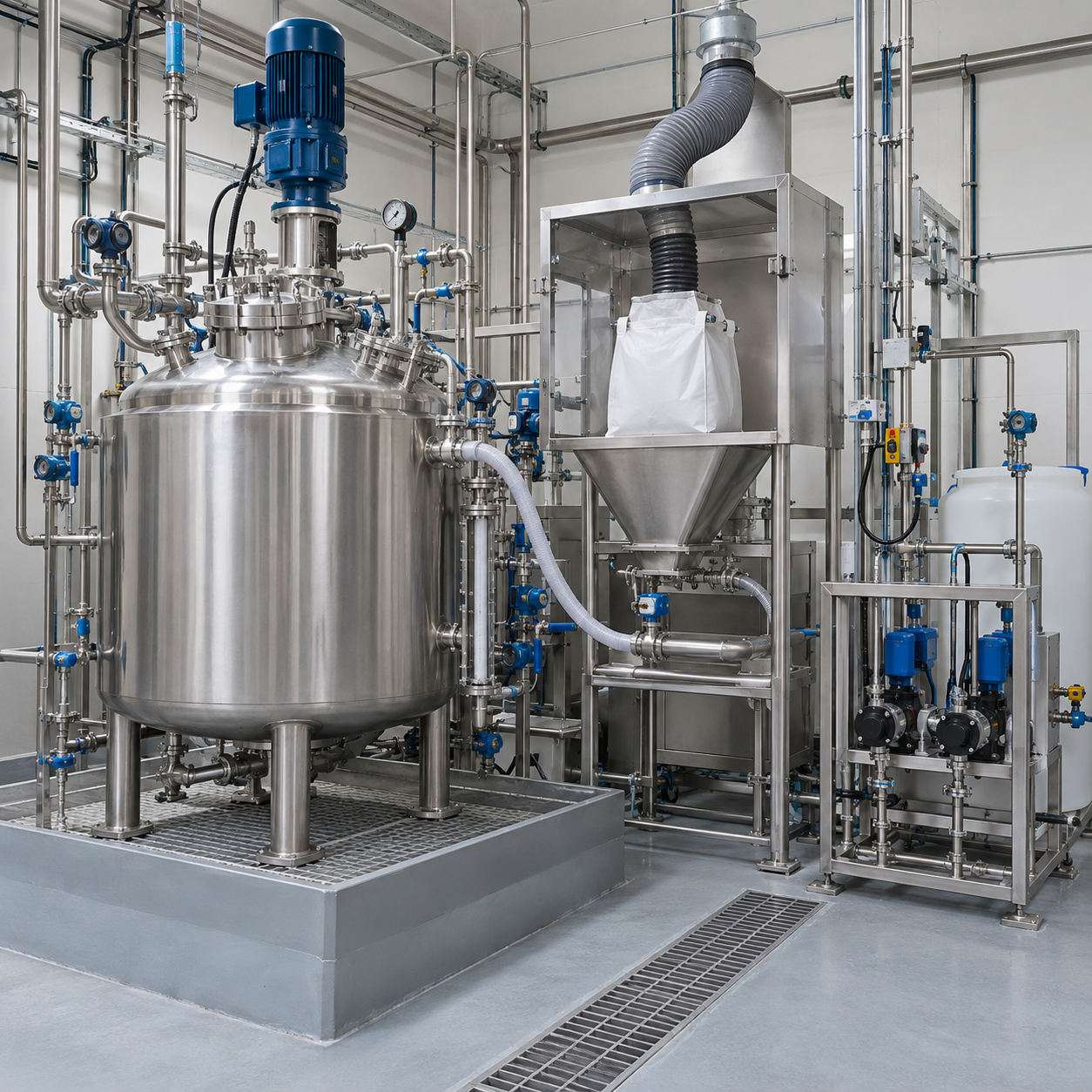
A reliable oxalic acid dosing system must turn a dry raw material into a consistent process feed without exposing workers, plugging equipment or creating uncontrolled concentration changes. The design begins with the required solution strength, batch or continuous demand, water quality, minimum operating temperature and downstream sensitivity. It then connects bag handling, dust control, make-down, agitation, filtration, storage, metering and verification as one system. This article provides a B2B planning framework for engineering and procurement teams. Final conditions, materials and safeguards must be established by qualified professionals using the current SDS, site hazard review and equipment supplier data.
For industrial qualification, assign purchasing, quality, engineering, operations, logistics and EHS responsibilities before the first delivery. Approve the specification, analytical methods, sampling point, retained-sample period, storage conditions, deviation response and release authority in writing. Evaluate several representative supplier lots under controlled process conditions so one unusually clean or unusual lot does not become the hidden baseline. Record raw-material identity, hydrate form, assay, relevant impurities, package condition and lot number together with process settings, mass balance, waste, equipment observations and final product quality. This separates raw-material variation from water, equipment, operator and analytical changes. Review the chain from supplier release through carrier, pallet, bag, warehouse and make-down station because contamination or moisture pickup can occur after final analysis. Reconcile ordered, received, stored and consumed quantities and investigate unexplained differences. Supplier scorecards should include documentation accuracy, delivery condition, corrective-action quality and change notification as well as price. Qualify an alternate source before a disruption using the same methods and process criteria. When buyer and supplier results differ, review sampling, basis, calibration, detection limits, rounding and uncertainty before disposition. Confirm emergency contacts, receiving hours and stop-work authority for every shipment. Close qualification with an authorized report, approved supplier status and a routine monitoring plan.
Define the dosing duty
Document normal, minimum and peak consumption; target concentration; required flow turndown; batch frequency; hold time; and downstream control response. Clarify whether the process needs mass flow, volumetric flow or feedback from pH, conductivity or another validated measurement.
Set concentration by mass balance
Use verified raw-material assay, hydrate form and water quantity. Record actual charged masses and final batch mass or volume. Density-based conversion should use validated temperature data rather than a generic value copied from an unrelated concentration.
Control dry-material charging
Use a guarded bag opening and loading arrangement with local exhaust or enclosed transfer suitable for corrosive dust. Position the operator outside the direct dust path and provide a safe method for empty-bag containment.
Prevent lumps and dead zones
Choose the addition point, agitation pattern and charge rate to wet solids without creating floating rafts or settled deposits. Confirm performance at low liquid level and cold conditions. Interlocks should prevent charging when agitation or extraction is unavailable.
Design the make-down vessel as a system
Evaluate vessel material, agitator, seals, nozzles, venting, level measurement, temperature range and secondary containment together. The NOAA CAMEO entry lists oxalic acid properties and incompatibility information that should be considered alongside the supplier SDS.
Separate dissolution from transfer
Define a completion criterion before solution enters the day tank or dosing line. Time alone may be insufficient. Visual inspection, recirculation stability, filtration pressure or an analytical check can provide a controlled release point.
Protect pumps and instruments
Select wetted materials using concentration, temperature and contaminants. Provide strainers or filtration only where they can be isolated and cleaned safely. Size the metering pump for the actual viscosity, pressure and turndown range.
Calibrate the delivered dose
Verify pump output at representative suction level and backpressure. Track stroke or speed against measured mass or volume, and define recalibration frequency. Alarm on loss of flow, empty tank, blocked line or abnormal pressure where the process risk requires it.
Operate with traceability and change control
Link each make-down batch to raw-material lot, water source, operator, charge weights, time, temperature and release result. Investigate deposits, color, slow dissolution or unexpected demand before adjusting the recipe.
Prepare an equipment-ready inquiry
Provide hydrate form, assay, target solution, daily demand, package, receiving constraints and destination. Review the Hiacid oxalic acid product page, then request supply and packaging options that fit the approved make-down system.
Related oxalic acid resources
- Oxalic Acid Dihydrate vs Anhydrous: Industrial Buying Guide
- Oxalic Acid Assay by Permanganate Titration: COA Verification
- Oxalic Acid for Indium Recovery from ITO Manufacturing Scrap
Frequently asked questions
Should oxalic acid be charged before agitation starts?
No. Follow the approved operating procedure and interlocks; uncontrolled charging can promote settling, lumps and concentrated contact.
Why does hydrate form matter to solution preparation?
It changes the active-acid mass and water balance used to calculate the final concentration.
Is a timer enough to confirm dissolution?
Not always. A validated release check should demonstrate that the solution is homogeneous and suitable for transfer.
How should a metering pump be verified?
Measure actual output under representative suction level, backpressure and concentration, then document calibration and alarm checks.