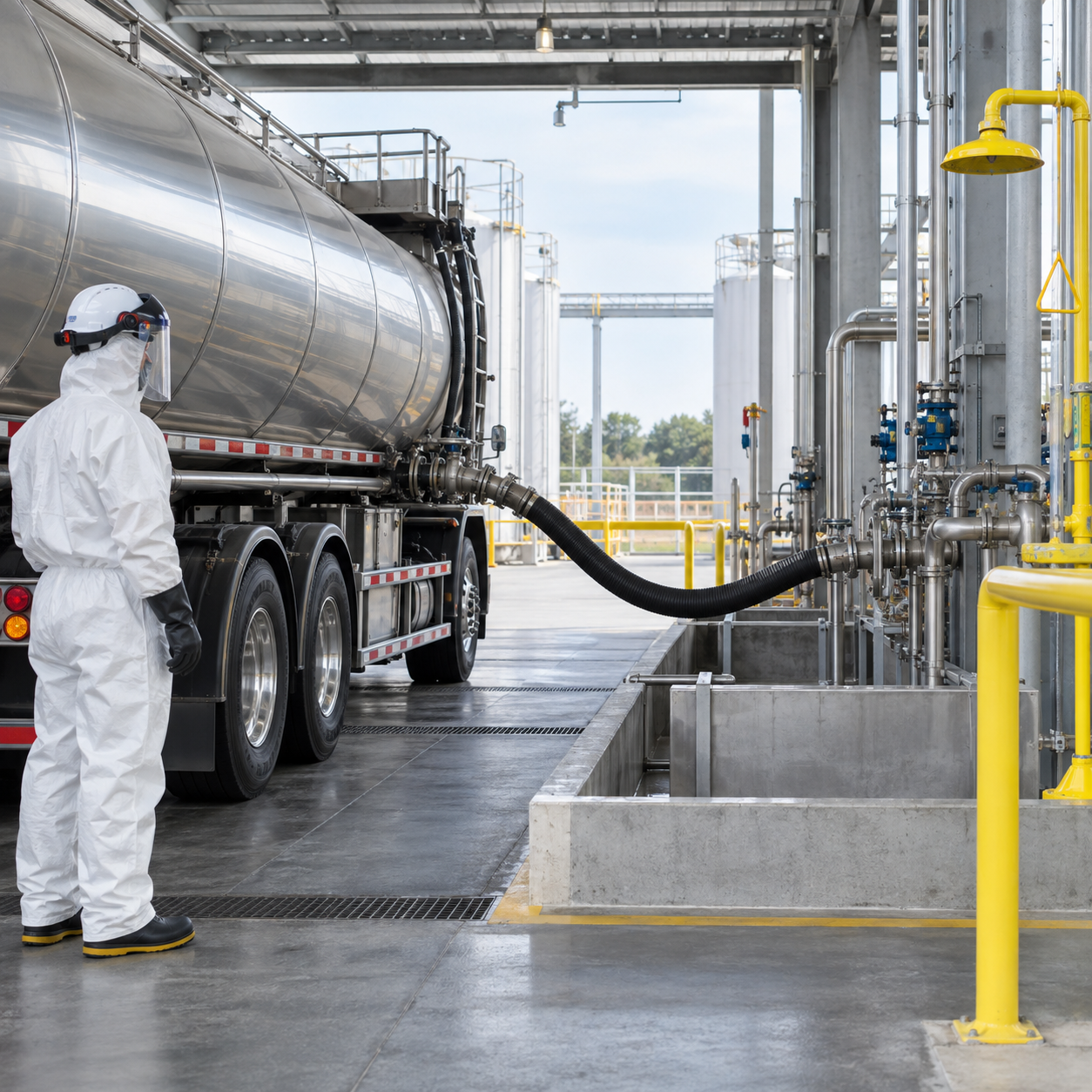
Bulk nitric acid unloading is a planned transfer between a carrier and a fixed industrial system, not a routine hose connection. The load is a corrosive oxidizer, and errors involving product identity, incompatible materials, contaminated equipment or the wrong receiving tank can have severe consequences. A useful checklist assigns decisions before the vehicle arrives, verifies the delivery at the gate and connection point, controls the transfer, and closes the job with records and inspection. It must be specific to the site’s engineered system and current hazard review. The points below are management guidance only; they do not replace the carrier’s instructions, the current SDS, operating procedures, permits or trained supervision.
For dependable B2B implementation, assign purchasing, quality, engineering, operations and EHS responsibilities before the first shipment. Approve the receiving method, sample point, test frequency, storage system, transfer equipment, deviation process and retained-sample period in writing. Compare several representative supplier lots under controlled conditions and record product quality, process response, waste load and equipment observations. This evidence helps separate raw-material variation from operating or analytical changes. Review packaging, transport, seal integrity and unloading records together with laboratory results because contamination can occur after the supplier’s final test. Define who may release a lot, what requires quarantine, what evidence resolves a dispute and which supplier changes trigger requalification. Include current SDS and COA review, emergency contacts, complaint response and delivery continuity in the same approval plan. Close qualification with an authorized report, a controlled specification and assigned follow-up actions.
Complete the pre-arrival review
Confirm purchase order, supplier, carrier, nitric acid grade, concentration, quantity, vehicle identification and delivery window. Verify that the receiving tank has sufficient working capacity and that incompatible transfers are not scheduled nearby. The site and carrier should exchange emergency contacts and entry requirements in advance.
Review transport documentation
Check the shipping description, labels, seals, COA and SDS against the order. Nitric acid transport classification depends on concentration and other conditions; the PHMSA interpretation for UN2031 illustrates why trained shippers must apply the applicable regulations rather than rely on a generic product name.
Verify identity before connection
Use a positive identification process that links the vehicle, paperwork, sample, receiving tank and transfer line. Confirm tank labels and valve line-up independently where the site’s procedure requires it. Stop when any label, seal, document or concentration is inconsistent.
Inspect the unloading area
Restrict access, confirm containment is available, remove incompatible materials and verify drainage isolation. Check lighting, weather limits, communications, eyewash, shower and emergency equipment. The driver and site operator should agree on roles and the stop signal.
Confirm material compatibility and cleanliness
Inspect the hose, couplings, gaskets, valves and pump for approved nitric-acid service, current inspection status and visible damage. Dedicated equipment is preferred. A component compatible with another acid is not automatically suitable for nitric acid.
Prevent contamination and backflow
Verify caps and connection faces are clean and dry under the approved procedure. Use engineered backflow protection and the designated connection only. Do not use adapters that defeat keying or allow an uncertain line to be connected.
Control and monitor the transfer
Maintain attendance and communication for the full transfer. Monitor the approved indicators for pressure, flow, receiving level and containment. The written procedure must define conditions requiring an immediate stop and who can authorize restart.
Protect workers and the surrounding area
Use the site-selected PPE, ventilation and exposure controls. The NIOSH nitric acid guidance summarizes important exposure and incompatibility information, while the facility’s hazard assessment determines actual controls. Never place a worker in an uncontrolled vapor plume.
Close the job with verification
After transfer, follow the approved draining, depressurizing, disconnection and capping sequence. Inspect for leakage, reconcile delivered quantity and receiving level, restore valves and remove restrictions only after authorization. Record any equipment damage, spill or abnormal indication.
Plan the next documented delivery
Include concentration, impurity limits, expected shipment size, tank connection standard, destination, delivery timing and required records in the RFQ. Review the Hiacid nitric acid supply information and contact the export team to align documentation before dispatch.
Related nitric acid resources
- Nitric Acid Concentration Verification by Density and Titration
- Nitric Acid for Controlled Copper Etching and Surface Preparation
- Nitric Acid in Nitrophosphate Fertilizer Production
Frequently asked questions
Who should authorize an unloading transfer?
A trained site representative designated by the facility procedure should verify prerequisites and authorize the connection and start.
Can one hose be used for several acids?
Only when a qualified compatibility and cleaning procedure explicitly permits it; dedicated identified equipment is generally safer.
What if the tanker seal or paperwork does not match?
Stop, isolate the delivery from the process and resolve the discrepancy with purchasing, quality, EHS and the supplier.
Should the driver or site operator leave during transfer?
No. Attendance and communication responsibilities must be defined and maintained throughout the transfer.