
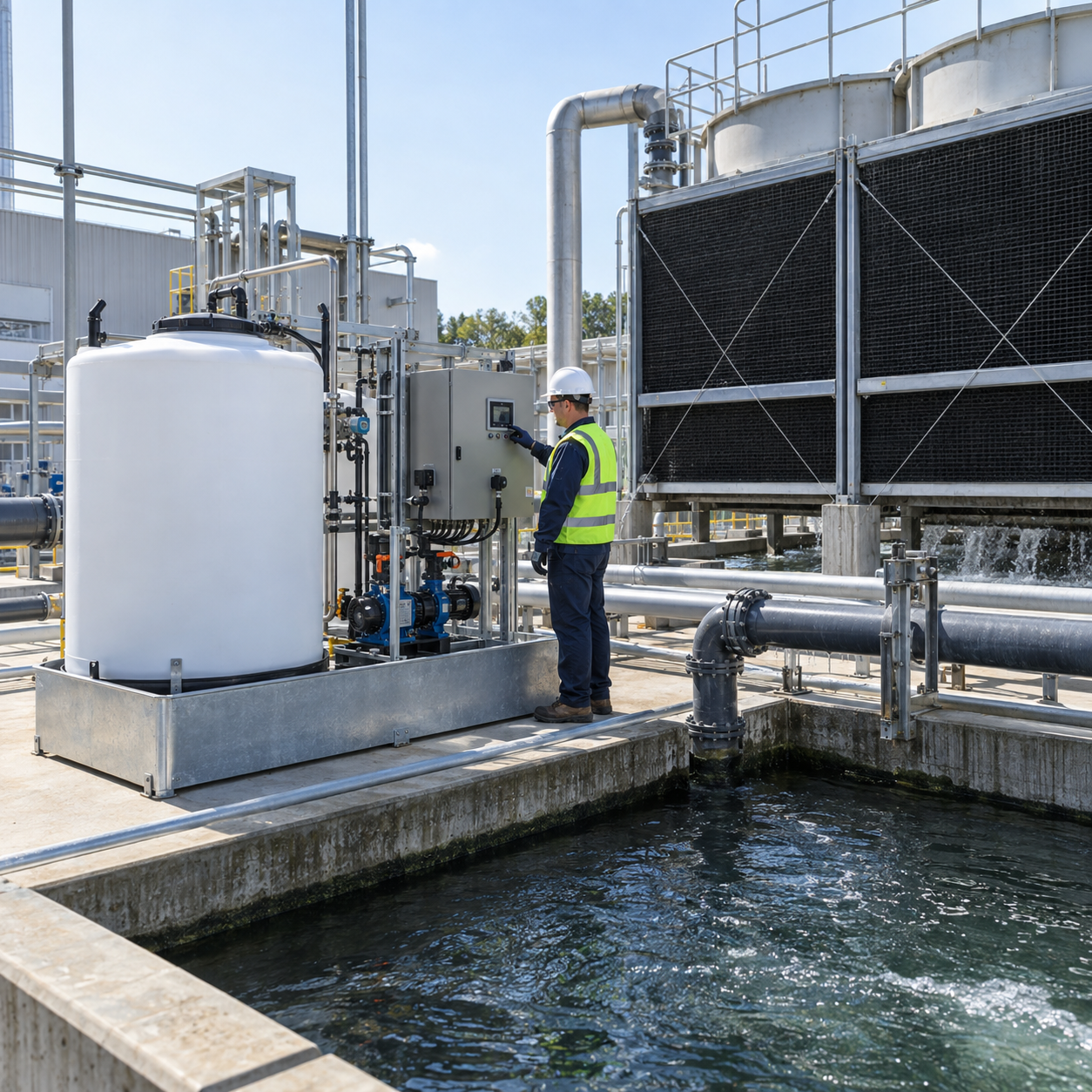
Hydrogen peroxide can form part of an engineered cooling-water treatment program, either as a registered product component or under other legally permitted uses. It decomposes to water and oxygen, but that does not make uncontrolled dosing safe or universally effective. Biofilm control depends on system volume, temperature, metallurgy, organic load, ammonia, pH, retention, deposits and the broader scale and corrosion program. In many jurisdictions, antimicrobial claims trigger pesticide or biocide registration requirements. This article addresses procurement and program governance only. Product selection, dose, contact time and microbiological targets must come from a licensed water-treatment professional, approved labels and site-specific validation.
For dependable B2B implementation, assign purchasing, quality, engineering, operations and EHS responsibilities before the first shipment. Approve receiving tests, sample points, storage, transfer equipment, deviation response and retained-sample periods in writing. During qualification, compare several representative peroxide lots under controlled conditions and record process response, finished quality, waste load and equipment observations. This plan helps separate raw-material variation from operating or analytical changes and supports buyer-supplier investigations. Review packaging, venting, transport, seal integrity and unloading records with laboratory data because contamination can occur after the supplier’s final test. Define who may release a lot, what requires quarantine, what evidence resolves a dispute and which supplier changes trigger requalification. Include current COA and SDS review, emergency contacts, complaint handling, delivery continuity and document retention. Reconcile ordered, received, stored and consumed quantities; trend assay and critical impurities by lot; inspect vents and dedicated transfer connections; and review deviations jointly with operations. Hydrogen peroxide is a powerful oxidizer that can decompose to oxygen and heat, so clean compatible equipment and contamination control are core quality requirements. Close qualification with an authorized report, controlled specification, assigned follow-up actions and routine performance monitoring.
Define the cooling-system objective
Map tower cells, basin, exchangers, dead legs, side streams and makeup. Establish baseline planktonic counts, sessile biofilm evidence, heat-transfer loss, corrosion and fouling. A single dip-slide result cannot characterize the whole system.
Confirm the legal use pattern
Use only products and applications permitted in the jurisdiction. An EPA-registered peroxygen product label illustrates that cooling-water directions are product-specific. It does not authorize use of a different peroxide grade or an off-label program.
Measure oxidant demand and compatibility
Representative water testing should address organics, metals, sulfide, ammonia, pH, temperature and process contamination that can consume peroxide. Review elastomers, coatings, metals and existing treatment chemicals before introducing an oxidizer.
Pilot the complete program
Use a controlled trial with defined monitoring and stop criteria. Compare microbiology, heat transfer, corrosion, deposits and discharge conditions. A reduction in bulk-water counts without control of attached biofilm is not sufficient evidence.
Design closed dosing and monitoring
Use compatible storage, secondary containment, dedicated metering, injection at an engineered point and suitable interlocks. Prevent backflow and contamination of the peroxide tank. The system should stop safely when circulation or critical monitoring is lost.
Choose meaningful performance indicators
Trend microbiological results with oxidant residual where applicable, makeup and blowdown, temperatures, corrosion coupons or probes, exchanger approach and visual inspection. No single indicator can prove system control.
Integrate scale, corrosion and discharge controls
Changes in oxidant program can affect inhibitors, deposits and material condition. Review the complete water chemistry through management of change. Confirm blowdown and discharge requirements for the formulation and reaction products.
Investigate biofilm recurrence systematically
Review hydraulic dead zones, nutrient ingress, process leaks, cleaning history, dosing reliability and sampling quality. Increasing chemical use without correcting physical or operational causes can raise cost and risk without durable control.
Qualify hydrogen peroxide supply
Specify only the concentration and grade approved by the treatment professional. Use clean vented compatible storage and follow the current SDS. The NIOSH guidance provides general occupational-hazard context.
Prepare a controlled supply inquiry
State approved specification, expected volume, package, delivery schedule, storage limits, destination and documents. Review the Hiacid hydrogen peroxide supply page, then ask whether a suitable documented product is available.
Related hydrogen peroxide resources
- Hydrogen Peroxide Concentration Verification by Permanganate Titration
- Bulk Hydrogen Peroxide Unloading and Transfer Checklist
- Hydrogen Peroxide for Recycled Paper Deinking and Brightening
Frequently asked questions
Can commodity hydrogen peroxide automatically be used as a cooling-water biocide?
No. The product, concentration, claim and use pattern must comply with applicable registrations, labels and professional approval.
Why can biofilm return after treatment?
Dead zones, nutrients, deposits, process leaks or incomplete physical cleaning can allow rapid regrowth.
Which results should be monitored?
Use microbiology, biofilm inspection, heat-transfer, corrosion, water chemistry, dosing reliability and discharge data together.
Is more peroxide always more effective?
No. Demand, decomposition, compatibility and legal label limits require a validated program rather than uncontrolled dose increases.