
Organic-acid programs are used in some poultry operations to manage drinking-water pH or support a broader hygiene and flock-management plan. Formic acid has been studied alone and in blends, but results depend on source-water alkalinity, pipe materials, biofilm, dose uniformity, bird age, climate, formulation and farm management. Research findings are mixed and do not create a universal performance claim. Only a legally permitted, suitably documented product should be used under veterinary, nutrition and regulatory oversight. This guide focuses on B2B sourcing and engineered application, not on prescribing a dose or disease-control treatment.
For B2B qualification, assign purchasing, quality, engineering, operations, logistics and EHS ownership before the first commercial delivery. Approve the specification, analytical methods, sampling point, retained-sample period, storage conditions, transfer equipment, deviation response and release authority in writing. Compare representative lots under controlled conditions and record process performance, mass balance, waste, equipment observations and final quality. This separates raw-material variation from water, equipment, operator or analytical changes. Review the chain from supplier release through carrier, package, receiving connection and day tank because contamination or misidentification can occur after final analysis. Reconcile ordered, received, stored and consumed quantities and investigate unexplained differences. Supplier scorecards should cover documentation accuracy, delivery condition, corrective-action quality and change notification as well as price. Qualify an alternate source before a disruption using the same methods and process criteria. When buyer and supplier results differ, review sample representativeness, temperature, calibration, detection limits and uncertainty before deciding disposition. Confirm emergency contacts, unloading hours and stop-work authority for every shipment. Include maintenance and warehouse teams in post-trial review because they often identify seal, vent, hose or handling issues not visible in a certificate of analysis. Close qualification with an authorized report, approved supplier status and a defined routine-monitoring plan. The NIH PubChem record for formic acid provides broad identity and use context, while the current SDS and site procedures control handling.
Confirm authorization and responsibility
Identify the country, production standard, product status, permitted function, species and labeling obligations. Assign veterinary, nutrition, farm, water-quality and regulatory owners. Do not infer drinking-water approval from an industrial SDS or a feed-preservative listing.
Use evidence without overclaiming
A published broiler study evaluated organic acids, including formic acid, in drinking water under specific experimental conditions. Its findings do not establish a general disease-prevention claim or replace local approval and farm validation.
Characterize source water first
Measure pH, alkalinity, hardness, iron, manganese, microbial condition and disinfectant program across seasons. Alkalinity can strongly influence the amount of acid needed to change pH. Well and municipal sources may require different control strategies.
Define realistic program outcomes
Set measurable targets such as delivered-water pH stability, consumption, line condition, flock performance and equipment integrity. Avoid treating a water acidifier as a substitute for sanitation, ventilation, biosecurity, nutrition or veterinary care.
Engineer uniform and fail-safe dosing
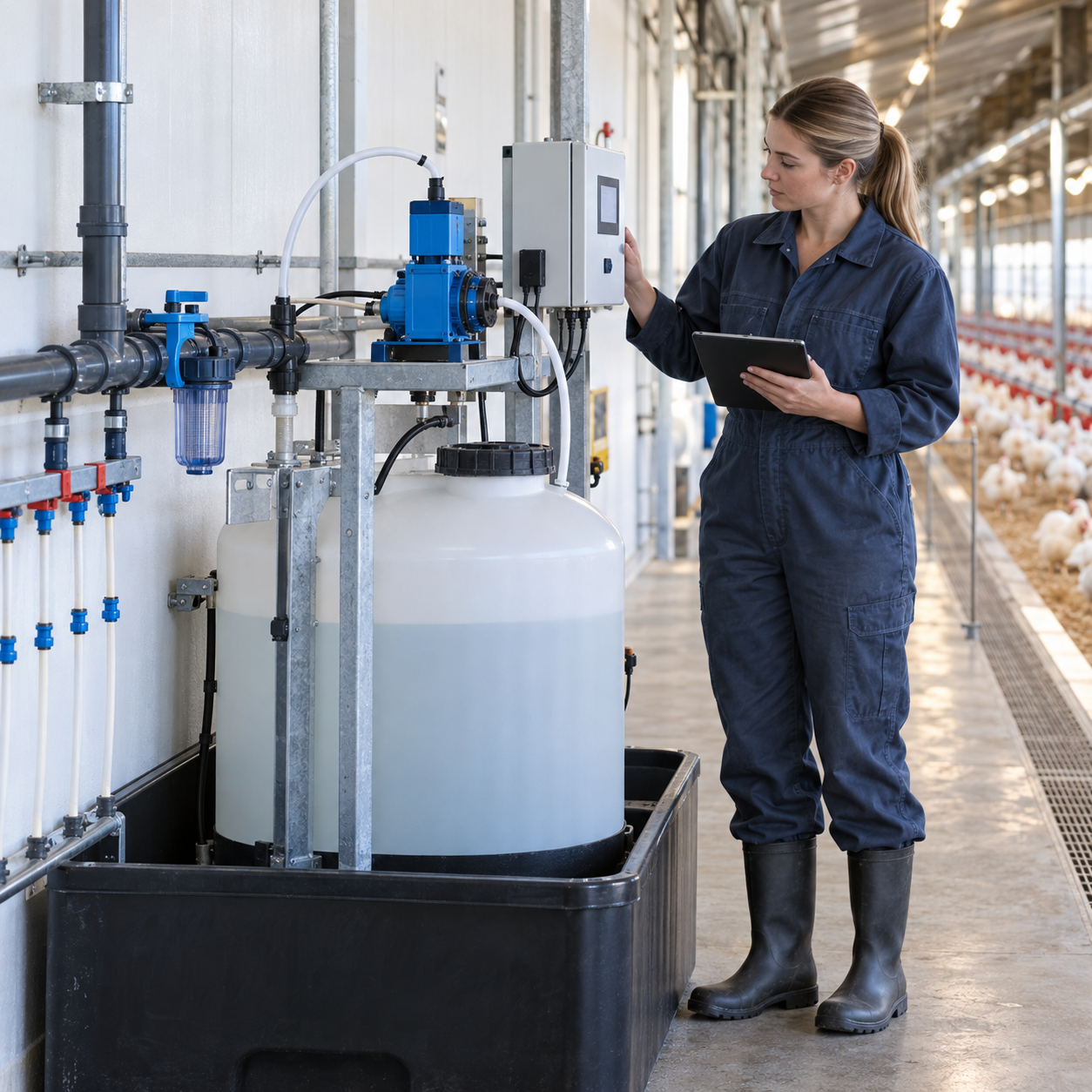
Use a compatible closed day tank, calibrated metering pump, injection point with adequate mixing, backflow prevention, alarms and maximum limits. Verify pH or another approved endpoint at representative drinker locations, not only beside the dosing skid.
Protect birds from dosing excursions
Assess pump failure, empty container, concentrated slug, low flow and sensor drift. Establish automatic shutdown, manual stop authority, response procedures and independent checks appropriate to the farm risk.
Review materials and cleaning interactions
Evaluate storage, seals, tubing, injectors, regulators and drinker-line materials for the actual formulation and concentration. Coordinate acidification with disinfectants and cleaners; never combine chemicals without documented compatibility and an approved sequence.
Maintain traceability and calibration
Record product lot, concentration, delivery, pump calibration, water tests, consumption and deviations. Reconcile chemical inventory with water volume and investigate unexpected use before continuing.
Qualify the supplied product
Require a specification, COA, SDS, legal documentation, manufacturing traceability, shelf life and change notification suited to the intended market. General industrial formic acid should not be assumed appropriate for animal drinking water.
Prepare a regulated-use inquiry
Provide jurisdiction, intended function, required documented grade, annual volume, package, water system and destination. Review the Hiacid formic acid page, then ask whether a suitably documented product can be offered for your professional review.
Related formic acid resources
- Formic Acid Assay, Water and Impurity Verification
- Formic Acid Crystallization and Cold-Weather Handling
- Formic Acid for Electroless Precious-Metal Plating
Frequently asked questions
Can industrial formic acid be added directly to poultry water?
Do not assume so. Confirm legal status, documented grade and professional approval for the destination market and system.
Why does source-water alkalinity matter?
It controls buffering capacity and can change the amount of acid required to reach a stable endpoint.
Does acidification replace water-line sanitation?
No. It is one possible element of a broader water, biosecurity and flock-management program.
Where should water be checked?
Use representative points across the distribution line and drinkers, not only the dosing skid outlet.