
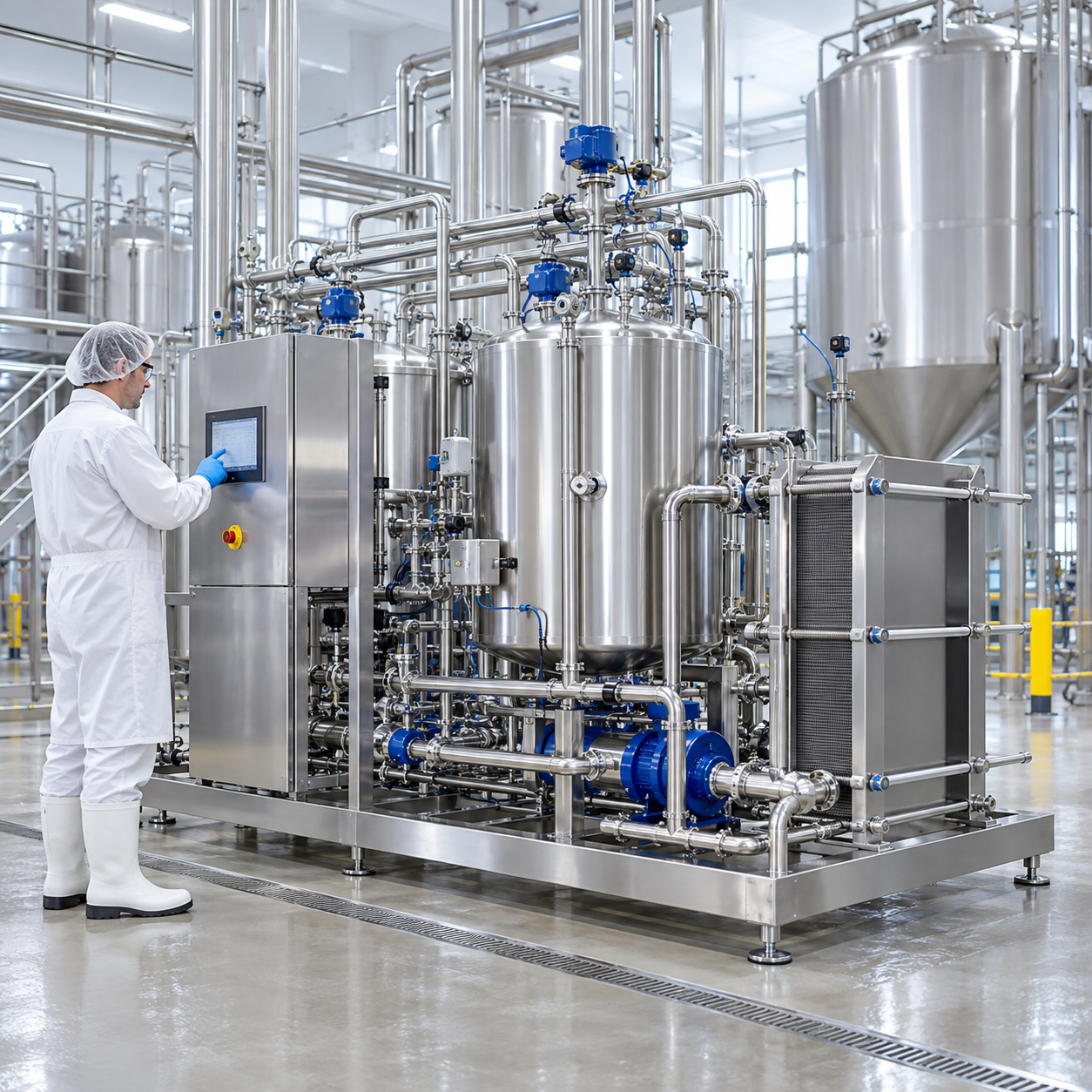
Nitric acid is commonly used as the acid stage in selected dairy clean-in-place programs because mineral deposits on heated food-processing surfaces can be acid soluble. It is not a stand-alone sanitation guarantee, and more acid is not automatically better. Soil, equipment design, flow, temperature, time, water quality, alkaline cleaning, rinse control and microbiological verification work as one validated system. This guide covers industrial supply, dosing and documentation for professional food plants. The facility’s food-safety plan, equipment limits, detergent supplier instructions and local law remain controlling.
For B2B qualification, assign purchasing, quality, engineering, operations, logistics and EHS ownership before the first commercial delivery. Approve the specification, analytical methods, sampling point, retained-sample period, storage conditions, transfer equipment, deviation response and release authority in writing. Compare representative lots under controlled conditions and record process performance, mass balance, waste, equipment observations and final quality. This separates raw-material variation from water, equipment, operator or analytical changes. Review the chain from supplier release through carrier, package, receiving connection and day tank because contamination or misidentification can occur after final analysis. Reconcile ordered, received, stored and consumed quantities and investigate unexplained differences. Supplier scorecards should cover documentation accuracy, delivery condition, corrective-action quality and change notification as well as price. Qualify an alternate source before a disruption using the same methods and process criteria. When buyer and supplier results differ, review sample representativeness, temperature, calibration, detection limits and uncertainty before deciding disposition. Confirm emergency contacts, unloading hours and stop-work authority for every shipment. Include maintenance and warehouse teams in post-trial review because they often identify seal, vent, hose or handling issues not visible in a certificate of analysis. Close qualification with an authorized report, approved supplier status and a defined routine-monitoring plan. Nitric acid is a strong oxidizer and corrosive chemical; the current SDS, local law and site procedures control segregation, handling, ventilation, exposure control and emergency response.
Connect chemical supply to the validated CIP program
Map every circuit, product soil, heated surface, construction material and required hygienic outcome. Approve the cleaning sequence and verification method through the plant’s food-safety and engineering teams. The Tetra Pak Dairy Processing Handbook explains that nitric acid is a common dairy cleaning acid and that effective CIP depends on a controlled sequence.
Separate cleaning from disinfection claims
Acid cleaning can remove mineral soil but does not replace every disinfection step or hygienic design requirement. Define what each stage must accomplish and how it is verified. Avoid supplier claims that imply raw nitric acid alone makes a line microbiologically safe.
Specify concentration and impurities for the plant
State delivered concentration, assay method, chloride, iron, residue and other limits linked to equipment or product risk. Include package or bulk mode, shelf-life expectations and actual-result COA reporting. Determine whether a formulated acid detergent or commodity nitric acid is authorized for the validated program.
Control supplier and lot traceability
Record manufacturer, delivery, lot, COA, receiving result, tank assignment and consumption. Retain a representative sample under safe conditions. Quarantine material with broken seals, conflicting identity, abnormal color or documents that do not match the purchase specification.
Use closed and fail-safe dosing
Connect approved storage to the CIP make-up system with compatible pumps, valves, backflow protection, level control and containment. Calibrate flow or concentration instruments at defined intervals. Interlock dosing against low water flow, wrong circuit, overfill and unauthorized manual operation.
Verify concentration and final rinse
Measure the approved endpoint with validated conductivity, titration or other controls and account for dilution by retained rinse water. Confirm that the final rinse meets the plant’s acceptance criteria before food production resumes. Record deviations and authorized disposition.
Protect equipment, people and product
Review tanks, seals, heat exchangers, instruments and piping for the actual cleaning program. Use ventilation, segregation, eyewash, shower, spill response and suitable PPE under the current SDS. Prevent nitric acid contact with incompatible cleaners, organics or unauthorized chemicals.
Manage recovered solution and wastewater
Track soil loading and chemical strength when CIP solutions are recovered or reused. Define retirement criteria, neutralization controls and wastewater limits. Reducing chemical use must not compromise cleaning performance or create uncontrolled mixing in the drain system.
Maintain change control and performance trends
Trend chemical use, conductivity, rinse time, differential pressure, inspection, ATP or microbiological results and production downtime. Investigate drift before simply increasing dose. Review any supplier, formula, water source or equipment change through the cleaning-validation process.
Prepare a dairy CIP inquiry
Provide concentration, impurity limits, delivery mode, monthly volume, site storage, destination and food-plant document requirements. Review the Hiacid nitric acid supply page, then request a specification-based quotation.
Related nitric acid resources
- Nitric Acid for Titanium Pickling Quality Control
- Nitric Acid for NdFeB Magnet Recycling Trials
- Nitric Acid for Photovoltaic Silicon Wafer Texturing
Frequently asked questions
Does nitric acid alone validate a dairy CIP cycle?
No. Validation covers the complete sequence, equipment, operating controls, rinsing and hygienic verification.
Why monitor concentration during cleaning?
Water and product residues dilute or consume the cleaning solution, changing performance and rinse load.
Can acid and alkaline chemicals share an uncontrolled line?
No. Chemical segregation, compatible equipment and engineered sequencing are essential.
What supplier documents should be reviewed?
Use the agreed specification, COA, SDS, traceability, change-notification terms and delivery records.