
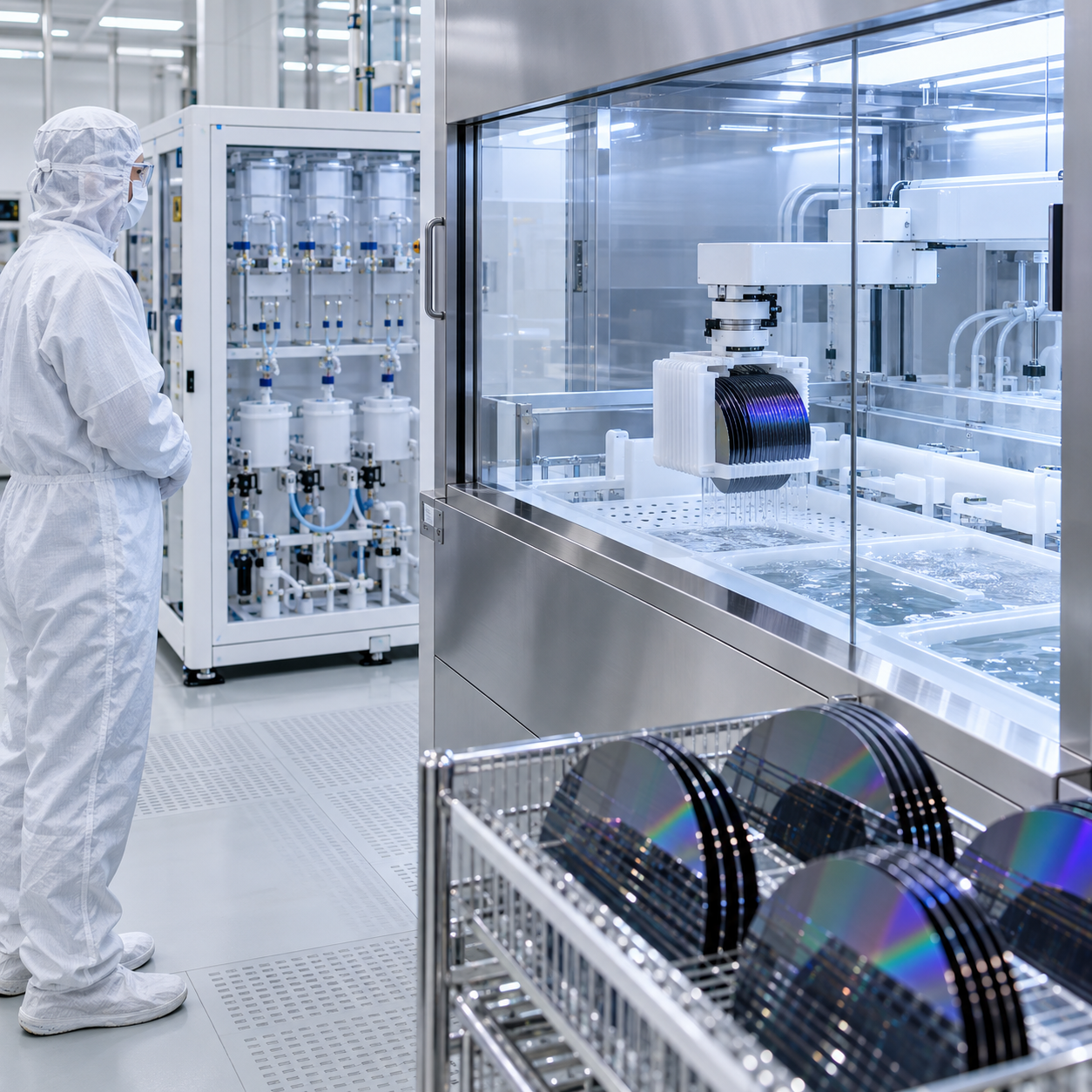
Hydrochloric acid is a component of selected semiconductor SC-2 wafer-cleaning systems used to remove ionic and metallic contamination. The result depends on reagent purity, water, companion chemistry, tool materials, bath age, wafer condition and downstream rinsing. A commercial acid with high bulk assay is not automatically suitable for a sensitive device process. Semiconductor users need individual trace-metal limits, clean packaging, point-of-use monitoring and strict change control. This article covers B2B chemical qualification and intentionally does not provide a bath recipe, mixing sequence, temperature or cleaning time.
For B2B qualification, assign purchasing, quality, engineering, operations, logistics and EHS ownership before the first commercial delivery. Approve the specification, analytical methods, sampling point, retained-sample period, storage conditions, transfer equipment, deviation response and release authority in writing. Compare representative lots under controlled conditions and record process performance, mass balance, waste, equipment observations and final quality. This separates raw-material variation from water, equipment, operator or analytical changes. Review the chain from supplier release through carrier, package, receiving connection and day tank because contamination or misidentification can occur after final analysis. Reconcile ordered, received, stored and consumed quantities and investigate unexplained differences. Supplier scorecards should cover documentation accuracy, delivery condition, corrective-action quality and change notification as well as price. Qualify an alternate source before a disruption using the same methods and process criteria. When buyer and supplier results differ, review sample representativeness, temperature, calibration, detection limits and uncertainty before deciding disposition. Confirm emergency contacts, unloading hours and stop-work authority for every shipment. Include maintenance and warehouse teams in post-trial review because they often identify seal, vent, hose or handling issues not visible in a certificate of analysis. Close qualification with an authorized report, approved supplier status and a defined routine-monitoring plan. Hydrochloric acid and hydrogen chloride vapor are corrosive and hazardous; the current SDS, local law and site procedures control segregation, handling, ventilation, exposure control and emergency response.
Define the wafer contamination problem
Identify target metals, surface films, device stage, allowable oxide condition and downstream thermal exposure. Set measurable surface-contamination, particle and material-loss criteria before comparing acid suppliers. A single total-metals number can hide an individual element that is critical to device yield.
Use primary technical context carefully
An Agilent semiconductor application note explains that hydrochloric acid is used in standard SC-2 cleaning and demonstrates trace-metal analysis of high-purity HCl. The fab’s qualified process and analytical methods remain controlling.
Build an application-specific acid specification
Set HCl assay, particles, nonvolatile residue, chloride-compatible anions and individual metallic impurities at reporting limits aligned with the process risk. State units, sample preparation, blank control and instrument method. Grade labels should never replace the complete specification and lot data.
Compare multiple commercial lots
Test representative lots and packages through the actual tool and rinse sequence. Measure incoming acid, point-of-use solution and wafer results. This reveals contamination introduced by packaging, distribution or facility systems after supplier release.
Qualify packaging as part of purity
Approve container resin, closure, liner, seal, cleaning, filling environment, bagging and connection. Review extractables, particles and metals relevant to the fab. Define tamper evidence, shelf life and external cleanliness for controlled receiving.
Protect the delivery path
Map the chemical from warehouse through cabinet, filters, valves and dispense point. Establish flushing, sampling, preventive maintenance and filter-change rules. One incompatible fitting or uncontrolled connection can compromise a high-purity lot.
Validate performance and change response
Use designed trials with production-representative wafers and the intended tool. Evaluate metal removal, particles, surface roughness, oxide condition and downstream yield indicators as applicable. Predetermine acceptance criteria rather than selecting the best result after testing.
Require supplier change notification
Manufacturing route, purification, site, analytical method, raw material, filtration or package changes can shift the trace profile. Define notification lead time, bridging data and requalification responsibility in the quality agreement.
Scale supply under clean governance
Forecast demand by tool and campaign, rotate stock within the approved shelf life and retain lot genealogy. Maintain a qualified alternate before a disruption. Supplier scorecards should cover analytical consistency, package condition, documentation and corrective action.
Prepare a high-purity inquiry
Provide impurity limits, methods, reporting limits, package, annual demand, destination and change-control expectations. Review the Hiacid hydrochloric acid product page and supply overview, then request a documented grade review.
Related hydrochloric acid resources
- Hydrochloric Acid for Lithium-Ion Battery Recycling Trials
- Hydrochloric Acid for Leather Hide Pickling Control
- Food-Grade Hydrochloric Acid for Acid-Thinned Starch
Frequently asked questions
Is high assay enough for semiconductor SC-2 cleaning?
No. Trace metals, particles, residue, packaging and point-of-use contamination can be more critical than bulk assay.
Why test point-of-use chemistry?
Storage, filters, valves, connections and distribution systems can add contaminants after supplier release.
Does this article provide an SC-2 recipe?
No. The qualified fab process and formal chemical-safety review control composition and operation.
Which supplier changes require review?
Changes to site, route, purification, methods, filtration, filling or packaging may require requalification.