
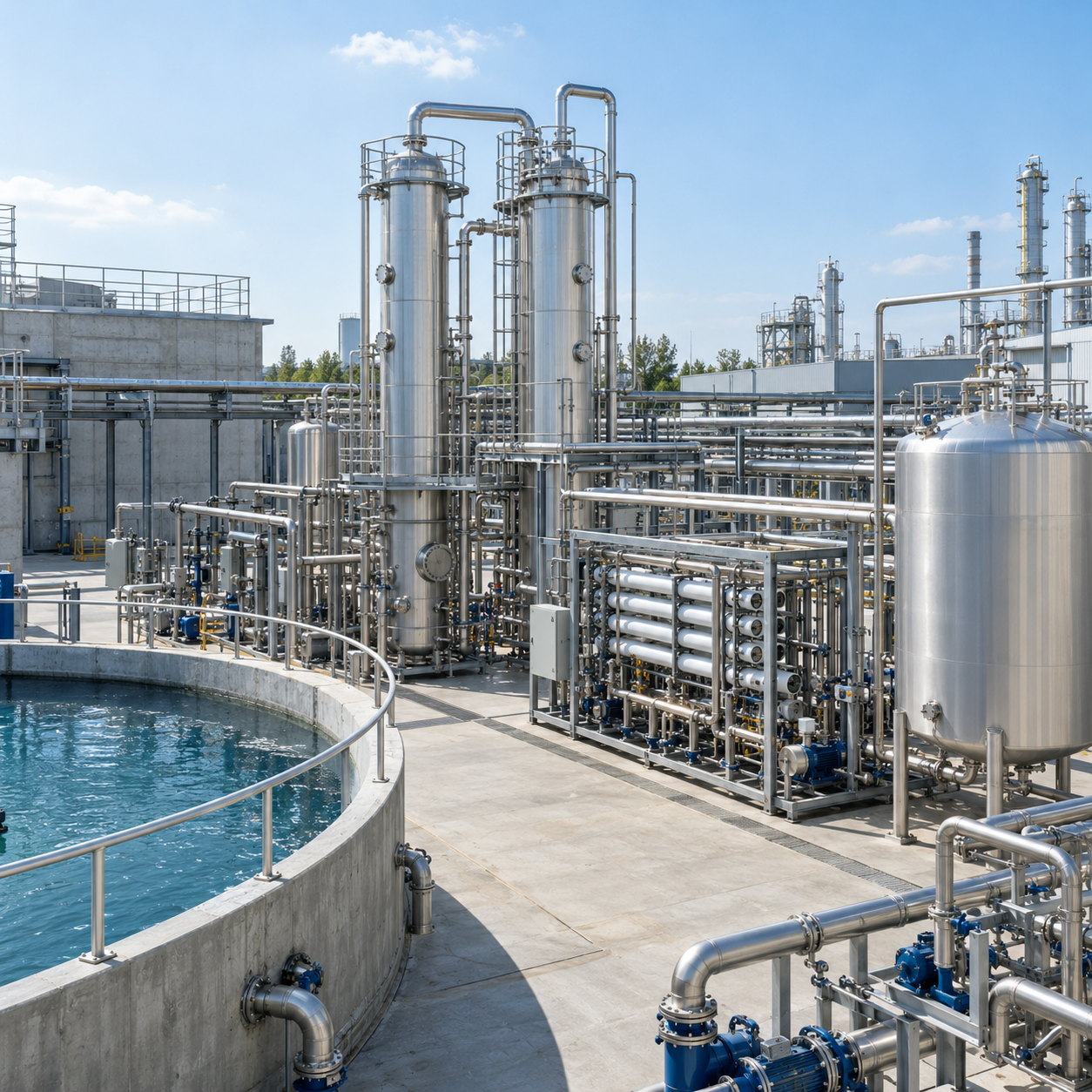
Process water from acetic acid manufacture, esterification, oxidation, purification or solvent washing can contain recoverable acetic acid together with aldehydes, salts, chlorinated compounds, suspended solids and other organics. Sending every stream directly to biological treatment can waste product and impose avoidable chemical oxygen demand, but recovery is not automatically economic or safe. The decision depends on concentration, variability, contaminants, phase behavior, energy, recovered-product use and treatment constraints. This article explains how plants can evaluate extraction, distillation, membranes or hybrid recovery with complete balances and qualified reuse criteria.
For industrial qualification, assign purchasing, quality, engineering, operations, logistics and EHS ownership before the first commercial delivery. Approve glacial acetic acid assay, impurity limits, analytical methods, sampling, storage, dilution or dosing equipment, deviation response and release authority in writing. Compare representative lots under controlled conditions and record process performance, mass balance, waste, equipment observations and final product quality. This separates raw-material variation from changes in water, feedstock, equipment, operator or laboratory method.
Review the chain from supplier release through carrier, package, receiving connection and day tank because contamination or dilution can occur after final analysis. Reconcile ordered, received, stored and consumed quantities and investigate unexplained differences. Supplier scorecards should cover documentation accuracy, delivery condition, corrective-action quality and change notification as well as price. Qualify a contingency source before disruption using the same methods and process criteria. When buyer and supplier results differ, review sample representativeness, temperature, standards, calibration, detection limits and uncertainty before disposition.
Glacial acetic acid is corrosive, combustible and has a pungent vapor. Its freezing point is near ordinary cool-weather conditions, so crystallization can disrupt delivery or measurement if not controlled. Use the current SDS, compatible materials, ventilation, ignition control, secondary containment and an approved emergency plan. The OSHA acetic acid data page and NIH PubChem record provide general identity and hazard context; local law, site procedures and the process hazard review remain controlling. Confirm emergency contacts, unloading hours and stop-work authority for every shipment.
Use published evidence as context
An EPA research report on acetic-acid manufacture wastewater evaluated solvent extraction for acid recovery and COD reduction. Its historical economics and specific streams should be updated with current site data.
Translate research into site qualification
Define feed, equipment, analytical methods, acceptance criteria and stop conditions before trials. Scale only after replicated data, a reviewed hazard assessment and documented product and waste routes support the decision. Close qualification with an authorized report, approved-supplier status and a routine monitoring plan.
Segregate streams before selecting technology
Map source, flow, temperature, acid concentration, COD, salts, solids, volatile organics and hazardous constituents for each stream. Keep concentrated, recoverable streams separate from dilute utility water where practical.
Measure variability rather than one average
Build hourly, campaign and seasonal profiles. Upsets, cleaning and grade changes can create peaks that determine storage, recovery equipment and biological-treatment protection.
Screen recovery routes with real samples
Compare distillation, extraction, adsorption, membranes, electrodialysis or hybrid systems using representative matrices. Evaluate selectivity, phase separation, fouling, corrosion, solvent loss and energy.
Define the destination for recovered acid
Set assay and impurity limits for internal reuse, lower-grade use or external sale. Do not call a stream recovered product until its quality, traceability and legal status are defined.
Close acid COD water and solvent balances
Reconcile feed, raffinate, extract, distillate, condensate, purge, emissions and residue. Track actual acetic acid recovery and COD reduction rather than only equipment removal percentage.
Include secondary wastes
Account for spent extractant, regenerant, membrane cleaning, salt, concentrated residue and off-gas treatment. A recovery route that shifts load to a harder waste may not improve the total system.
Integrate recovery with biological treatment
Test raffinate biodegradability, inhibition, nutrient balance, pH and residual solvent. Confirm that variable acid removal does not starve a process that relies on acetate as a carbon source.
Protect against off-spec feed
Use equalization, online indicators, diversion capacity and release criteria so spills or concentrated slugs do not overwhelm recovery or downstream biology.
Qualify makeup and recovered acid separately
Maintain specifications and genealogy for purchased glacial acetic acid and recovered streams. Define where blending is allowed, how it is tested and which products prohibit recovered material.
Prepare a recovery and makeup inquiry
Provide makeup-acid grade, volume, wastewater analysis, package or bulk requirements and destination. Review the Hiacid glacial acetic acid page, then request a coordinated supply proposal.
Related glacial acetic acid resources
- Glacial Acetic Acid for TiO2 Sol-Gel Synthesis
- Glacial Acetic Acid for Acetylated Starch Manufacturing
- Glacial Acetic Acid Vapor Control at Transfer Stations
Frequently asked questions
When is acetic acid recovery most attractive?
Usually when a segregated stream has sufficient concentration, stable composition and a qualified use for the recovered product.
Does high removal efficiency prove good economics?
No. Energy, solvent loss, fouling, purification, waste and recovered-product value must be included.
Can recovered acid replace purchased acid everywhere?
No. Each use requires approved impurity limits, traceability and product-impact validation.
Why test the raffinate after recovery?
Residual solvent, salts and organics can affect corrosion, biodegradability and downstream treatment.