
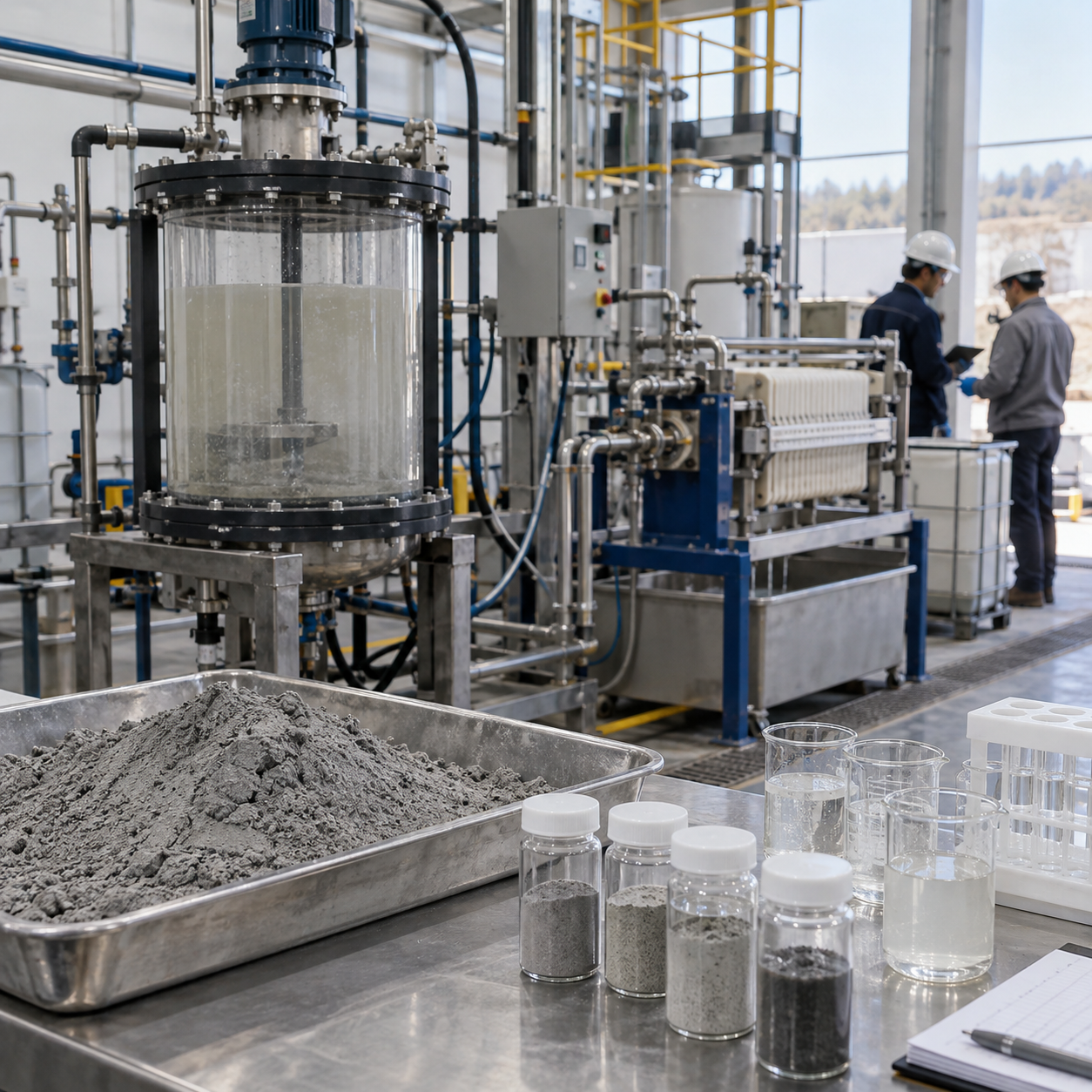
Coal fly ash can contain rare-earth elements dispersed through glassy aluminosilicate phases, iron-rich particles, calcium phases and accessory minerals. Nitric acid has been evaluated as a leachant, but direct leaching may deliver modest recovery when rare earths remain locked in resistant glass. Ash source, combustion conditions, storage, particle size and pretreatment strongly influence the result. A commercial development program should compare nitric acid with other routes using complete element balances, impurity and residue data, reagent consumption and downstream separation rather than treating acid strength as the only variable.
For B2B implementation, assign purchasing, production, quality, engineering and EHS ownership before the first delivery. Approve receiving tests, sampling, storage, transfer, deviation response and retained-sample periods in writing. Compare representative nitric acid lots under the same process conditions and record mass balance, acceptable product output, emissions, waste load and equipment observations. Define who may authorize a temporary deviation and the evidence required before release. Review transport classification, package integrity, unloading connections and emergency response alongside laboratory results. Procurement should confirm lead time, minimum order, container loading, port documentation and contingency stock. Quality teams should trend concentration and impurity results rather than check only pass or fail, while production records actual acid consumption per tonne of acceptable output. Close every trial with a written conclusion, updated specification and requalification triggers. A periodic supplier review can then combine delivery, complaint response, COA trends and process performance into one evidence-based decision. Before routine purchasing, complete a mock receiving exercise covering document review, sampling, quarantine, release and discrepancy handling. Confirm that storage capacity and unloading schedules match delivery size, and maintain a current contact list for logistics, quality and emergency escalation. These controls reduce avoidable delays when a shipment, seal or analytical result differs from expectation.
Characterize ash by source and mineralogy
Measure major oxides, rare earths, trace metals, unburned carbon, particle size, glass content and crystalline phases. Composite samples across operating periods and storage zones to capture variability.
Define the recovery objective
State target elements, acceptable co-dissolution, final product, residue reuse and regulatory limits. Total rare-earth extraction can hide poor selectivity or loss of value in a difficult mixed liquor.
Use literature to set realistic expectations
A Metallurgy review of rare-earth recovery from coal fly ash reports that nitric-acid performance depends heavily on ash composition and pretreatment and may be limited in resistant feeds.
Compare direct and pretreated routes
Test physical separation, thermal or alkaline activation only within an approved development plan. Include untreated controls and calculate the added energy, reagent, water and waste created by each pretreatment.
Track every element through the flowsheet
Analyze rare earths, aluminum, iron, calcium, silicon and regulated trace metals in liquor, wash, residue and intermediate products. Close mass balances before claiming recovery.
Assess downstream separation early
Use representative leach liquor to test purification, solvent extraction, ion exchange or precipitation. High extraction can be uneconomic when aluminum, iron or calcium dominates the solution.
Pilot filtration and residue washing
Fine ash can settle slowly, blind filters and retain nitrate liquor. Measure thickening, filtration rate, cake moisture, wash efficiency and recycle-water buildup under realistic solids loading.
Plan corrosion and emissions controls
Select compatible reactors, pumps and filters; provide closed addition, ventilation, NOx assessment, containment and emergency procedures. Characterize washed residue and wastewater before disposal or reuse.
Qualify acid supply against process needs
Specify concentration, assay, chloride, metals and residue. Compare acid lots in the same ash matrix and retain samples so unexpected recovery or corrosion changes can be investigated.
Prepare a mineral-processing inquiry
Provide concentration, trial volume, monthly forecast, package, destination and documents. Review the Hiacid nitric acid product page, then request a specification-based quotation.
Related nitric acid resources
- Nitric Acid for PV Panel Silver Recovery
- Nitric Acid for Pseudoboehmite Alumina Peptization
- Nitric Acid in Graphene Oxide Process Control
Frequently asked questions
Does nitric acid efficiently leach every coal fly ash?
No. Rare-earth occurrence, glass structure, calcium content and pretreatment can change recovery substantially.
Why is total extraction not enough?
Co-dissolved aluminum, iron, calcium and trace metals can make downstream separation costly or impractical.
What should be measured in the residue?
Measure remaining rare earths, regulated metals, nitrate carryover, leachability, moisture and properties relevant to reuse.
When should pretreatment be considered?
Only after mineralogy and direct-leach tests show that target elements are locked and the added cost and waste can be justified.