
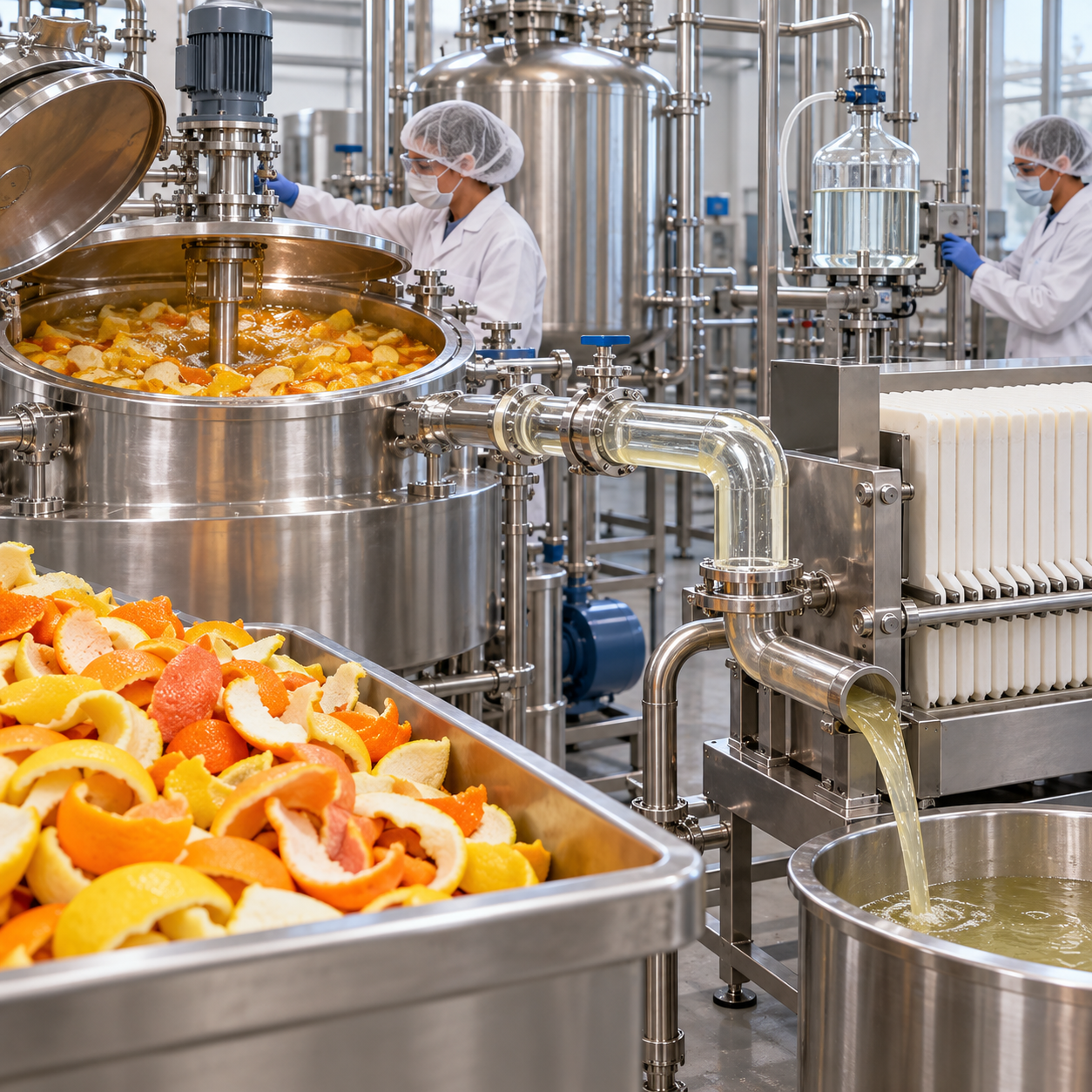
Pectin can be recovered from citrus peel, apple pomace and other fruit-processing side streams through controlled acidic extraction followed by solid-liquid separation, purification and drying. Research has also examined acetic acid for pectin extraction from watermelon rind. A commercial ingredient process must control more than yield: degree of esterification, galacturonic acid, methoxy content, color, ash, viscosity, microbiology and application performance define value. If glacial acetic acid is diluted for an approved extraction, the supplier grade, water quality, dosing accuracy and impurity profile become part of the food-safety plan. Traceability must connect every acid delivery to the extraction batch, finished ingredient and release record. This article covers B2B qualification and not an extraction recipe.
For industrial qualification, assign purchasing, quality, engineering, operations, logistics and EHS ownership before the first commercial delivery. Approve glacial acetic acid assay, impurity limits, analytical methods, sampling, storage, dilution or dosing equipment, deviation response and release authority in writing. Compare representative lots under controlled conditions and record process performance, mass balance, waste, equipment observations and final product quality. This separates raw-material variation from changes in water, feedstock, equipment, operator or laboratory method.
Review the chain from supplier release through carrier, package, receiving connection and point of use because contamination or dilution can occur after final analysis. Reconcile ordered, received, stored and consumed quantities and investigate unexplained differences. Supplier scorecards should cover documentation accuracy, delivery condition, corrective-action quality and change notification as well as price. Qualify a contingency source before disruption using the same methods and process criteria. When buyer and supplier results differ, review sample representativeness, temperature, standards, calibration, detection limits and uncertainty before disposition. Procurement documents should define shelf life, minimum remaining life, seal condition, seasonal temperature and rejection criteria.
Glacial acetic acid is corrosive, combustible and has a pungent vapor. Its freezing point is near ordinary cool-weather conditions, so crystallization can disrupt delivery or measurement if not controlled. Use the current SDS, compatible materials, ventilation, ignition control, secondary containment and an approved emergency plan. The OSHA acetic acid data page and NIH PubChem record provide general identity and hazard context; local law, site procedures and the process hazard review remain controlling. Confirm emergency contacts, unloading hours and stop-work authority for every shipment.
Use published evidence as context
A 2023 peer-reviewed study reports acetic-acid extraction of pectin from watermelon rind and evaluates extraction variables and product characteristics. Its laboratory conditions require independent food-process validation.
Translate evidence into site qualification
Define feed, equipment, analytical methods, acceptance criteria and stop conditions before trials. Scale only after replicated data, a reviewed hazard assessment and documented product and waste routes support the decision. Close qualification with an authorized report, approved-supplier status and a routine monitoring plan.
Define the target pectin application
Set requirements for high- or low-methoxyl grade, degree of esterification, galacturonic acid, ash, moisture, color, viscosity, gel strength and microbiology.
Use application-based release tests
Jam, beverage, confectionery, dairy-alternative and pharmaceutical uses may respond differently. Evaluate the pectin in representative customer formulations.
Qualify fruit side streams and acid
Characterize peel or pomace variety, maturity, storage, washing, particle size and native pectin. Require food-grade acid identity, assay, water, related organics, metals and residue.
Control dilution water and traceability
Use water meeting the applicable food standard and record acid lot, water source, preparation mass, verification and tank. Prevent cross-contact with non-food chemicals.
Close yield and quality balances
Reconcile dry feed, extract, press cake, washes, precipitate, mother liquor and dried pectin. Report yield on a clear dry basis and account for retained moisture.
Avoid optimizing yield alone
Severe extraction may increase apparent recovery while damaging molecular weight, color or gelling performance. Select conditions from the complete quality profile.
Validate separation and finishing
Measure filterability, wash demand, solvent recovery where used, drying behavior, particle size and dust control. Define hygienic cleaning and allergen or cross-contact controls.
Establish shelf life in commercial packaging
Monitor moisture, microbiology, color, viscosity and functional performance under expected temperature and humidity. Verify barrier and closure integrity.
Build food-supply governance
Require food-grade declarations, COA, SDS, lot traceability, change notification and applicable regulatory or religious documentation. Audit storage and transport cleanliness.
Prepare a pectin-project inquiry
Provide food-grade specification, package, pilot and annual demand, destination and documentation needs. Review the Hiacid glacial acetic acid page, then request a food-industry supply discussion.
Related glacial acetic acid resources
- Glacial Acetic Acid for Ketene Manufacturing
- Glacial Acetic Acid for Dimethylacetamide Manufacturing
- Glacial Acetic Acid for Zinc-Nickel Electroplating
Frequently asked questions
Can industrial acid be used for food pectin automatically?
No. Use an approved food-grade material within the manufacturer’s food-safety and regulatory system.
Is the highest extraction yield always best?
No. Excess severity can reduce molecular quality, color, viscosity or gelling performance.
Why characterize every fruit side-stream lot?
Variety, maturity, storage and prior processing change native pectin and extraction behavior.
Does this article give an extraction formula?
No. It provides a raw-material and process-qualification framework without operating conditions.