Buying phosphorous acid for industrial use is not simply a matter of comparing one purity number and one price. The right material must fit the process, quality-control plan, packaging system, destination rules and delivery schedule. This phosphorous acid buying guide gives procurement and technical teams a practical framework for evaluating offers before placing an order.
Define the required phosphorous acid specification
Start with the application rather than a generic grade name. Phosphorous acid is commonly identified as H3PO3, and commercial specifications may report assay, appearance, iron, chloride, phosphate and other controlled impurities. The relevant limits depend on how the material will be used. A specification that is adequate for one synthesis route may be unsuitable for a process that is sensitive to color or trace metals.
Build a purchase specification
A useful purchase specification should state the test method and acceptance limit for every critical parameter. It should also identify the physical form, sampling plan and any customer-specific requirements. Ask the supplier for a current product specification and recent certificates of analysis, then compare the results with your actual process limits.
- Assay or active-content requirement
- Appearance and physical form
- Limits for process-critical impurities
- Packaging size, pallet configuration and net weight tolerance
- Required COA, SDS, labeling and shipping documents
Review purity and batch consistency
A high nominal assay does not by itself prove consistent performance. Review several recent COAs to see whether results remain comfortably within specification or move close to the acceptance limits. Ask how incoming raw materials, production batches and final release tests are controlled. For repeat purchases, batch-to-batch consistency can be more valuable than a small difference in headline purity.
A representative sample may be appropriate before a large order. Test it under the intended process conditions and document the result. The sample must be traceable to its batch and should represent the grade that will actually be shipped.
Select packaging for the supply chain
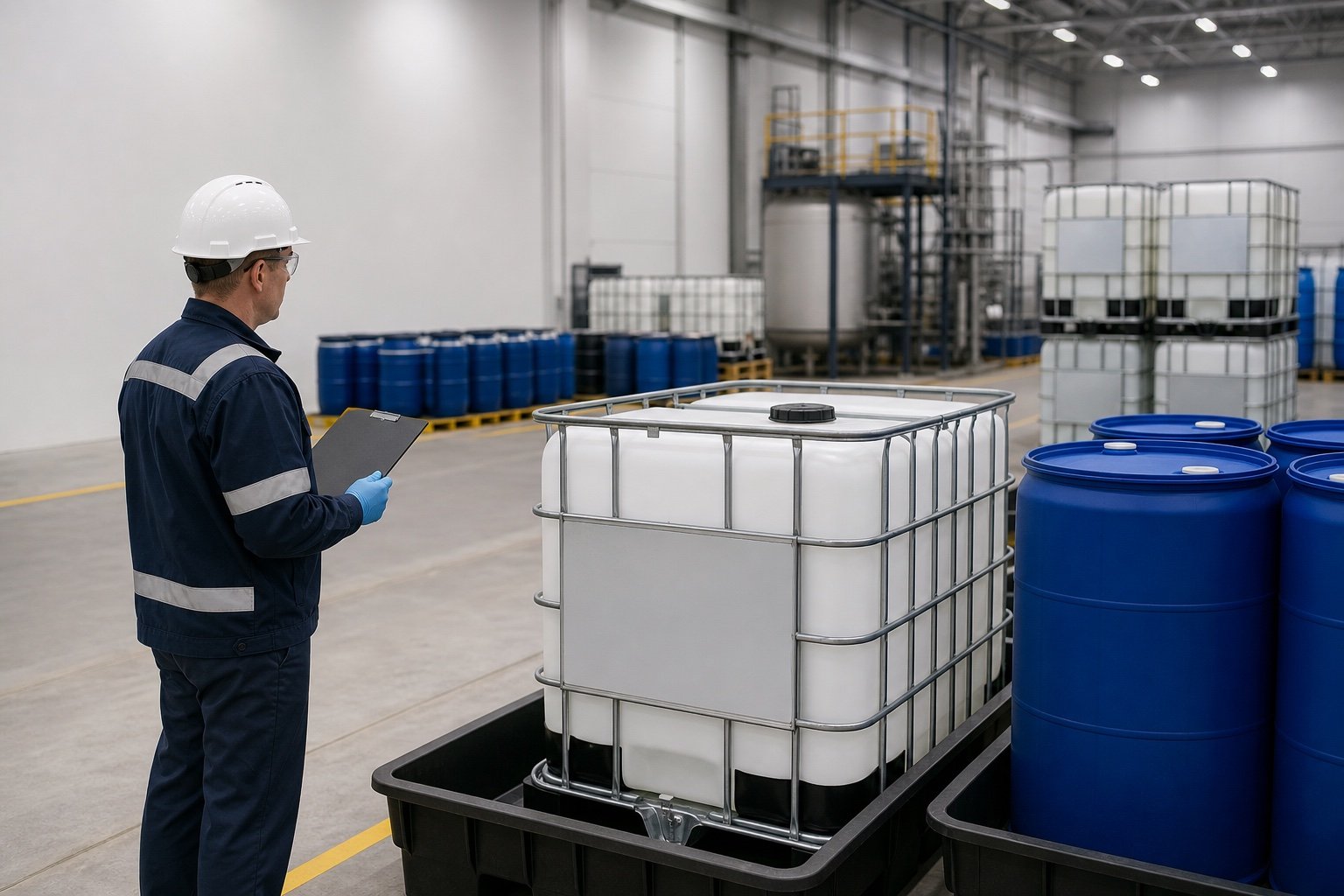
Packaging should protect the product through filling, inland transport, container loading, ocean freight and customer storage. Discuss the available drum, bag or bulk configurations with the supplier and confirm that the contact materials are compatible with the supplied form and concentration. The final choice should also match unloading equipment and local handling procedures.
Inspect packaging details before approval
Confirm closure type, liner or inner bag where applicable, pallet material, restraint method, labels and lot identification. For export shipments, ask for loading photos and a proposed container-loading plan. Good packaging is part of quality control: it helps prevent contamination, moisture exposure, leakage and handling damage.
Compare documents and commercial terms
Before approving a supplier, review the product specification, batch COA format, current safety data sheet and transport information. The quotation should clearly state grade, quantity, packaging, Incoterm, validity, lead time and payment terms. Compare landed cost rather than unit price alone, because packaging, freight, port charges and inventory risk can materially change the result.
For current product and packaging information, review our phosphorous acid product page. Buyers can also use the supplier evaluation checklist and the storage and handling guide before completing an approval.
Frequently asked questions
Which phosphorous acid grade should I buy?
Choose the grade whose tested specification matches your process and regulatory requirements. Share the application, target limits and expected annual volume with the supplier instead of relying only on a general grade label.
What should I check on a phosphorous acid COA?
Check the batch number, test date, assay, appearance and every impurity relevant to your process. Confirm that the methods and units match the agreed specification and that the certificate is traceable to the shipped lot.
Should I request a sample before ordering?
A traceable pre-shipment or qualification sample is useful when the application is sensitive, the supplier is new or the purchase volume is significant. Approval should be based on documented testing under representative conditions.
How can I request a phosphorous acid quotation?
Send the required grade, specification, quantity, packaging, destination port and delivery schedule through the Hiacid contact page. Providing complete requirements helps the supplier prepare an accurate technical and commercial offer.