Sulfuric acid is corrosive and reacts strongly with water while releasing heat. Safe storage and handling therefore depend on engineered controls, compatible materials, trained personnel and a site-specific risk assessment. This overview supports planning, but the current supplier safety data sheet, applicable regulations and professional engineering review must govern each facility.
Design storage around concentration and compatibility
The storage system must match acid concentration, temperature, water content and contamination risk. Tank, piping, gasket, valve and pump materials should be selected by a qualified engineer using reliable compatibility data. A material that performs well with concentrated acid may behave differently after dilution.
Provide containment and controlled drainage
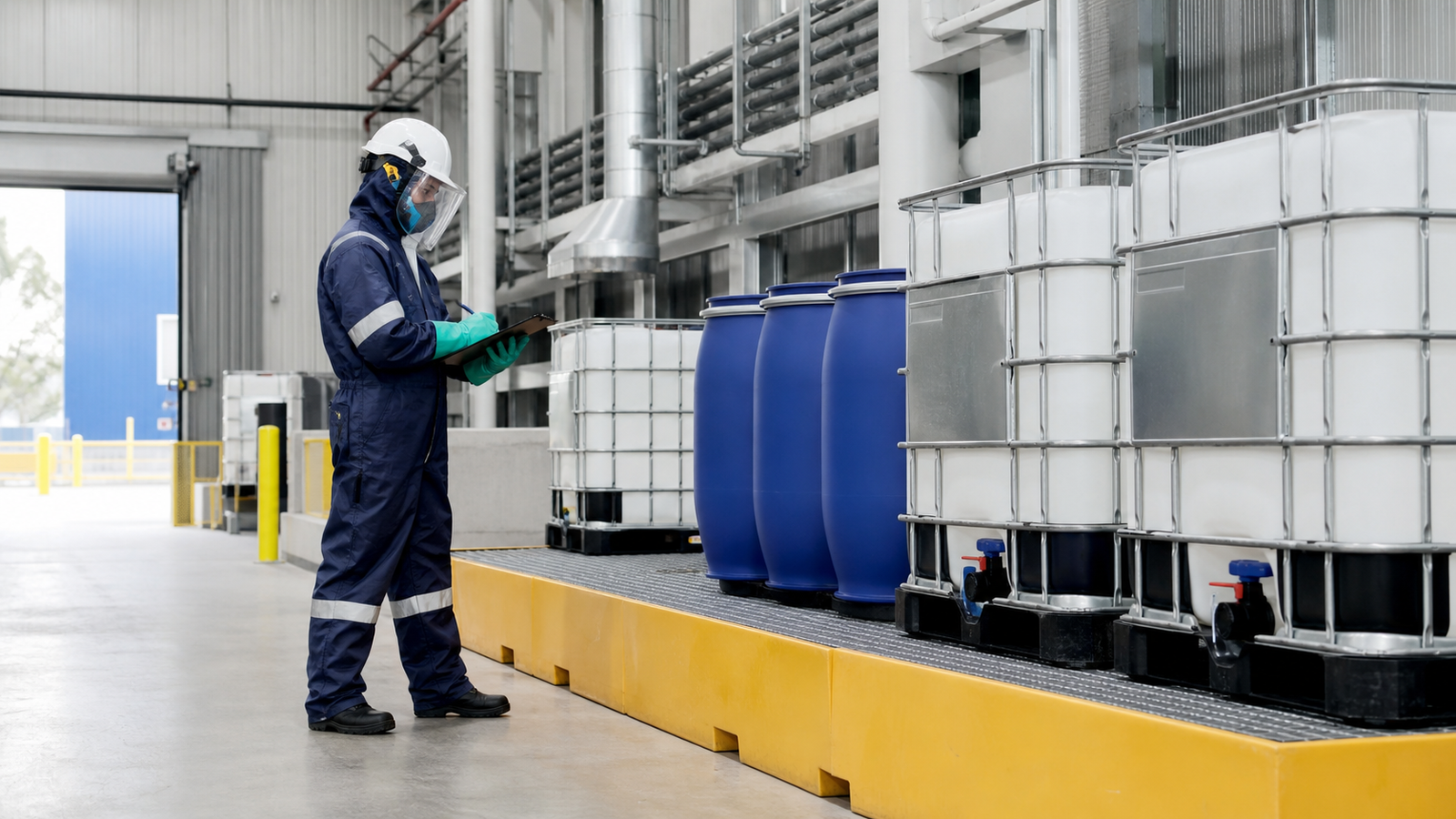
Use secondary containment sized and constructed for the installation and protected from incompatible drainage. Keep the area dry, accessible for inspection and separated from incompatible materials. Provide ventilation, controlled transfer points, suitable eyewash and emergency shower facilities according to the site assessment.
Control transfers and dilution
Closed transfer systems, verified connections and written procedures reduce exposure and misdelivery risk. Sulfuric acid dilution is highly exothermic. Follow the engineered procedure and the fundamental rule of adding acid to water in a controlled manner, never water to concentrated acid. The receiving system must be able to manage the generated heat.
Use task-specific PPE
PPE selection depends on concentration, splash potential, ventilation and task. Chemical splash protection, compatible gloves and protective clothing are common elements, but PPE is the final layer after elimination, substitution and engineering controls. Respiratory protection requires a formal program and exposure assessment.
Prepare for leaks, exposure and emergencies
Create a written plan for isolation, notification, evacuation, spill control, decontamination and medical response. Only trained and equipped personnel should respond. Neutralization and cleanup methods must be selected for the quantity, concentration, location and local rules. Do not improvise with incompatible absorbents or uncontrolled water addition.
Inspect each delivery
Before unloading, confirm product, concentration, lot, documents, seals, vehicle condition, hose and coupling compatibility, available tank capacity and the correct receiving connection. Maintain communication between driver and site operator throughout transfer.
Keep safety information current
Review the current SDS and local legal requirements whenever the source, concentration, package or process changes. NIOSH identifies sulfuric acid as corrosive to skin, eyes and the respiratory system. Pair this guide with the buying guide and request product documents from the Hiacid product page.
Related sulfuric acid resources
- Sulfuric Acid Buying Guide: Concentration, Packaging and Supplier Checks
- Sulfuric Acid Concentrations and Grades: How to Read a Specification
- Sulfuric Acid Uses: Fertilizers, Metals, Refining and Water Treatment
Frequently asked questions
Why is dilution a critical sulfuric acid hazard?
Mixing sulfuric acid and water releases substantial heat. Use an engineered procedure and add acid to water in a controlled manner, never water to concentrated acid.
Can one construction material suit every concentration?
No. Compatibility can change with concentration, temperature, contaminants and flow conditions; obtain qualified engineering guidance.
What should be checked before unloading?
Verify identity, concentration, seals, documents, receiving capacity, connections, hose compatibility and operator communication.
Is PPE enough to control sulfuric acid risk?
No. Engineering controls, closed systems, ventilation and procedures come first; PPE is one part of a complete control system.