Glacial acetic acid is miscible with water, but dilution is not simply a matter of combining two volumes. Mixing releases heat, changes density and can create corrosive vapor or splash exposure. Industrial dilution should use a written, engineered procedure with controlled acid-to-water addition, mixing, cooling, ventilation and verified materials. This article explains planning principles; it is not a substitute for the current SDS or site process-safety review.
Calculate on a mass basis
For a planned final solution mass, the required feed mass can be estimated as: target acid mass fraction × final solution mass ÷ feed acid mass fraction. For example, producing 1,000 kg of 20.0% solution from 99.5% feed requires about 201.0 kg of feed acid and 799.0 kg of water before any process allowances.
Do not use simple volume addition
Volumes are not reliably additive, and density changes with concentration and temperature. Metering by calibrated mass is generally easier to reconcile with the batch record. Engineering calculations should include actual feed assay, heel, line contents, sampling and the permitted final tolerance.
Add acid to water under control
Establish the water charge and mixing before introducing acid. Add acid gradually into water through a closed, controlled point; do not add water into a large quantity of concentrated acid. The addition rate must remain within the cooling, agitation and vent-handling capacity of the system.
Control temperature and vapor
Monitor temperature at representative locations and define high-temperature alarms or interlocks as required. Provide ventilation or closed vapor management based on the risk assessment. NIOSH lists acetic acid as a combustible liquid and identifies serious eye, skin and respiratory hazards, so ignition control and exposure prevention belong in the procedure.
Verify equipment compatibility
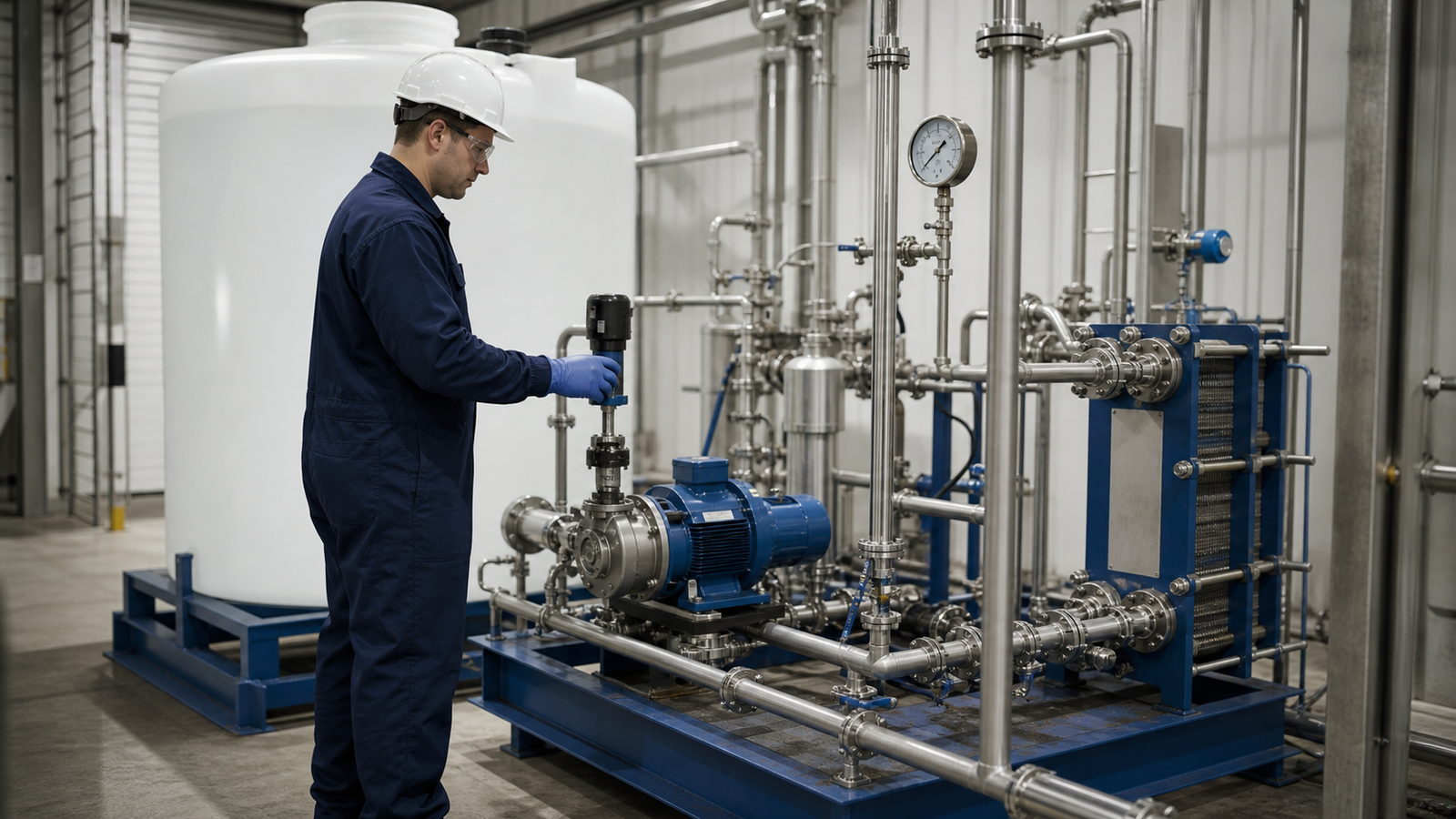
Review tank, mixer, piping, pump, gasket, instrument and heat-exchanger materials for both concentrated acid and every intermediate dilution. Compatibility can change with concentration, temperature and contamination. Secondary containment, emergency shower and eyewash provisions should match the site assessment.
Sample only after adequate mixing
After addition and cooling, continue mixing for the validated time before sampling. Verify concentration with the approved method and record feed lots, masses, temperatures and results. If adjustment is required, use the same controlled mass-balance approach rather than making an unrecorded correction.
Coordinate supply with the dilution design
Feed assay and lot consistency affect every batch calculation. Review the glacial acetic acid product page, compare package choices in the drum, IBC and ISO tank guide, and contact Hiacid with the required grade and shipment size.
Related glacial acetic acid resources
- Glacial Acetic Acid in Vinyl Acetate Monomer Production
- Glacial Acetic Acid for Acetate Ester Manufacturing
- Glacial Acetic Acid Packaging: Drums, IBCs and ISO Tanks
Frequently asked questions
Should water be added to glacial acetic acid?
Industrial procedures normally establish water and then add acid gradually under controlled mixing and cooling; the site engineer and SDS must govern the operation.
Why calculate dilution by mass?
Mass avoids errors from temperature-dependent density and non-additive solution volumes.
Is dilution exothermic?
Yes. Heat release requires a controlled addition rate, adequate mixing, temperature monitoring and sufficient cooling capacity.
When should concentration be tested?
Test after the batch is fully mixed and cooled according to the validated sampling and analytical procedure.