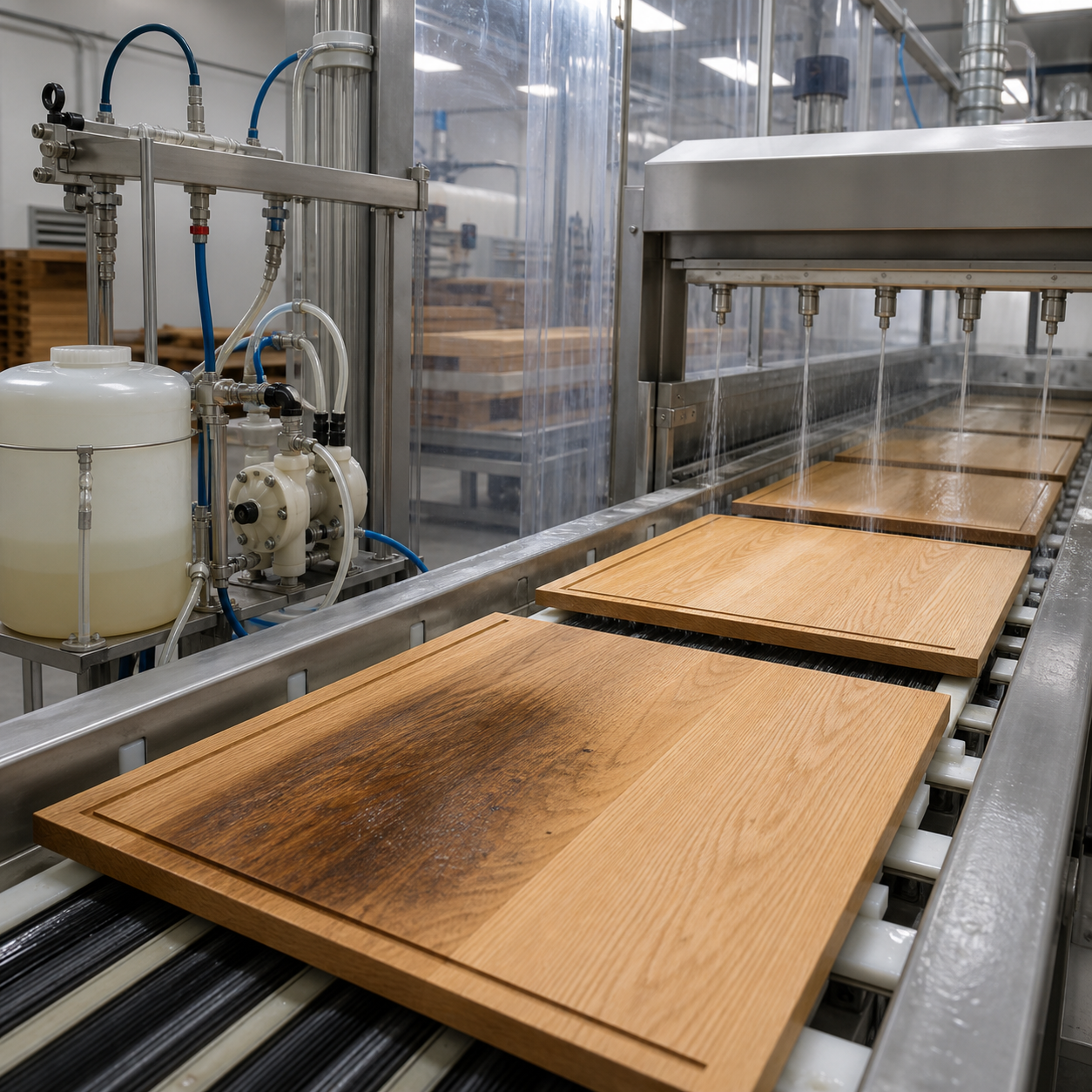
Blue-black or gray iron staining on wood can occur when iron contacts tannin-rich extractives in the presence of moisture. Professional restoration and wood-processing operations may use oxalic acid solutions to reduce this discoloration, but diagnosis matters. Iron stain is not the same as fungal blue stain, weathering, mildew, adhesive bleed or coating failure. Treating the wrong problem can waste chemical, damage a finish or leave the source of staining in place. A controlled program should identify the wood species and finish, test a small area, remove iron contamination, define solution strength and contact time, rinse thoroughly and verify dryness before recoating. Production users should also standardize solution preparation, application tools, rinse-water collection and acceptance lighting so one operator or shift does not deliver a visibly different result from another.
For B2B implementation of Oxalic Acid for Wood Iron-Stain Removal and Brightening, define ownership across purchasing, production, quality, engineering and EHS before the first delivery. Approve the receiving test, sampling tools, storage method, dosing basis, deviation response and retained-sample period in writing. This shared control plan helps separate raw-material variation from equipment or operating changes and gives both buyer and supplier objective evidence when investigating performance.
Confirm that the discoloration is iron stain
Inspect fasteners, steel wool residue, wire-brush contact, cutting equipment and water pathways. Iron-tannin staining is common on oak, cedar, redwood and other extractive-rich woods, but visual appearance alone is not definitive. Test in an inconspicuous area and document the original surface condition.
Remove the continuing iron source
Cleaning may improve color, but staining can return if corroding fasteners or embedded iron remain. Replace or isolate the source where the construction permits, and use compatible corrosion-resistant hardware for future work. Correct moisture entry before applying a new finish.
Design a repeatable treatment trial
Prepare solution with controlled water quality, mass measurement and safe dissolution. Establish coverage, contact time and temperature on representative panels. Keep adjacent materials protected because acid and rinse water can affect metals, masonry or landscaping. Do not apply a published concentration blindly to an unknown finish or veneer.
Evaluate color after drying
Wet wood looks darker and can hide uneven treatment. Rinse and dry the test area under the planned production conditions before approving appearance. Compare treated and untreated control areas in consistent lighting. Record wood species, acid lot, solution age and number of applications.
Control acid quality and dissolution
Specify oxalic acid form, assay, insoluble matter, color and relevant metals. Granule size and caking affect dissolution and dosing in larger operations. Use enclosed opening, dust capture and clean mixing equipment so foreign particles do not mark the wood surface.
Avoid cross-contamination
Steel tools, rusty containers or contaminated rinse equipment can reintroduce iron. Use approved nonstaining tools and keep the work area separated from grinding or steel-wire operations. Do not return unused solution or samples to the original package.
Rinse, dry and manage wastewater
The USDA wood-finishing guidance emphasizes washing the surface after oxalic-acid treatment. Define rinse volume and collection based on the job and local rules. Verify the surface is dry and within coating requirements before sanding or finishing.
Use source-specific guidance
The USDA Forest Products Laboratory iron-stain resource explains the iron-tannin mechanism and the role of oxalic acid. It also cautions users about exposure. Professional operations should integrate the current SDS and site controls.
Qualify supply for professional use
Review multiple COAs, package integrity, moisture protection, traceability and change notification. Inventory should remain dry and sealed. Train workers for dust and solution hazards; NIOSH lists eye, skin, respiratory and kidney concerns.
Prepare a wood-processing RFQ
State form, assay, insoluble matter, package size, annual volume, destination, COA and SDS language. Review the Hiacid oxalic acid product page, the supply overview and the anodizing guide, then contact Hiacid.
Related oxalic acid resources
- Oxalic Acid for Aluminum Anodizing and Process Control
- Oxalic Acid in Lithium-Ion Battery Recycling Processes
- Oxalic Acid for Heavy-Metal Wastewater Precipitation
Frequently asked questions
Does oxalic acid remove every dark wood stain?
No. It is especially associated with iron-tannin staining; other discoloration needs different diagnosis and treatment.
Why can staining return?
The iron source or moisture pathway may remain even after the surface color improves.
Should appearance be judged while wet?
No. Rinse and dry the test area before evaluating final color and coating suitability.
Which handling issue matters for powdered acid?
Control dust, prevent skin and eye contact, maintain dry storage and follow the current SDS.