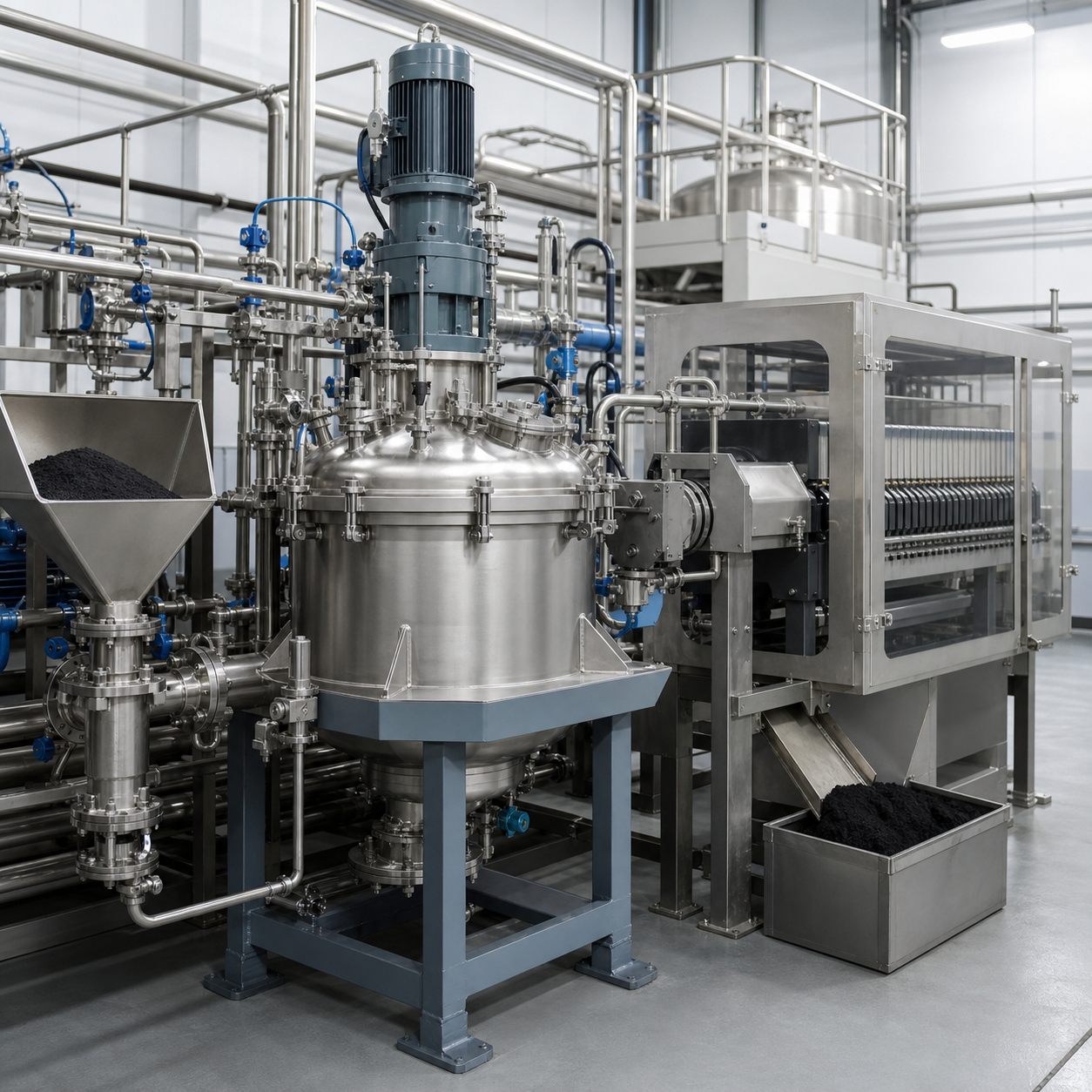
Hydrometallurgical lithium-ion battery recycling research includes routes that use oxalic acid for leaching, selective precipitation or production of metal-oxalate intermediates. Performance depends on battery chemistry, black-mass preparation, oxidation state, acid stoichiometry, temperature, pH, residence time and solid-liquid separation. A method developed for lithium cobalt oxide cannot automatically be applied to nickel-rich or mixed feed. Recyclers should define recovery, selectivity, product purity, reagent consumption, wastewater and safety targets through laboratory and pilot testing. Oxalic acid purchasing then needs to support the approved route with consistent assay, crystal form and low levels of process-sensitive impurities rather than a generic “battery grade” claim. Scale-up should include emergency venting, slurry transfer, filter capacity and off-spec disposition, since a chemically promising bench test may fail when solids accumulate or feed composition changes.
For B2B implementation of Oxalic Acid in Lithium-Ion Battery Recycling Processes, define ownership across purchasing, production, quality, engineering and EHS before the first delivery. Approve the receiving test, sampling tools, storage method, dosing basis, deviation response and retained-sample period in writing. This shared control plan helps separate raw-material variation from equipment or operating changes and gives both buyer and supplier objective evidence when investigating performance.
Characterize the black-mass feed
Measure lithium, cobalt, nickel, manganese, copper, aluminum, iron, graphite, fluoride and binder-related material across representative lots. Residual charge and physical hazards must be controlled before wet processing. Feed variability can change acid demand and precipitate composition more than a small difference between acid suppliers.
Choose the role of oxalic acid
Distinguish direct leaching from precipitation after another leach step. In some flowsheets, metal oxalates are filtered while lithium remains in solution; in others, oxalic acid participates in a broader electrochemical or solvent system. Each role requires different purity, dosing and recovery controls.
Build a complete mass balance
Track oxalate, target metals, impurities, wash water and residual acid through reaction, filtration and product treatment. Analyze both solids and filtrate. High apparent cobalt recovery is not enough if lithium is lost, impurity rejection is poor or oxalate wastewater becomes difficult to manage.
Control nucleation and filtration
Concentration, pH, temperature, addition rate, agitation and aging influence crystal size and filterability. A fine precipitate may meet chemical yield but overload filtration or retain mother liquor. Pilot the actual reactor and filter configuration before defining production-scale reagent demand.
Specify application-sensitive acid quality
Assay, hydrate form, insoluble matter, iron, copper, chloride, sulfate and other metals may affect product purity. Select limits from the flowsheet and final-product requirement. Review actual COAs and retained samples across several lots.
Reconcile solid and solution dosing
Oxalic acid dihydrate contributes crystal water and dissolves with a temperature-dependent rate. Define whether the recipe uses mass of commercial product, anhydrous equivalent or solution concentration. Calibrate scales, solution tanks and sampling so the stoichiometric basis remains clear.
Plan residues and recycle
Evaluate oxalate remaining in raffinate, wash streams and off-spec solids. Consider acid recovery or destruction only within a validated process. Recycle can reduce demand but may accumulate sodium, sulfate, fluoride or metals.
Use current development evidence cautiously
A published battery-recycling patent application describes an oxalic-acid system that separates cobalt and copper oxalates. It demonstrates one route, not a universal commercial design. Independent validation and environmental permitting remain necessary.
Scale handling safely
Oxalic acid dust and solutions require enclosed transfer, ventilation, compatible equipment and emergency facilities. NIOSH identifies exposure limits and kidney, eye, skin and respiratory hazards. Apply the current SDS and formal process-safety review.
Issue a recycling RFQ
State hydrate form, assay, critical metals, insoluble matter, methods, trial and commercial volume, package, destination, COA and change control. Review the Hiacid oxalic acid product page and supply page, then request samples and scale-up pricing.
Related oxalic acid resources
- Oxalic Acid for Aluminum Anodizing and Process Control
- Oxalic Acid for Wood Iron-Stain Removal and Brightening
- Oxalic Acid for Heavy-Metal Wastewater Precipitation
Frequently asked questions
Is oxalic acid used the same way in every battery-recycling process?
No. It may serve in leaching, precipitation or a combined route, depending on battery chemistry and flowsheet.
Why is feed characterization essential?
Mixed battery chemistries and contaminants change acid demand, selectivity and product purity.
What controls metal-oxalate filterability?
Concentration, pH, temperature, addition rate, agitation and aging affect crystal size and filtration.
Does high cobalt recovery prove the process is viable?
No. Lithium recovery, impurity rejection, reagent use, filtration and wastewater must also meet targets.