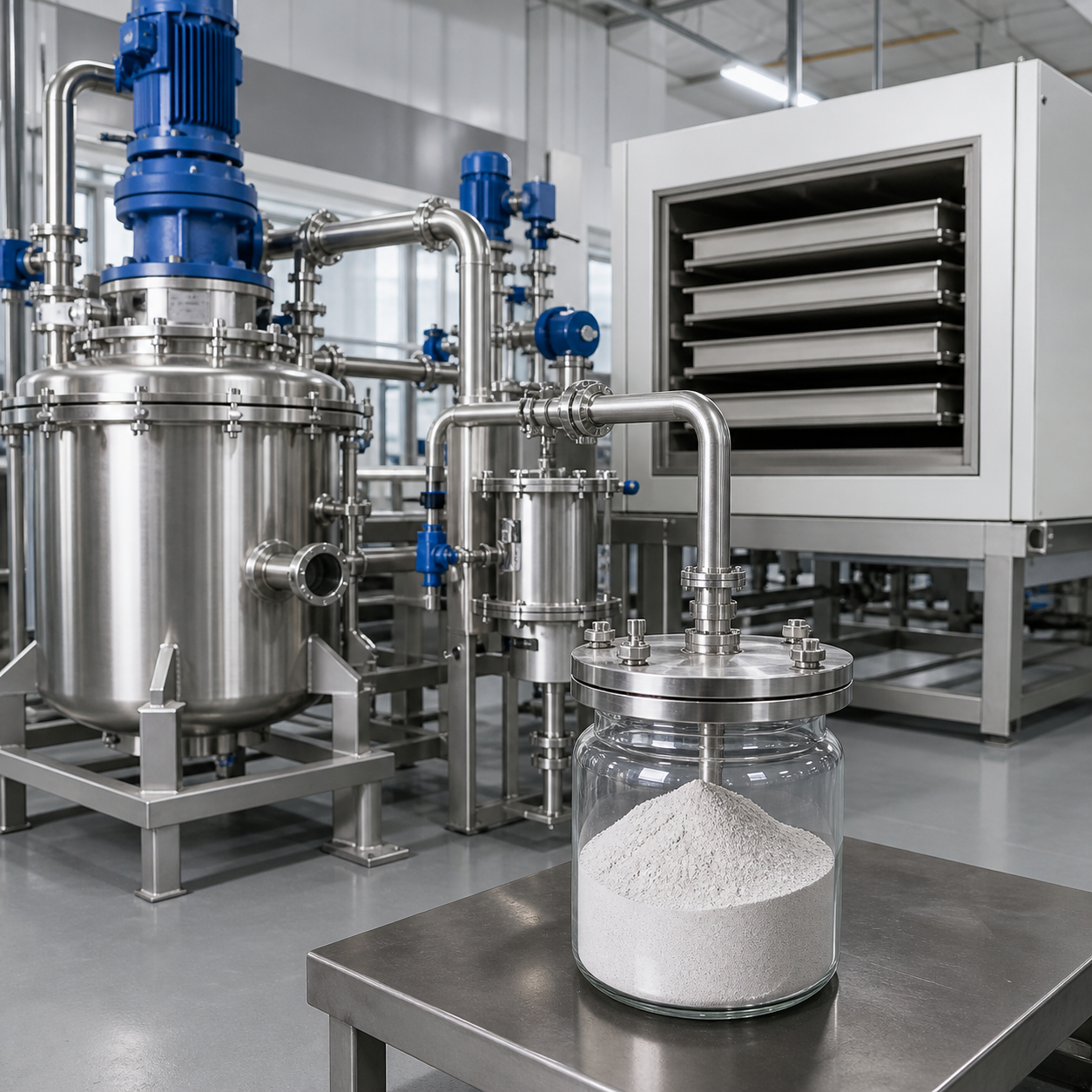
Metal-oxalate precipitation is used in selected routes for producing fine oxide and ceramic precursor powders. Oxalic acid can react with dissolved metal ions to form an oxalate solid that is filtered, washed, dried and thermally decomposed or calcined to the target oxide. Final powder properties depend on solution purity, metal ratio, pH, acid addition rate, mixing, temperature, aging, washing and heat treatment. Procurement teams should not assume that commodity assay alone controls ceramic performance. The approved oxalic acid grade must be tested through the complete precursor process, with attention to trace metals, insoluble matter and batch-to-batch consistency. Qualification should compare multiple raw-material lots through precipitation, filtration, calcination and final sintering or functional testing. A small change in soluble ions or particle contamination can be amplified during powder processing, so retained samples and lot-linked performance data are essential.
For B2B implementation of Oxalic Acid for Metal-Oxalate Ceramic Precursors, define ownership across purchasing, production, quality, engineering and EHS before the first delivery. Approve the receiving test, sampling tools, storage method, dosing basis, deviation response and retained-sample period in writing. This shared control plan helps separate raw-material variation from equipment or operating changes and gives both buyer and supplier objective evidence when investigating performance.
Define the target oxide and precursor
Specify chemical composition, phase, particle size distribution, surface area, morphology, agglomeration, sintering behavior and functional performance. Work backward to define acceptable oxalate composition and precipitation window. Different products may need different excess oxalate or washing intensity.
Control the metal solution first
Impurities in metal salts, water and dissolution equipment can exceed those from oxalic acid. Analyze all feeds and use a mass balance for sodium, chloride, sulfate and trace metals. A clean precipitant cannot compensate for an uncontrolled metal solution.
Engineer nucleation and growth
Acid concentration, addition rate, temperature, pH and mixing determine supersaturation. Uncontrolled local addition can create fines or composition gradients. Validate feed location and scale-up mixing with representative equipment.
Use aging to stabilize filtration behavior
Aging can change crystal size and mother-liquor release. Define time and temperature from data, then monitor slurry density and filter performance. Do not shorten aging simply to increase throughput without confirming powder properties after calcination.
Wash and dry without recontamination
Washing removes soluble ions but can also lose fines or alter agglomeration. Set endpoint conductivity or ion limits and verify filter-cake uniformity. Use compatible dryer materials and controlled temperature.
Connect calcination to the precursor lot
Thermal decomposition converts the oxalate and releases gases. Establish a heating profile, ventilation and load geometry that deliver the required phase and morphology. Link furnace batch data to oxalic acid and metal-salt lots for traceability.
Specify acid purity by product risk
Potential controls include assay, hydrate form, insoluble matter, iron, sodium, chloride, sulfate and selected metals. Choose limits from the target ceramic and analytical capability. Review several COAs and production trials before approving a source.
Use research references as context
A NIST publication on electronic ceramic materials discusses chemical precursor approaches. Technical literature supports development, but each producer must validate its own precipitation and calcination system.
Manage powder and acid exposure
Use enclosed solid charging, dust extraction and clean transfer. NIOSH describes oxalic acid as an exposure hazard and combustible solid with specific incompatibilities. Dry oxalate and oxide powders may require separate exposure and combustible-dust assessment.
Prepare a precursor-grade RFQ
State form, assay, trace-metal and insoluble limits, methods, annual volume, package, destination, COA and change control. Review the Hiacid oxalic acid record and supply page, then request qualification samples.
Related oxalic acid resources
- Oxalic Acid for Aluminum Anodizing and Process Control
- Oxalic Acid for Wood Iron-Stain Removal and Brightening
- Oxalic Acid in Lithium-Ion Battery Recycling Processes
Frequently asked questions
Why use metal oxalates as ceramic precursors?
They can provide a controlled intermediate that is filtered and thermally converted to selected oxide powders.
What controls oxalate particle size?
Supersaturation, pH, temperature, addition rate, mixing and aging all influence nucleation and growth.
Is high oxalic-acid assay sufficient?
No. Trace ions, insoluble matter, hydrate form and lot consistency can affect precursor and final powder quality.
Why link calcination data to acid lots?
Final phase and morphology depend on both precursor chemistry and thermal history, so complete traceability supports investigations.