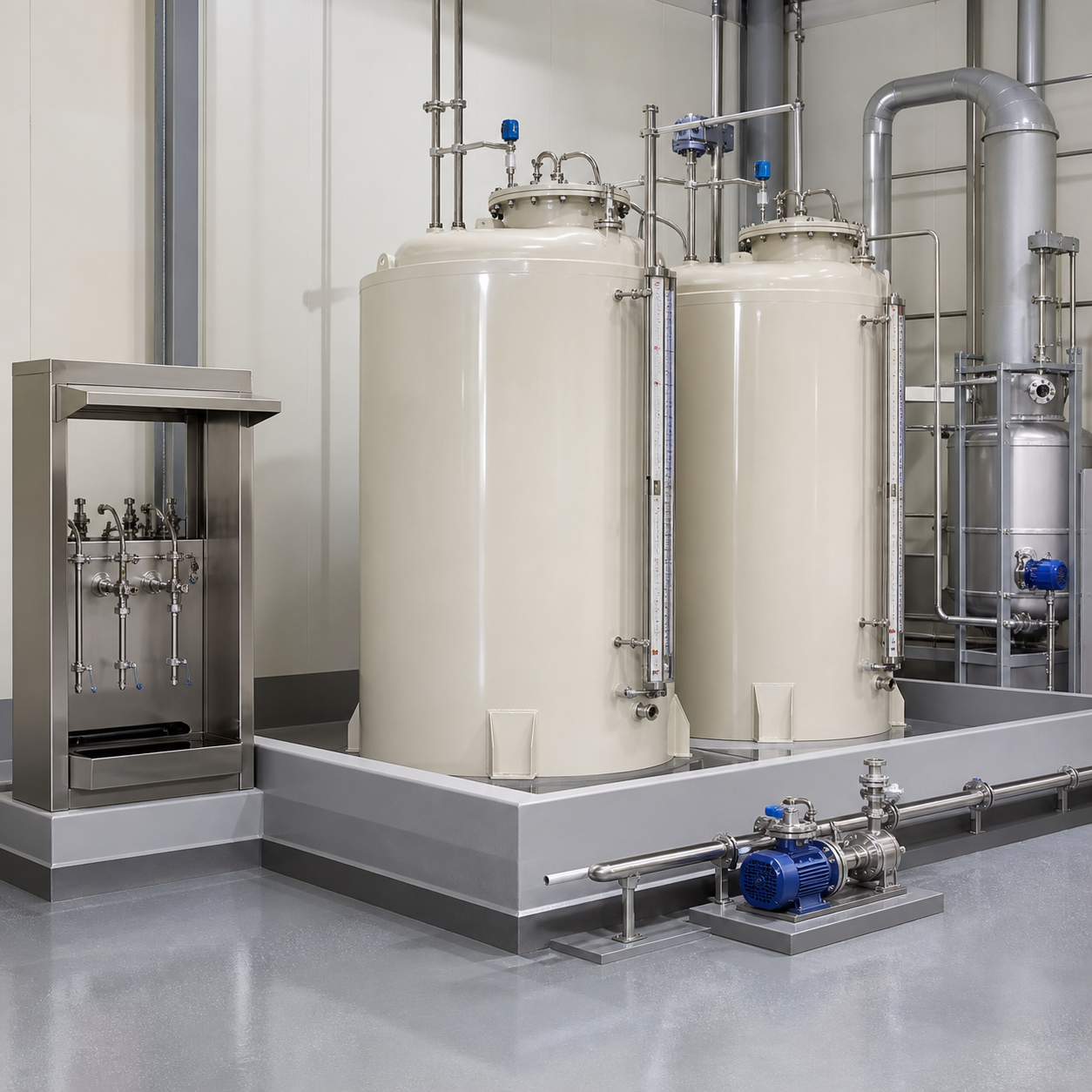
Nitric acid storage cannot be designed from a generic “acid resistant” label. Compatibility depends on concentration, temperature, aeration, contaminants, stress, fabrication quality and expected service life. Nitric acid is also a strong oxidizer, so segregation from organic materials, reducing agents and other incompatibles is fundamental. A safe installation requires process engineering, supplier data, applicable codes and a formal hazard review. The tank is only one component: fill connection, vent, scrubber, overflow, level instruments, valves, gaskets, piping, pump, sampling point, secondary containment and unloading area must work as a system. Changes in concentration or supplier packaging can alter the approved envelope. Facilities should maintain a documented materials basis, inspection plan and retirement criteria rather than waiting for visible leakage. Operators need clear line identification and transfer authorization to prevent wrong-connection events. Emergency response should be developed with site responders and local requirements, using the current SDS and realistic maximum-release scenarios.
For B2B implementation of Nitric Acid Storage, Transfer and Material Compatibility, assign ownership across purchasing, quality, production, engineering, logistics and EHS before the first delivery. Approve the receiving test, compatible handling system, deviation response, retained-sample period and supplier-change process in writing. This shared control plan helps separate raw-material variation from equipment or operating changes and provides objective evidence for investigations.
Define the complete service envelope
Record normal and maximum concentration, temperature, pressure, fill frequency, residence time and possible contaminants. Include startup, cleaning, water ingress and upset cases. A material that performs well in one concentration range may behave differently when diluted or heated.
Obtain concentration-specific compatibility evidence
Use chemical supplier guidance, equipment manufacturer data, recognized references and site experience. Confirm that data apply to the exact material grade, weld or lining system, gasket and fabrication method. Laboratory coupons may support selection but do not replace inspection of real equipment.
Design dedicated storage and containment
Provide compatible secondary containment, controlled access, protected fill point, overfill prevention, level indication and emergency isolation. Route vents through a system designed for normal breathing and credible upset conditions. Keep rainwater and incompatible materials out of containment.
Segregate oxidizer hazards
Do not store nitric acid with organic chemicals, combustible materials, reducing agents or other substances identified as incompatible by the SDS and hazard review. Segregation includes shared drains, vent headers, pumps, hoses and spill equipment, not merely distance between containers.
Engineer the transfer path
Use dedicated, clearly identified connections and compatible hose or fixed piping. Verify tanker identity, seal, available tank capacity, valve lineup and receiving authorization before transfer. Monitor the operation continuously according to site rules and stop on abnormal pressure, level, color, vapor or leakage.
Avoid contamination during sampling and maintenance
Sampling tools and maintenance materials can introduce incompatible contamination. Isolate, drain and prepare equipment through an approved permit procedure. Never assume a rinsed line is safe without verifying the cleaning method, residual chemistry and destination of rinsate.
Inspect degradation before failure
Establish external inspection, thickness or lining checks, gasket replacement and leak-detection testing based on risk. Record corrosion, discoloration, distortion, vent deposits and recurring maintenance. Trend findings and define engineering review or retirement thresholds.
Use authoritative safety references
The NIOSH Pocket Guide summarizes nitric acid exposure, symptoms and incompatibilities, while the NIH PubChem record provides additional hazard context. The current SDS and local code remain mandatory for the specific site.
Connect procurement to facility limits
The purchase specification should state the concentration and package approved by the facility. Procurement must not substitute a stronger concentration, different container or changed unloading connection without management of change. Require advance supplier notification of packaging and loading-point changes.
Prepare a storage-compatible RFQ
Provide concentration, shipment size, package or tanker requirements, approved connection, destination constraints, delivery schedule, COA and SDS language. Review the Hiacid nitric acid product and supply page and 68% procurement guide, then confirm delivery compatibility.
Related nitric acid resources
- 68% Nitric Acid Buying Specification for Industrial Supply
- Nitric Acid for Stainless Steel Passivation and Validation
- Nitric Acid for Industrial Metal Nitrate Production
Frequently asked questions
Is stainless steel always compatible with nitric acid?
No. Compatibility depends on alloy, concentration, temperature, contaminants, fabrication and service conditions.
Why must diluted and concentrated service be reviewed separately?
Changing concentration can change corrosion behavior and the approved materials envelope.
Does secondary containment solve segregation?
No. Incompatible drains, vents, hoses, pumps or spill materials can still create dangerous contact.
Can procurement change package type without engineering review?
No. A new package or connection can affect compatibility, unloading and emergency controls.