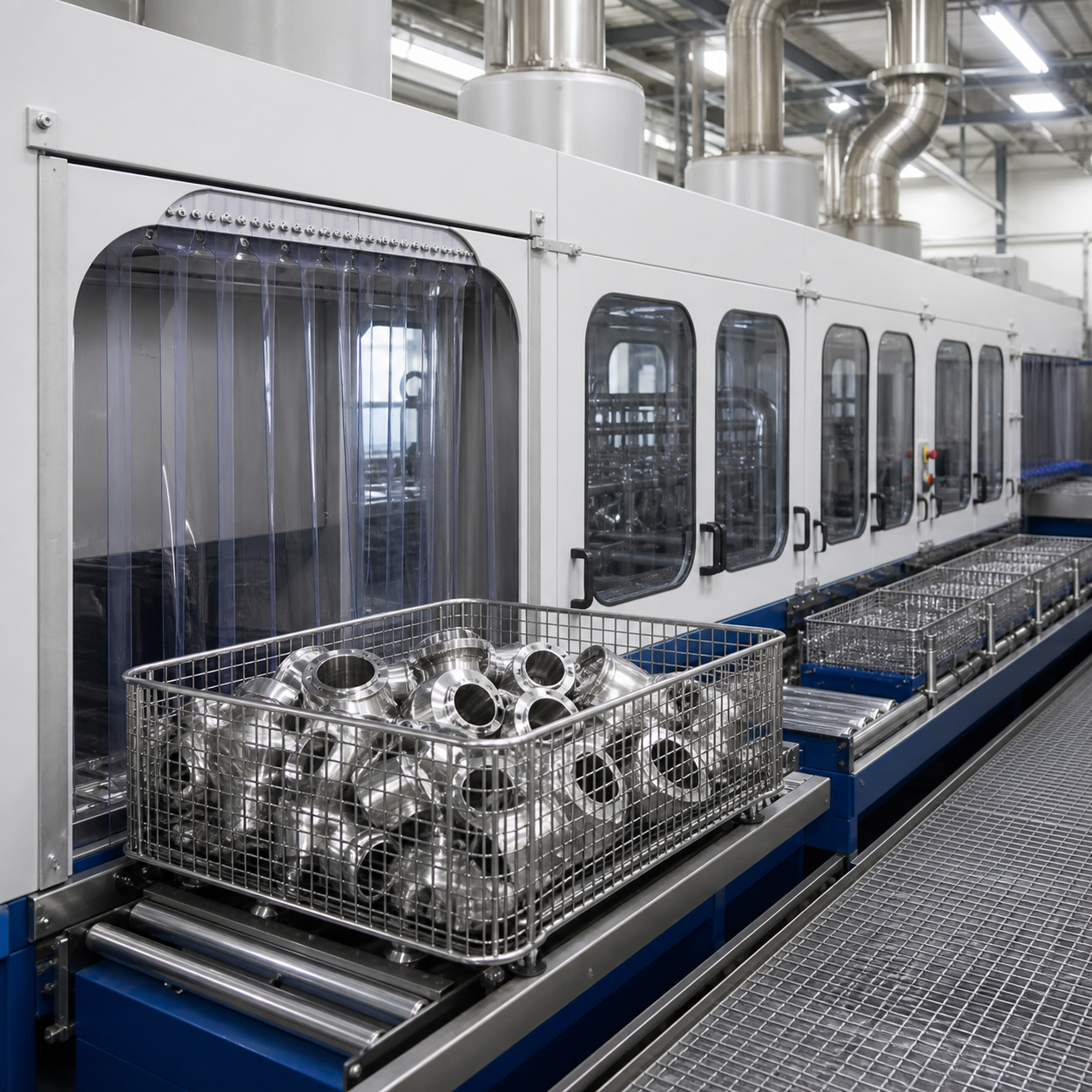
Nitric-acid passivation is used in selected specifications to remove free iron and support a clean, corrosion-resistant stainless-steel surface. It is not a substitute for proper alloy selection, fabrication control, degreasing, descaling or removal of heat tint. Results depend on alloy family, surface condition, prior machining, bath composition, temperature, exposure time, loading, rinsing and verification method. The purchaser must identify the governing drawing, customer requirement and current standard edition before choosing a process. A finishing line should validate representative parts rather than rely only on solution concentration. Crevices, threads, welded zones, blind holes and mixed loads can retain soil or chemistry differently from flat coupons. Nitric acid quality also matters: chloride and metal contamination can increase risk, while concentration drift can move the bath outside the approved range. A control plan should connect incoming acid lots, bath analysis, load records, rinse quality and test results so investigations use evidence instead of guesswork.
For B2B implementation of Nitric Acid for Stainless Steel Passivation and Validation, assign ownership across purchasing, quality, production, engineering, logistics and EHS before the first delivery. Approve the receiving test, compatible handling system, deviation response, retained-sample period and supplier-change process in writing. This shared control plan helps separate raw-material variation from equipment or operating changes and provides objective evidence for investigations.
Start with the governing requirement
Identify alloy, part drawing, customer specification, required passivation treatment and acceptance test. The widely referenced ASTM A967/A967M framework includes several nitric treatments, but the contract must identify the approved route and current edition. Do not change to a different acid system without customer and engineering authorization.
Distinguish cleaning from passivation
Oil, shop soil, embedded abrasive, weld scale and heat tint may require separate cleaning or descaling. Passing contaminated parts through a passivation bath can exhaust chemistry and leave defects. Verify water-break-free cleaning and inspect difficult geometry before treatment.
Control the bath as a production process
Define concentration, temperature, exposure time, dissolved metals, chloride risk, replenishment and discard criteria. Use calibrated instruments and an approved titration or analytical method. Track load surface area and drag-in because production history influences bath condition even when nominal concentration is unchanged.
Manage racks, agitation and loading
Use compatible racks and contacts that allow complete wetting and drainage. Avoid nesting parts or trapping air. Validate agitation and load density for the actual geometry. A heavily loaded basket may not receive the same mass transfer as an individual validation coupon.
Specify suitable incoming nitric acid
Set assay and process-sensitive impurity limits with methods. Chloride, iron, residue and visible contamination may matter to a passivation line, but limits should be supported by process data. Review several supplier COAs and approve more than one lot through receiving and production checks.
Protect the acid from contamination
Use dedicated transfer equipment and compatible containers. Never introduce organic material, incompatible metals or cleaning residues into nitric acid storage or the bath. Maintain clear labeling and line identification, and investigate any unexpected color, fuming or analytical shift before use.
Rinse and verify the finished surface
Rinsing must remove residual chemistry from threads, crevices and recesses. Control final-rinse quality and drying so stains are not mistaken for passivation failure. Select verification methods required by the governing specification and define sampling frequency, acceptance criteria and retest rules in advance.
Reference standards carefully
The ASTM A967/A967M standard page describes the specification scope. Buyers should confirm the currently required edition and any customer modifications. The standard does not replace site-specific process validation, EHS review or part cleanliness requirements.
Integrate safety and supplier control
Nitric acid is corrosive and strongly oxidizing. Use closed transfer where practical, local exhaust, compatible containment, emergency facilities, trained operators and current SDS instructions. Keep incompatible organics and reducing agents out of the process area.
Prepare a passivation-grade RFQ
State concentration, relevant impurities, methods, shipment size, packaging, destination, COA, SDS language and change notification. Review the Hiacid nitric acid product and supply page and the 68% buying guide, then contact Hiacid.
Related nitric acid resources
- 68% Nitric Acid Buying Specification for Industrial Supply
- Nitric Acid for Industrial Metal Nitrate Production
- High-Purity Nitric Acid for Electronics Cleaning Supply
Frequently asked questions
Does nitric acid passivation remove heat tint?
Not necessarily. Heat tint and scale may require a separately approved cleaning or descaling step.
Can one bath condition be used for every stainless alloy?
No. Follow the governing specification and validate the approved treatment for the alloy and part.
Why monitor dissolved metals and chloride?
Bath contamination can affect surface quality, corrosion risk and the decision to replenish or replace solution.
How should passivation success be verified?
Use the acceptance method, sampling plan and criteria required by the customer or governing specification.