
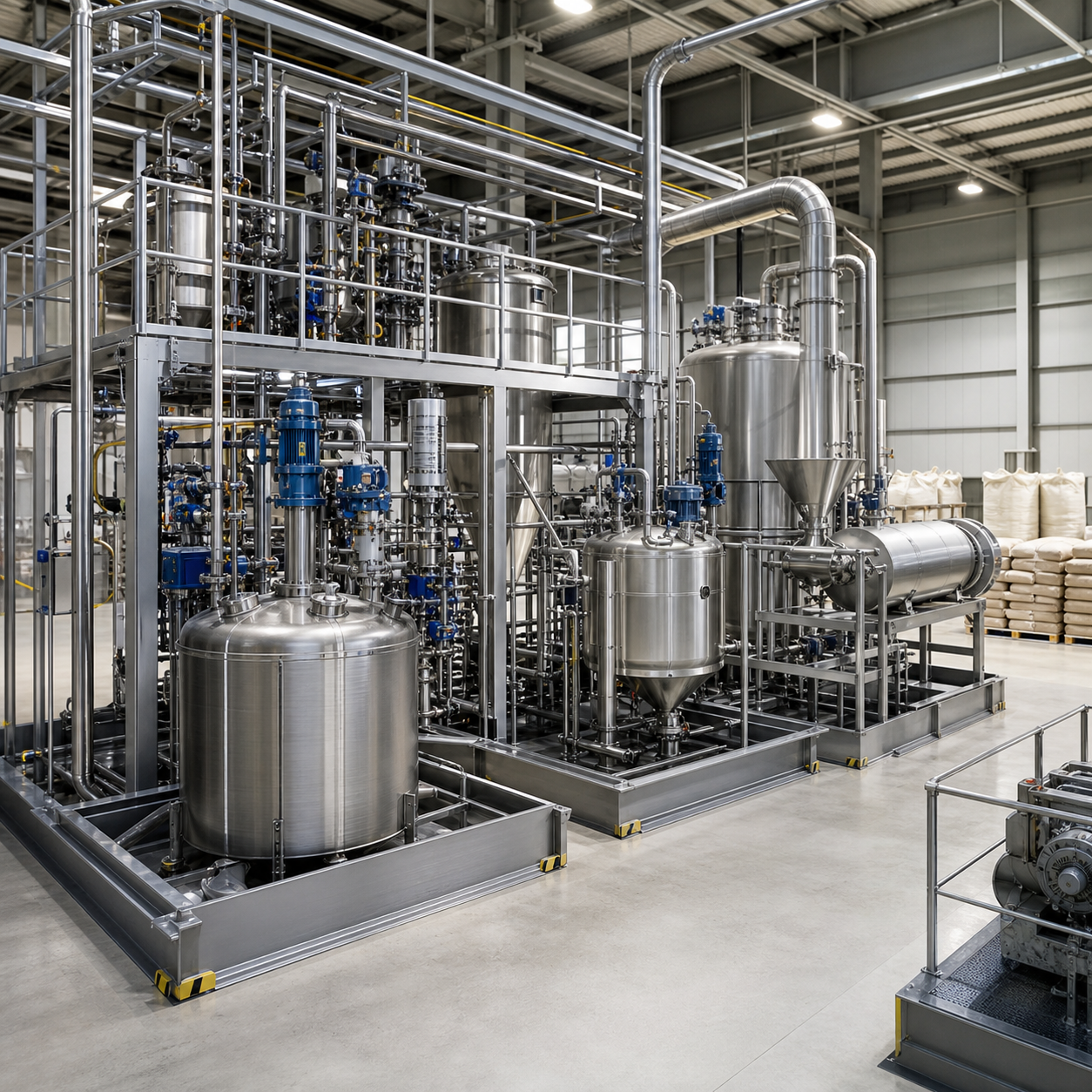
Calcium formate is produced by reacting a suitable calcium source with formic acid, followed by concentration, crystallization or drying and particle finishing. It is used in selected construction and cement-admixture formulations, but the formic acid feed does not determine final performance by itself. Calcium-source purity, stoichiometry, heat release, carbon dioxide evolution, mixing, filtration, moisture and particle size all influence the salt. Admixture producers must then test calcium formate in the intended cement system because cement chemistry, supplementary materials, temperature and dosage affect setting and strength. Procurement teams should connect the acid specification to salt yield, color, insolubles and finished-product consistency. An apparently cheaper acid can increase filtration load or introduce ions that matter to reinforced concrete or customer limits. Supplier qualification should therefore include several production lots, mass-balance data and final-product testing rather than a single laboratory neutralization. Commercial approval should also define mother-liquor purge, rework limits and retained samples. Without those controls, recycled impurities or a late batch correction can obscure the relationship between incoming acid quality and finished calcium formate performance.
Select and characterize the calcium source
Limestone, calcium carbonate, calcium hydroxide or another approved calcium feed can differ in assay, magnesium, iron, silicate, particle size and reactivity. Analyze normal and worst-case material. Insoluble minerals can remain in the salt or raise filtration demand even when the acid reaction reaches its target pH.
Calculate on an active basis
Use verified formic acid assay and calcium-feed purity for stoichiometric planning. Include water entering with both feeds and define acceptable residual acidity or alkalinity. Reconcile actual consumption, carbon dioxide release and dry product so concentration errors or unreacted feed are detected early.
Control neutralization and gas evolution
The reaction can release heat, and carbonate feeds release carbon dioxide. Engineer addition rate, agitation, cooling, headspace and vent treatment for the selected batch size. Prevent foaming or local acid excess. Automated mass dosing and temperature interlocks improve repeatability and reduce operator exposure.
Establish a defensible endpoint
Use validated pH and chemical analysis rather than a fixed addition time. Sample only after adequate mixing. Endpoint criteria should support final calcium formate assay and minimize free acid or unreacted calcium, while allowing for the measurement behavior of a concentrated salt slurry.
Manage crystallization and solids quality
Concentration, cooling, seeding, residence time and drying influence crystal form, moisture, caking and particle distribution. Track mother-liquor recycle because impurities can accumulate. Define filtration and wash conditions that deliver the target purity without excessive salt loss.
Link acid impurities to the finished salt
Control formic acid water, color, residue and process-relevant metals or anions. Determine which impurities pass into crystals, remain in mother liquor or form insolubles. Set incoming limits from this partitioning evidence rather than copying an unrelated acid specification.
Validate construction performance separately
The finished calcium formate must be tested at intended dosage in representative cement and admixture combinations. Measure set, early and later strength, workability, compatibility and durability-related properties required by the customer. Raw-material conformity does not prove performance in every cement.
Use research as process context
A recent calcium-formate production study shows how formic acid concentration affected reaction heat, conversion and product quality with a carbonate feed. Its laboratory conditions are informative, but commercial plants must validate their own calcium source, reactor and finishing train.
Secure steady raw-material supply
Compare supplier lots for assay, water and critical impurities, and maintain retained samples. Forecast acid demand from active-content balance and seasonal construction demand. Prequalify alternate supply before a disruption rather than changing acid during a customer campaign.
Issue a calcium-formate RFQ
Provide concentration, impurity limits, methods, monthly volume, package or bulk delivery, destination, COA, SDS and change notification. Review the Hiacid formic acid supply page and product record, then request a quotation.
Related formic acid resources
- Formic Acid for Fluxless Soldering and Vacuum Reflow
- Formic Acid for Semiconductor Copper Oxide Removal
- Formic Acid Quality for LC-MS Mobile Phase Preparation
Frequently asked questions
Can calcium carbonate react with formic acid to make calcium formate?
Yes, but feed purity, heat release, gas evolution, mixing and downstream finishing must be controlled.
Does formic acid assay alone predict calcium formate quality?
No. Calcium feed, impurities, endpoint, crystallization, washing and drying also determine quality.
Why test the salt in multiple cements?
Cement composition and other admixtures can change set and strength response.
What acid documents should a producer request?
Request a lot-specific COA, current SDS, traceability, agreed methods and change notification.