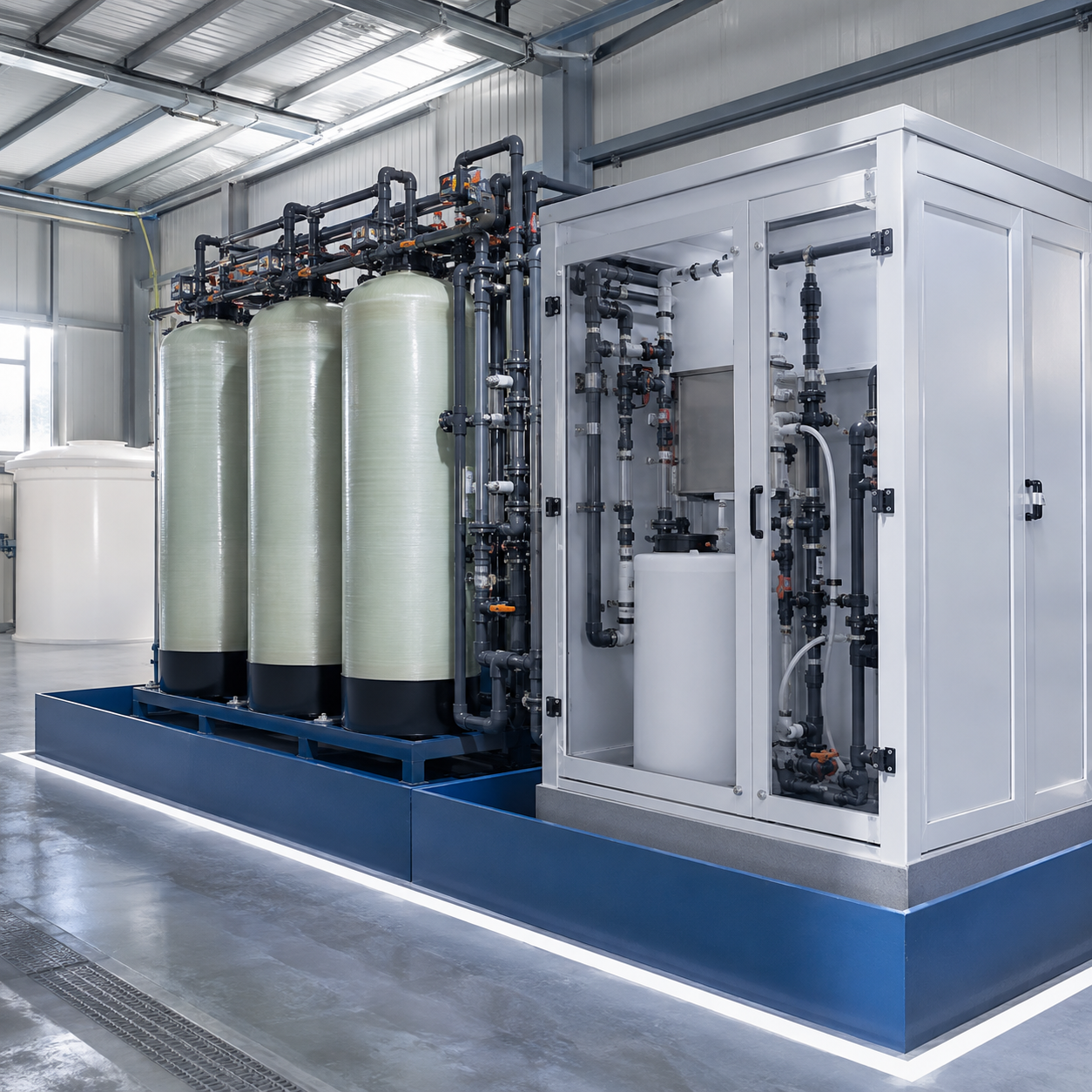
Hydrochloric acid is commonly used to regenerate hydrogen-form cation-exchange resins in industrial demineralization and water-reuse systems. The regenerant displaces accumulated cations and restores exchange capacity, but reliable results depend on resin type, exhaustion profile, acid strength, distribution, contact, displacement and rinsing. Acid procurement therefore belongs inside the complete operating and wastewater plan. Concentration variability changes active dose and rinse demand, while iron, suspended matter or cross-contamination may foul equipment or affect treated-water quality. This article provides B2B qualification guidance, not a regeneration recipe. Resin manufacturers, plant engineers and environmental permits must define the approved sequence and limits.
For B2B implementation, assign purchasing, production, quality, engineering and EHS ownership before the first delivery. Approve receiving tests, sampling tools, storage, transfer, deviation response and retained-sample period in writing. During qualification, compare several representative acid lots under the same conditions and record mass balance, product quality, waste load and equipment observations. This control plan helps separate raw-material variation from operating or analytical changes and provides objective evidence for buyer-supplier investigations. Review transport, package integrity and unloading because contamination can enter after the supplier’s final test. Define who can approve a deviation, which evidence is required before release and which changes trigger requalification. Review complaint response, shelf-life evidence, emergency contacts and delivery scheduling during approval. Purchasers should reconcile ordered, received, stored and consumed quantities; trend concentration and critical impurities by lot; audit transfer connections and sampling cleanliness; and review deviations jointly with operations before changing a specification. Supplier scorecards should include document accuracy, delivery condition, responsiveness and corrective-action quality, not price alone. A controlled alternate source should be qualified before a supply interruption. Training records, instrument calibration and laboratory uncertainty should be reviewed whenever buyer and supplier results disagree. Close each trial with an authorized report, updated specification, assigned actions and clear routine-monitoring decision.
Match the acid specification to the resin system
State commercial concentration, allowable iron, suspended matter, residue and other water-quality-sensitive impurities with agreed methods. Confirm whether the plant dilutes from bulk acid or receives a ready concentration, and calculate every comparison on active HCl.
Review resin and equipment compatibility
Verify resin chemistry, vessel lining, distributors, valves, pumps and instruments with the resin and equipment suppliers. Acid suitable for one train may not be appropriate for another, especially where high-purity water or sensitive downstream membranes are involved.
Control regeneration by performance data
Track capacity restored, leakage profile, conductivity, sodium or hardness breakthrough and run length. Compare these indicators with acid lot, active dose and rinse volume. A fixed calendar dose without performance review can hide resin aging or poor distribution.
Separate chemical strength from hydraulic problems
Channeling, damaged distributors, resin loss and inadequate backwash can resemble weak regenerant. Check pressure drop, bed expansion and flow distribution before blaming an acid shipment. Retained samples help confirm concentration and contamination.
Manage rinse water and spent regenerant
Define slow and fast rinse endpoints using conductivity, acidity or validated analytes. Characterize spent regenerant for dissolved metals, salts and regulated constituents before treatment, reuse or discharge. Waste routing must match the facility permit.
Use current supply-chain context
The U.S. EPA hydrochloric acid supply-chain profile identifies ion-exchange regeneration as a water-sector application and notes supply dependencies. Buyers can use that context when setting inventory, alternate-source and change-notification plans.
Protect high-purity water quality
Use dedicated, clean unloading and dilution equipment. Confirm dilution water quality, tank cleanliness and final rinse release before returning a bed to service. Trend blanks and trace metals when the demineralized water supports boilers, electronics or laboratories.
Plan continuity and requalification
Define forecast volume, minimum stock, approved transport, delivery windows and emergency contacts. Requalify after manufacturing-site, concentration, package, carrier or critical impurity changes rather than relying only on a familiar supplier name.
Apply safe storage and dilution governance
Hydrogen chloride vapor and hydrochloric acid are corrosive. Use closed transfer, ventilation, compatible containment and emergency facilities. Follow the current SDS and NIOSH hydrogen chloride guidance; trained plant personnel must approve dilution and connection procedures.
Prepare a regeneration-acid RFQ
Provide concentration, impurity limits, methods, monthly volume, package or bulk mode, destination, COA, SDS and change control. Review the Hiacid hydrochloric acid product page and 31–37% supply overview, then request a documented quotation.
Related hydrochloric acid resources
- Hydrochloric Acid Supply for Oilfield Matrix Acidizing
- Food-Grade Hydrochloric Acid for Gelatin Processing
- Hydrochloric Acid for Rare-Earth Leaching and Processing
Frequently asked questions
Why compare hydrochloric acid on an active basis?
Commercial strengths differ, so active HCl reveals the real dose, freight and storage requirement.
What indicates successful regeneration?
Use restored capacity, leakage, conductivity, breakthrough and rinse endpoints defined by the validated system.
Can spent regenerant go directly to drain?
Not automatically; characterize it and follow the site permit and approved treatment route.
When should a new acid source be requalified?
Requalify changes in source, concentration, packaging, carrier, method or critical impurity profile.