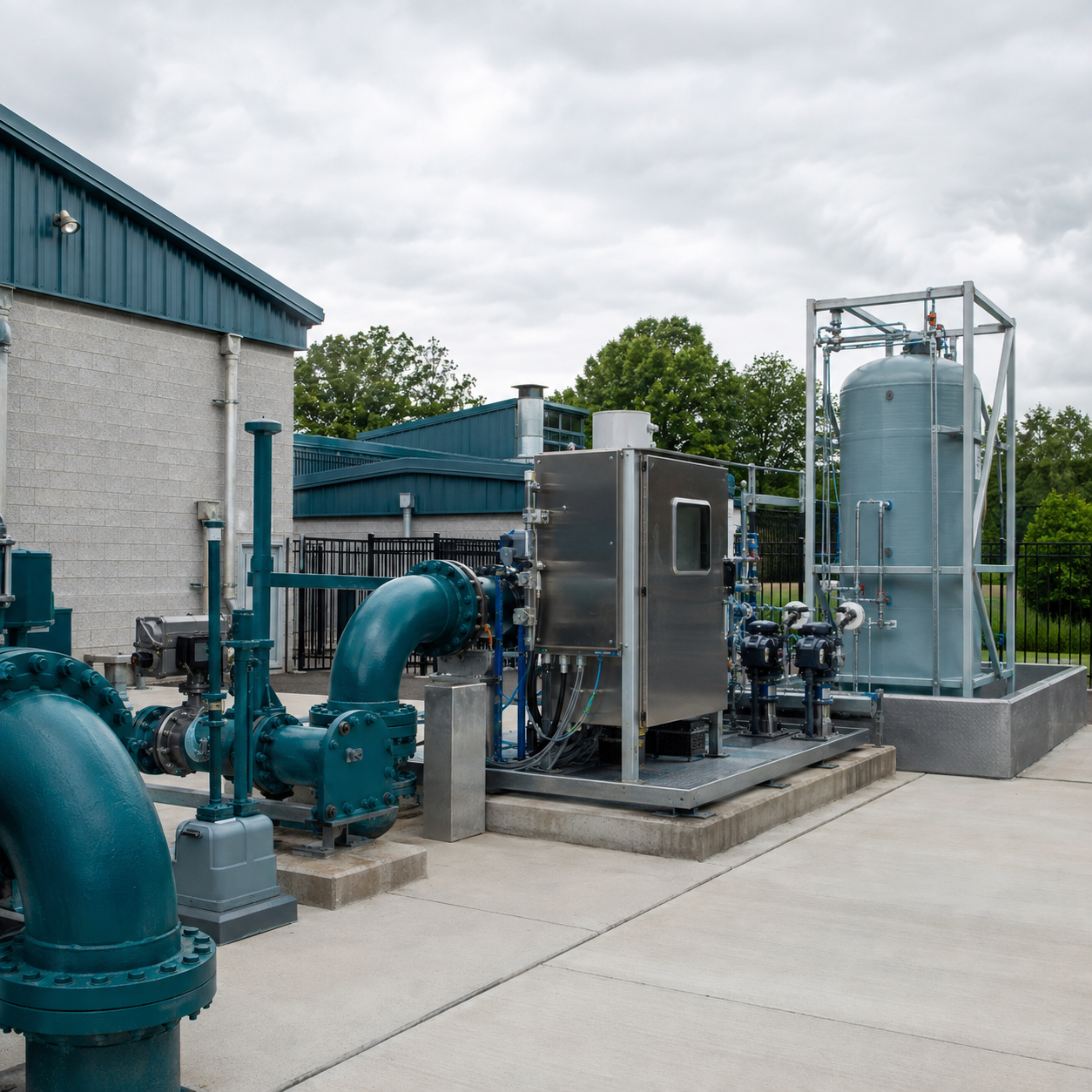
Hydrogen sulfide in wastewater collection systems can create odor, worker exposure and corrosion concerns. Hydrogen peroxide is one oxidant used in selected force mains, pump stations and headworks to oxidize dissolved sulfide and support aerobic conditions. Required performance depends on sulfide concentration, wastewater demand, pH, temperature, travel time, turbulence and the selected injection point. A generic peroxide-to-sulfide ratio cannot replace field testing and continuous monitoring. This guide addresses B2B chemical supply and control-system qualification rather than a dosing recipe. Utility engineers and permit requirements must define the program.
For B2B implementation, assign purchasing, production, quality, engineering and EHS ownership before the first delivery. Approve receiving tests, sampling tools, storage, transfer, deviation response and retained-sample period in writing. During qualification, compare several representative peroxide lots under the same conditions and record mass balance, process result, waste load and equipment observations. This control plan separates raw-material variation from operating or analytical changes and supports buyer-supplier investigations. Review transport, package venting, seal integrity and unloading because contamination can enter after the supplier’s final test. Define who can approve deviations, what evidence is required before release and which changes trigger requalification. Reconcile ordered, received, stored and consumed quantities; trend concentration and critical impurities by lot; audit transfer connections; and review deviations jointly with operations. Supplier scorecards should cover documentation, delivery condition, responsiveness and corrective-action quality, not price alone. Qualify an alternate source before a disruption. Review training, calibration and laboratory uncertainty whenever test results disagree. Confirm receiving capacity, unloading duration, temperature limits, vent inspection, emergency communication and holiday coverage before scheduling each load. Verify that warehouse rotation and use-by controls prevent an older container from being overlooked. Include maintenance and logistics staff in post-trial review because their observations often reveal contamination, venting or handling risks that laboratory data cannot show. Close each trial with an authorized report, updated specification, assigned actions and routine-monitoring decision.
Establish the sulfide baseline
Measure dissolved sulfide, headspace H2S, flow, pH, temperature, oxidation-reduction potential and travel time across seasonal and diurnal conditions. Identify corrosion and odor locations rather than relying on one grab sample.
Set measurable control objectives
Define worker-exposure, odor, dissolved-sulfide and downstream-treatment targets. Include minimum and maximum flows and upset conditions. A program should not shift an uncontrolled reaction or oxygen demand to another location.
Select injection and feedback control
Choose a location that provides mixing and reaction time while avoiding localized exposure and incompatible equipment. Flow pacing may need sulfide or residual feedback and alarm limits. Verify pump turndown and standby capacity.
Avoid overdosing by routine review
Excess peroxide can affect downstream biology, analytical samples and operating cost. Trend dose, residual, sulfide, dissolved oxygen, complaints and corrosion indicators, then update the validated control curve when wastewater conditions change.
Use EPA operating context
The U.S. EPA odor and corrosion control manual discusses hydrogen peroxide addition for sulfide control and the need to relate dosing to wastewater conditions and reaction time. Current permits and site trials govern actual operation.
Coordinate with treatment-plant biology
Notify downstream operators of dose changes. Evaluate effects on influent oxygen, redox, nutrient-removal zones and sampling. Residual oxidant can bias samples or disturb biological processes if unmanaged.
Specify peroxide for dependable dosing
State concentration, acidity, stability, residue and application-sensitive impurities with methods. Compare active H2O2, dilution needs, storage and delivery frequency. Link supplier lot to dosing and performance records.
Maintain clean compatible equipment
Use dedicated vented storage, compatible pumps, calibrated flowmeters and clean injection hardware. Contamination can accelerate decomposition and gas generation. Inspect vents and containment routinely.
Integrate worker and public protection
Monitor H2S independently of peroxide control and maintain ventilation, confined-space and emergency procedures. Hydrogen peroxide adds oxidizer and corrosive hazards, so staff need SDS-based training and splash protection.
Issue a utility supply RFQ
Provide concentration, monthly and peak volume, delivery schedule, storage limits, destination, COA, SDS and carrier requirements. Review the Hiacid peroxide supply page, then request a specification-based quotation.
Related hydrogen peroxide resources
- Hydrogen Peroxide for HPPO Propylene Oxide Production
- Hydrogen Peroxide for In Situ Chemical Oxidation Remediation
- Vaporized Hydrogen Peroxide for Medical Device Sterilization
Frequently asked questions
Does peroxide prevent every sewer odor?
No. It targets responsive sulfide conditions; other odor sources and hydraulic causes may remain.
Why is one grab sample insufficient?
Sulfide, flow, temperature and travel time often vary strongly by hour and season.
Can dose be based only on flow?
Flow pacing may be a base, but validated programs often require sulfide, residual or performance feedback.
What should be trended with supplier lot?
Track concentration, dose, residual, sulfide, dissolved oxygen, complaints, corrosion and downstream effects.