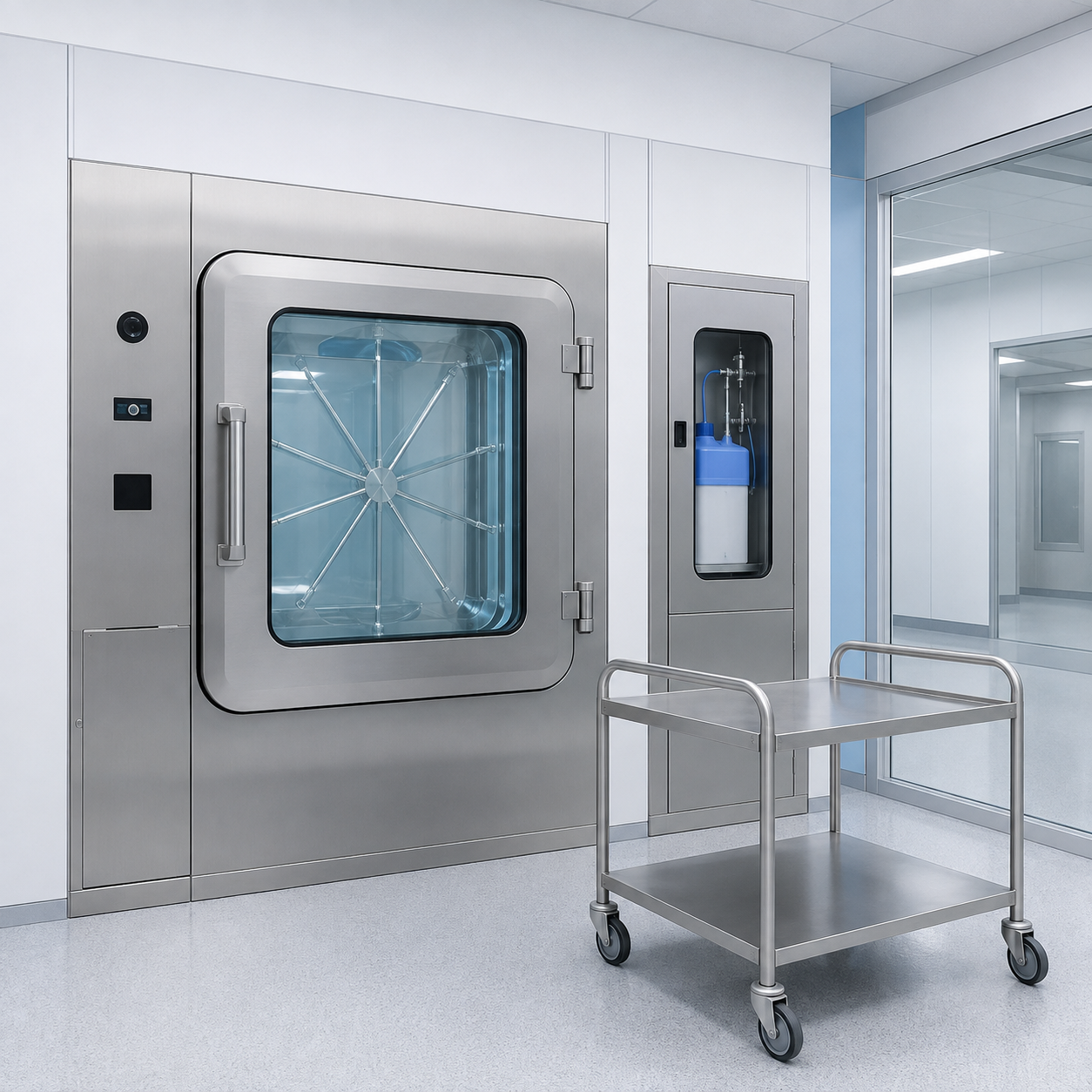
Vaporized hydrogen peroxide and hydrogen peroxide gas-plasma systems are used for low-temperature sterilization or biodecontamination in defined medical, pharmaceutical and cleanroom applications. Performance depends on the validated generator or chamber, liquid peroxide formulation, load, packaging, humidity, temperature, pressure, distribution and aeration endpoint. Cellulose, long lumens and some polymers may be restricted by a specific device or cycle. Bulk industrial peroxide cannot simply replace a qualified cartridge or formulation. This B2B guide focuses on supplier controls and validation governance, not cycle parameters or clinical instructions. Users must follow cleared equipment, labeling and facility quality systems.
For B2B implementation, assign purchasing, production, quality, engineering and EHS ownership before the first delivery. Approve receiving tests, sampling tools, storage, transfer, deviation response and retained-sample period in writing. During qualification, compare several representative peroxide lots under the same conditions and record mass balance, process result, waste load and equipment observations. This control plan separates raw-material variation from operating or analytical changes and supports buyer-supplier investigations. Review transport, package venting, seal integrity and unloading because contamination can enter after the supplier’s final test. Define who can approve deviations, what evidence is required before release and which changes trigger requalification. Reconcile ordered, received, stored and consumed quantities; trend concentration and critical impurities by lot; audit transfer connections; and review deviations jointly with operations. Supplier scorecards should cover documentation, delivery condition, responsiveness and corrective-action quality, not price alone. Qualify an alternate source before a disruption. Review training, calibration and laboratory uncertainty whenever test results disagree. Confirm receiving capacity, unloading duration, temperature limits, vent inspection, emergency communication and holiday coverage before scheduling each load. Verify that warehouse rotation and use-by controls prevent an older container from being overlooked. Include maintenance and logistics staff in post-trial review because their observations often reveal contamination, venting or handling risks that laboratory data cannot show. Close each trial with an authorized report, updated specification, assigned actions and routine-monitoring decision.
Start with the validated equipment specification
Identify the exact peroxide concentration, purity, stabilizer profile, cartridge or package and approved supplier status required by the sterilizer. Changes need documented equivalence or revalidation before routine use.
Distinguish sterilization from room decontamination
A medical-device chamber cycle, isolator biodecontamination and whole-room process have different claims, load configurations and endpoints. Purchase and qualify peroxide for the exact registered or validated use.
Control bioburden and load preparation
Cleaning, drying, packaging and device geometry affect sterilant contact. Hydrogen peroxide does not replace validated precleaning. Define load families, worst cases, biological indicators and routine controls under the quality system.
Evaluate material compatibility
Assess metals, elastomers, adhesives, electronics, nylon and cellulose-containing materials according to equipment guidance. Repeated exposure may differ from one cycle. Record cosmetic, functional and mechanical changes.
Verify distribution and cycle release
Use calibrated sensors and qualified placement to confirm the required process. Release criteria may include physical, chemical and biological indicators plus residual or aeration checks. Deviations require investigation, not automatic reprocessing.
Use CDC technical context
The CDC overview of vaporized hydrogen peroxide describes low-temperature sterilization approaches, benefits and material or penetration limitations. Current equipment instructions and regulatory status govern each application.
Qualify peroxide lots and packages
Review concentration, identity, trace contaminants, stability, container integrity and shelf life. For proprietary cartridges, maintain manufacturer traceability. For approved bulk systems, validate transfer, day tank and generator feed as one controlled chain.
Manage changes formally
Supplier site, purification, stabilizer, package, closure, transport or test-method changes can affect a validated process. Define notification lead time, assessment, bridging evidence and approval responsibility.
Protect workers and prevent unintended exposure
Operate sealed equipment, monitor areas as required and prevent entry until validated release. Liquid peroxide remains corrosive and oxidizing. Follow the SDS, occupational limits, spill plan and equipment interlocks.
Prepare a sterilization-grade inquiry
State equipment and intended use, required peroxide specification, package, annual volume, destination and documentation. Review the Hiacid hydrogen peroxide page, then ask whether a compatible documented grade can be offered.
Related hydrogen peroxide resources
- Hydrogen Peroxide for HPPO Propylene Oxide Production
- Hydrogen Peroxide for In Situ Chemical Oxidation Remediation
- Hydrogen Peroxide Supply for Aquaculture Fish Health
Frequently asked questions
Can industrial hydrogen peroxide replace a sterilizer cartridge?
Not automatically. Use only the formulation and package approved or validated for the specific equipment.
Does VHP replace cleaning?
No. Soil and geometry can block contact, so validated cleaning and load preparation remain necessary.
Are all polymers compatible?
No. Compatibility depends on material, construction, cycle and repeated exposure.
What supplier changes can trigger revalidation?
Changes to site, purification, concentration, stabilizer, package, transport or test method may require assessment.