Hydrogen peroxide is authorized in some jurisdictions as an aquaculture drug for specific species, life stages, diseases and labeled treatment conditions. Regulatory status is product- and country-specific: an industrial peroxide with a similar assay is not automatically an approved fish-health product. Water temperature, organic load, alkalinity, biomass, flow and animal condition can change exposure and tolerance. Procurement must therefore begin with the veterinarian or fish-health professional, approved label and local law. This article discusses traceability, storage and operational quality controls; it does not recommend a dose, indication or off-label use.
For B2B implementation, assign purchasing, production, quality, engineering and EHS ownership before the first delivery. Approve receiving tests, sampling tools, storage, transfer, deviation response and retained-sample period in writing. During qualification, compare several representative peroxide lots under the same conditions and record mass balance, process result, waste load and equipment observations. This control plan separates raw-material variation from operating or analytical changes and supports buyer-supplier investigations. Review transport, package venting, seal integrity and unloading because contamination can enter after the supplier’s final test. Define who can approve deviations, what evidence is required before release and which changes trigger requalification. Reconcile ordered, received, stored and consumed quantities; trend concentration and critical impurities by lot; audit transfer connections; and review deviations jointly with operations. Supplier scorecards should cover documentation, delivery condition, responsiveness and corrective-action quality, not price alone. Qualify an alternate source before a disruption. Review training, calibration and laboratory uncertainty whenever test results disagree. Confirm receiving capacity, unloading duration, temperature limits, vent inspection, emergency communication and holiday coverage before scheduling each load. Verify that warehouse rotation and use-by controls prevent an older container from being overlooked. Include maintenance and logistics staff in post-trial review because their observations often reveal contamination, venting or handling risks that laboratory data cannot show. Close each trial with an authorized report, updated specification, assigned actions and routine-monitoring decision.
Confirm legal product and intended indication
Verify approved product, species, life stage, condition, route, withdrawal requirements and prescriber oversight where applicable. Retain the current label and purchase only through an authorized channel.
Do not substitute on assay alone
Two products can both report 35 percent H2O2 yet differ in regulatory approval, stabilizers, packaging, manufacturing controls and labeling. Substitution requires the responsible professional and regulatory framework.
Characterize water and culture conditions
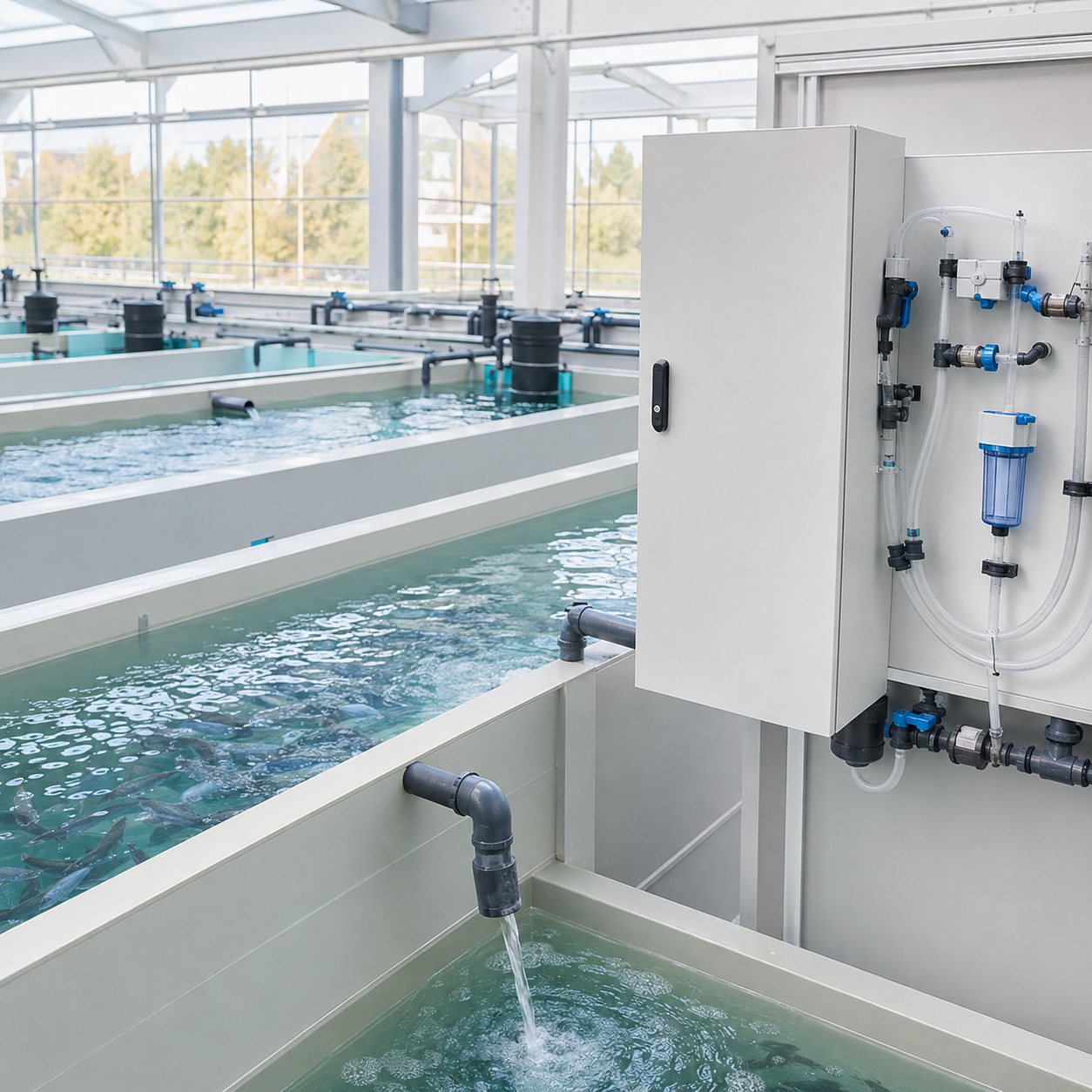
Record temperature, pH, alkalinity, dissolved oxygen, organic matter, flow and biomass before treatment. Validate mixing and exposure uniformity in the actual tank, raceway or egg system under the approved plan.
Protect animal welfare during application
Define observation, stop and emergency criteria. Monitor fish behavior, gill condition and water quality using trained staff. Treatment equipment should prevent local concentration peaks and accidental overdosing.
Use authoritative approval information
The U.S. FDA approved aquaculture drugs page lists a 35% hydrogen peroxide product for specific freshwater finfish and egg indications. Users outside that label and jurisdiction must verify their own applicable requirements.
Maintain treatment records
Link product lot, expiry, receiving check, storage condition, system, biomass, responsible staff and observed outcome. Records support pharmacovigilance, audits and investigation of unexpected mortality or performance.
Design compatible dosing and storage
Use approved vented containers, dedicated clean pumps and compatible hoses. Keep peroxide cool, protected from contamination and separated from feed, fuels, metals and organic materials. Never return unused product to the original container.
Plan water discharge and residual control
Assess receiving-water permit, residual peroxide, oxygen, treatment water and farm biosecurity. Follow approved label and environmental requirements. Do not assume decomposition eliminates every operational impact.
Train workers for concentrated oxidizer handling
Use splash protection, gloves and suitable clothing, plus emergency eyewash and drench facilities. Control vapor or mist and follow the SDS. Separate human safety supervision from animal-treatment decisions.
Prepare a regulated-product inquiry
Provide jurisdiction, authorized use, required approval status, concentration, package, volume and destination. Review the Hiacid hydrogen peroxide information, then ask whether a legally suitable documented product is available.
Related hydrogen peroxide resources
- Hydrogen Peroxide for HPPO Propylene Oxide Production
- Hydrogen Peroxide for In Situ Chemical Oxidation Remediation
- Vaporized Hydrogen Peroxide for Medical Device Sterilization
Frequently asked questions
Can industrial-grade peroxide be used as an aquaculture drug?
Not automatically. Use only a product legally approved or authorized for the specific jurisdiction and use.
Why does water quality matter?
Temperature, organics, alkalinity, flow and biomass can change exposure and animal tolerance.
Who selects the treatment conditions?
The approved label and responsible veterinarian or fish-health professional determine them.
Which records should be retained?
Keep product lot, expiry, storage, system, biomass, application, water quality, observations and outcome.