
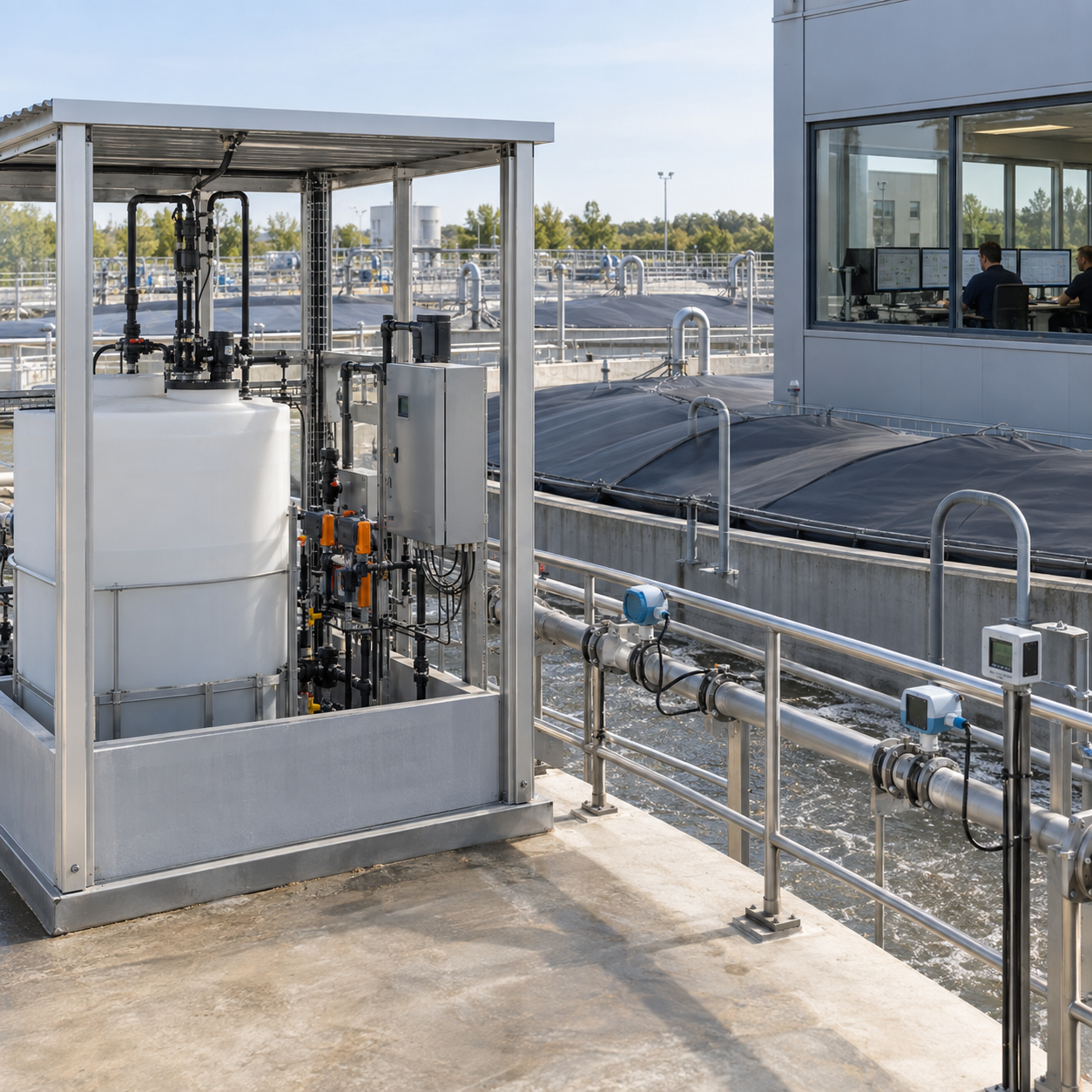
Biological denitrification requires an available carbon source so microorganisms can reduce nitrate under anoxic conditions. Wastewater plants with insufficient readily biodegradable carbon may evaluate an external source such as acetic acid. The purchasing decision cannot be separated from treatability, controls, storage, worker protection and permit performance. Concentrated glacial acetic acid offers high active content but requires engineered dilution, compatible equipment and careful dose control. This guide helps industrial and municipal buyers structure a trial and supply specification; it does not prescribe a universal dose or replace a plant-specific process evaluation.
For industrial qualification, assign purchasing, quality, engineering, operations, logistics and EHS responsibilities before the first commercial delivery. Approve the specification, analytical methods, sampling point, retained-sample period, storage conditions, transfer equipment, deviation response and release authority in writing. Compare representative lots under controlled conditions and record process performance, mass balance, waste, equipment observations and final quality. This helps separate raw-material variation from water, equipment, operator or analytical changes. Review the chain from supplier release through carrier, package, receiving connection and day tank because contamination or misidentification can occur after final analysis. Reconcile ordered, received, stored and consumed quantities and investigate unexplained differences. Supplier scorecards should cover documentation accuracy, delivery condition, corrective-action quality and change notification as well as price. Qualify an alternate source before a disruption using the same methods and process criteria. When buyer and supplier results differ, review sample representativeness, temperature, calibration, detection limits and uncertainty before deciding disposition. Confirm emergency contacts, unloading hours and stop-work authority for every shipment. Include maintenance and warehouse teams in the post-trial review because they often identify seal, vent, hose or handling issues not visible in a certificate of analysis. Close qualification with an authorized report, approved supplier status and a defined routine-monitoring plan.
Confirm the actual carbon limitation
Review influent and internal-recycle flow, nitrate load, readily biodegradable carbon, temperature, solids retention and anoxic capacity before adding chemical. Poor mixing, low biomass activity or control problems can resemble carbon limitation. Establish a defensible baseline across normal and peak conditions so the trial has a meaningful comparison.
Define success beyond nitrate removal
Set targets for total nitrogen, nitrite, residual chemical oxygen demand, dissolved oxygen, sludge behavior, alkalinity, odor, safety and cost. A product that lowers nitrate but causes effluent or operational problems is not a successful solution.
Convert product quality into usable carbon
Specify acetic acid assay, water and relevant impurities, then calculate cost on a delivered usable-carbon basis rather than price per tonne alone. Account for storage, dilution, metering, secondary containment, labor and residual disposal. Verify each receiving lot under the approved quality plan.
Use authoritative planning context
The U.S. EPA external carbon sources fact sheet discusses carbon addition for nitrogen removal and the need to consider performance and operational factors. Site permits, engineering design and biological testing remain controlling.
Design a controlled plant trial
Start with an approved engineering protocol and clear stop criteria. Change one important variable at a time where practical, allow the biology and instruments to stabilize, and collect representative data across load and temperature changes. Keep untreated or historical baseline data available for comparison.
Automate conservatively and verify instruments
Link dosing to validated flow or nitrogen measurements only after confirming sensor location, calibration, response time and failure behavior. Include maximum limits, alarms, interlocks and manual stop authority. Cross-check online values with laboratory results.
Engineer storage and chemical handling
Review tank, pump, seal, hose, vent and containment compatibility for the supplied concentration. Separate incompatible chemicals and prevent accidental connection. Use closed transfer, ventilation and emergency facilities based on the current SDS and risk assessment.
Plan dilution without local overfeed
Use an engineered, mixed dilution and injection arrangement. Avoid uncontrolled water addition to concentrated acid or direct discharge where personnel, equipment or biomass could experience a local high concentration. Document sequence, verification and maintenance.
Qualify supply and monitor lifecycle cost
Require lot traceability, COA, change notification, delivery controls and emergency contacts. Trend delivered concentration, dose, nitrogen removed, effluent COD, sludge impact and downtime. Revisit the business case when flows, permits or energy costs change.
Prepare a treatment-plant inquiry
Provide required concentration, annual and peak volume, package or bulk mode, delivery schedule, tank constraints, destination and documentation. Review the Hiacid glacial acetic acid page, then request a documented industrial supply proposal.
Related glacial acetic acid resources
- Glacial Acetic Acid Assay and Water Verification
- Glacial Acetic Acid for Oilfield Stimulation Programs
- High-Purity Glacial Acetic Acid for Pharmaceutical Buffers
Frequently asked questions
Can every denitrification plant use glacial acetic acid?
No. Suitability and dosing depend on wastewater characteristics, biology, equipment, permits and a controlled site evaluation.
Why compare cost on usable carbon basis?
Delivered concentration, required dose and operating costs can make nominal price per tonne misleading.
What should be monitored during a trial?
Track nitrogen species, residual COD, flow, temperature, dissolved oxygen, sludge response, safety events and chemical consumption.
Is direct manual dosing acceptable?
A trained facility should use an engineered, controlled system with mixing, safeguards and written procedures.