
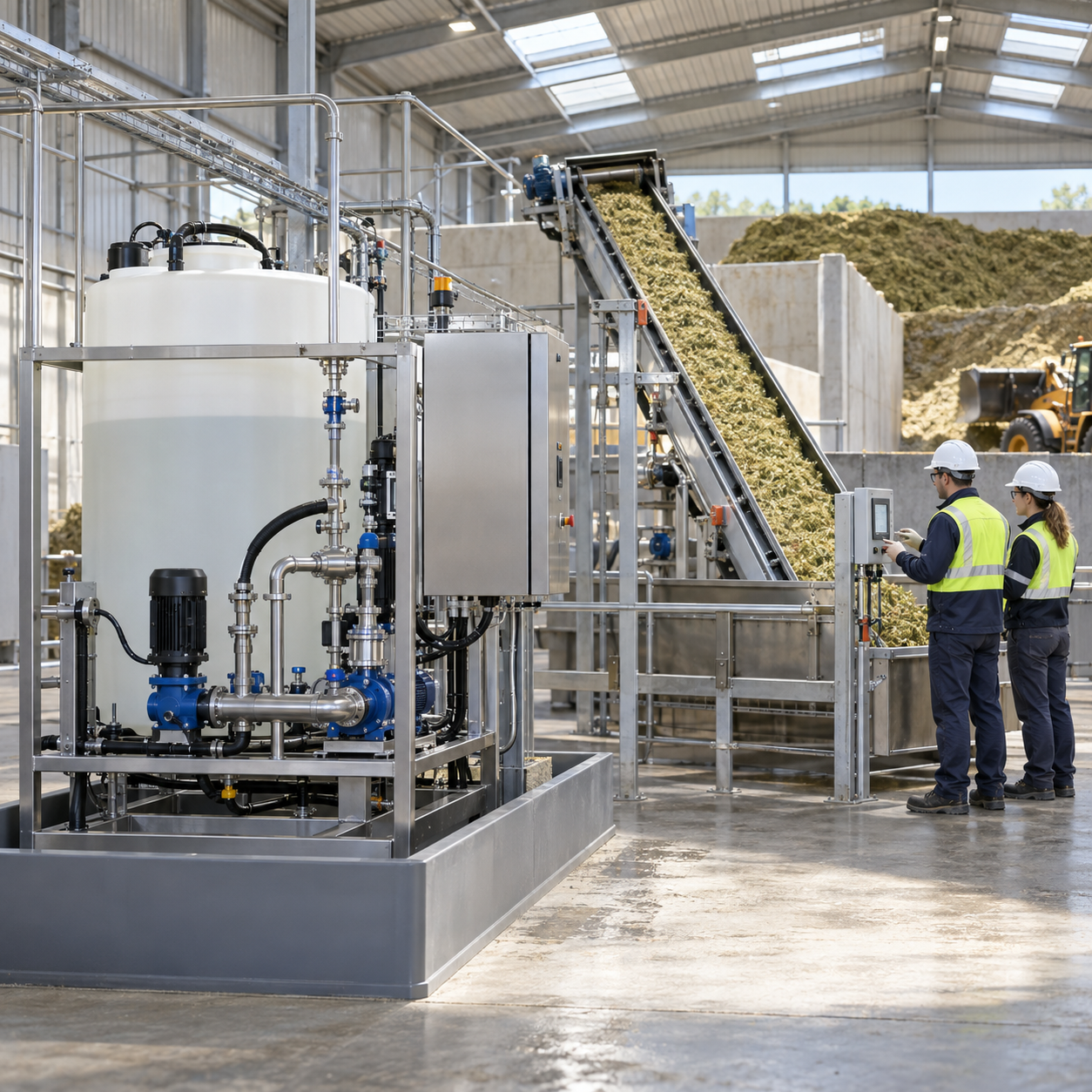
Acetic acid may be part of selected silage or animal-feed preservation strategies because acidification can influence undesirable microbial activity and storage stability. Performance depends on crop or feed matrix, moisture, temperature, packing, oxygen exclusion, application uniformity and the complete preservative system. Food or feed use also requires compliance with the destination market, intended species and permitted conditions. Buyers should not assume that general industrial glacial acetic acid is acceptable. This guide explains B2B qualification and handling considerations and asks purchasers to confirm regulatory, formulation and safety requirements with qualified advisers before use.
For industrial qualification, assign purchasing, quality, engineering, operations, logistics and EHS responsibilities before the first commercial delivery. Approve the specification, analytical methods, sampling point, retained-sample period, storage conditions, transfer equipment, deviation response and release authority in writing. Compare representative lots under controlled conditions and record process performance, mass balance, waste, equipment observations and final quality. This helps separate raw-material variation from water, equipment, operator or analytical changes. Review the chain from supplier release through carrier, package, receiving connection and day tank because contamination or misidentification can occur after final analysis. Reconcile ordered, received, stored and consumed quantities and investigate unexplained differences. Supplier scorecards should cover documentation accuracy, delivery condition, corrective-action quality and change notification as well as price. Qualify an alternate source before a disruption using the same methods and process criteria. When buyer and supplier results differ, review sample representativeness, temperature, calibration, detection limits and uncertainty before deciding disposition. Confirm emergency contacts, unloading hours and stop-work authority for every shipment. Include maintenance and warehouse teams in the post-trial review because they often identify seal, vent, hose or handling issues not visible in a certificate of analysis. Close qualification with an authorized report, approved supplier status and a defined routine-monitoring plan.
Confirm legal status and intended use
Identify the country, feed category, species, function, maximum conditions and labeling responsibilities before selecting a material. Regulatory status can differ by jurisdiction and formulation. Obtain current evidence and have the responsible feed-safety or regulatory team approve the use.
Specify an appropriate documented grade
Define assay, water, identity, heavy metals or elemental impurities, residue and other application-relevant attributes. Require lot-specific documentation and traceability. A supplier’s general industrial specification is not a substitute for the buyer’s feed-use approval.
Validate preservation performance
Conduct controlled trials using representative forage or feed, moisture and storage conditions. Compare untreated or current-practice controls and monitor stability, temperature, odor, visible spoilage, dry-matter loss and relevant analytical or microbiological indicators. Use predefined acceptance criteria.
Do not treat acid as a substitute for good management
Rapid filling, correct moisture, tight packing, oxygen exclusion, clean equipment and disciplined feed-out remain central to silage quality. A chemical program cannot compensate for major storage or process failures.
Engineer accurate application
Use compatible closed storage, dilution where validated, calibrated metering and enough distribution points to achieve uniform treatment. Verify actual flow and total quantity rather than relying only on a pump setting. Prevent concentrated material from contacting animals, workers or localized feed zones.
Link dose control to process data
Record feed or forage mass, moisture, product concentration, pump calibration, application time and operator. Reconcile inventory with treated tonnage and investigate unexpected consumption before the next campaign.
Protect safety and material integrity
Acetic acid is corrosive and concentrated vapor can be hazardous. Use the current SDS, trained personnel, ventilation, splash protection, compatible equipment, eyewash and emergency shower as required by the risk assessment. Separate incompatible chemicals and secure the dosing area.
Plan receiving and storage controls
Verify label, lot, seal, COA, container condition and quantity. Protect the material from contamination and unauthorized access. Glacial acetic acid may crystallize in cool weather, so approve any warming and homogenization procedure before winter delivery.
Manage supplier assurance
Review manufacturing site, purification, contamination controls, packaging, traceability, change notification, complaint response and continuity. Trend results and preservation outcomes by lot. Requalify material or supplier changes that can affect safety, legality or performance.
Prepare a feed-use inquiry
Provide destination market, intended function, required grade and specification, annual volume, package and documentation list. Review the Hiacid glacial acetic acid product page, then ask whether a suitably documented grade can be offered for your regulatory and technical review.
Related glacial acetic acid resources
- Glacial Acetic Acid Assay and Water Verification
- Glacial Acetic Acid for Wastewater Denitrification
- Glacial Acetic Acid for Oilfield Stimulation Programs
Frequently asked questions
Can industrial glacial acetic acid be used directly in animal feed?
Do not assume so. The buyer must confirm a legally permitted, suitably documented grade and approved conditions for the destination market.
Does acetic acid replace proper silage packing?
No. Moisture, rapid filling, compaction, sealing and feed-out management remain essential.
Why is application calibration important?
Uneven or incorrect application can reduce preservation performance and create concentrated local exposure.
What should supplier qualification cover?
Review specification, site controls, traceability, packaging, regulatory documents, change notification and complaint response.