
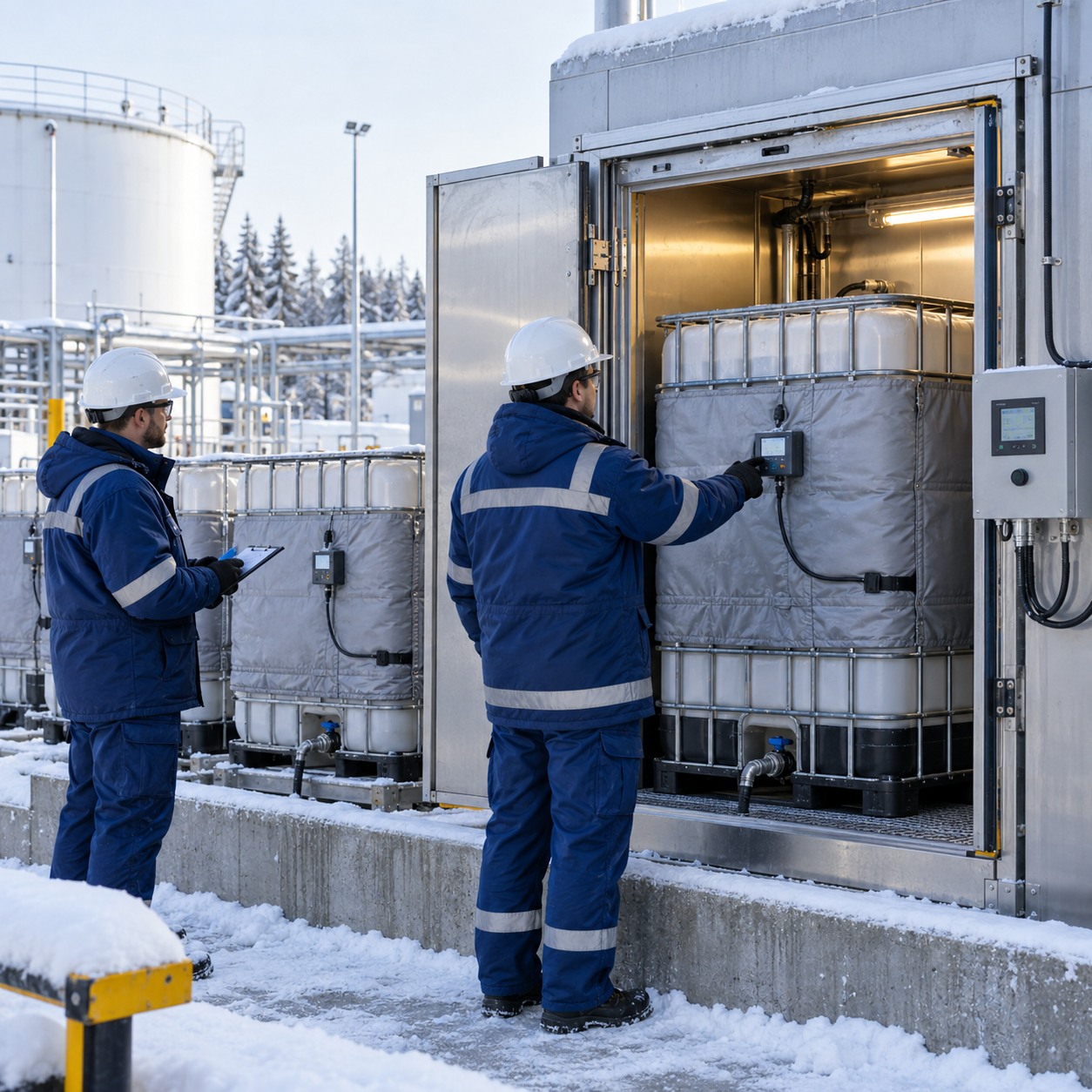
Concentrated formic acid can crystallize or become difficult to transfer during cold-weather logistics, but behavior depends strongly on concentration and the complete solution composition. A freezing observation alone does not prove contamination, and a clear liquid layer above crystals is not automatically representative of the whole package. Winter readiness should be agreed before dispatch: product concentration, package type, forecast temperatures, insulation, approved warming equipment, homogenization, sampling and delay responsibility. This guide supports planning for trained industrial sites; the current SDS, supplier data, package instructions and engineering review remain controlling.
For B2B qualification, assign purchasing, quality, engineering, operations, logistics and EHS ownership before the first commercial delivery. Approve the specification, analytical methods, sampling point, retained-sample period, storage conditions, transfer equipment, deviation response and release authority in writing. Compare representative lots under controlled conditions and record process performance, mass balance, waste, equipment observations and final quality. This separates raw-material variation from water, equipment, operator or analytical changes. Review the chain from supplier release through carrier, package, receiving connection and day tank because contamination or misidentification can occur after final analysis. Reconcile ordered, received, stored and consumed quantities and investigate unexplained differences. Supplier scorecards should cover documentation accuracy, delivery condition, corrective-action quality and change notification as well as price. Qualify an alternate source before a disruption using the same methods and process criteria. When buyer and supplier results differ, review sample representativeness, temperature, calibration, detection limits and uncertainty before deciding disposition. Confirm emergency contacts, unloading hours and stop-work authority for every shipment. Include maintenance and warehouse teams in post-trial review because they often identify seal, vent, hose or handling issues not visible in a certificate of analysis. Close qualification with an authorized report, approved supplier status and a defined routine-monitoring plan. The NIH PubChem record for formic acid provides broad identity and use context, while the current SDS and site procedures control handling.
Use concentration-specific property data
Do not apply the melting point of pure formic acid to every commercial aqueous grade. Review supplier data for the actual concentration and impurity range. The ECHA registration record provides physical-property context for formic acid, while the approved product specification should govern the shipment.
Define the winter operating envelope
Document expected transit and storage temperatures, exposure duration, package thermal behavior and minimum receiving capability. Identify when dispatch should pause, when insulation is required and when a controlled warming plan must be activated.
Approve warming before material arrives
Use a closed, engineered method compatible with the container and chemical. Control surface and product temperature, heating rate, ventilation, access and monitoring. Never use flame, improvised heaters or an unverified hot-water arrangement.
Review pressure and expansion risks
Confirm closures, vents, headspace and thermal expansion before warming. Personnel should not loosen a stressed closure or manipulate a distorted package outside the approved procedure and emergency plan.
Homogenize before sampling or transfer
Partial crystallization can separate liquid and solid phases. Achieve a uniform liquid condition and approved mixing before collecting a release sample or unloading. Record temperatures at defined locations and verify that the package is fit for transfer.
Avoid release decisions based on appearance
Clarity, crystals or viscosity are useful observations but do not replace representative assay and water testing. Compare receiving results with the agreed specification only after the package is safely homogenized.
Protect equipment and inventory
Inspect hoses, pumps, valves, seals and vents for cold-weather suitability. Keep access to containment and emergency equipment clear of ice. Track package condition, lot age and location so crystallized stock is not repeatedly bypassed or forgotten.
Train for winter-specific hazards
Cold PPE can reduce dexterity, snow can hide leaks and ice can affect vehicle or worker footing. Include these conditions in the job safety review, communication plan and stop-work criteria.
Investigate recurring winter delays
Compare product concentration, route, dwell time, insulation, package size and receiving schedule. A logistics or inventory change may be more effective than warming every load. Document corrective action and verify subsequent deliveries.
Prepare a winter-ready inquiry
Provide concentration, package, route, temperature range, unloading window, warming capability and documentation needs. Review the Hiacid formic acid page, then request a cold-weather logistics proposal.
Related formic acid resources
- Formic Acid Assay, Water and Impurity Verification
- Formic Acid for Electroless Precious-Metal Plating
- Formic Acid for Poultry Drinking-Water Acidification
Frequently asked questions
Does crystallization prove formic acid is off specification?
No. Temperature and concentration can cause crystallization, but release still requires safe homogenization and representative testing.
Can a frozen container be heated with an open flame?
No. Use only an engineered and approved warming method compatible with the chemical and package.
When should a receiving sample be collected?
After controlled warming and homogenization, using the site-approved closed sampling procedure.
What should be agreed before winter shipment?
Define concentration, package, forecast conditions, insulation, receiving hours, warming capability and delay responsibility.