
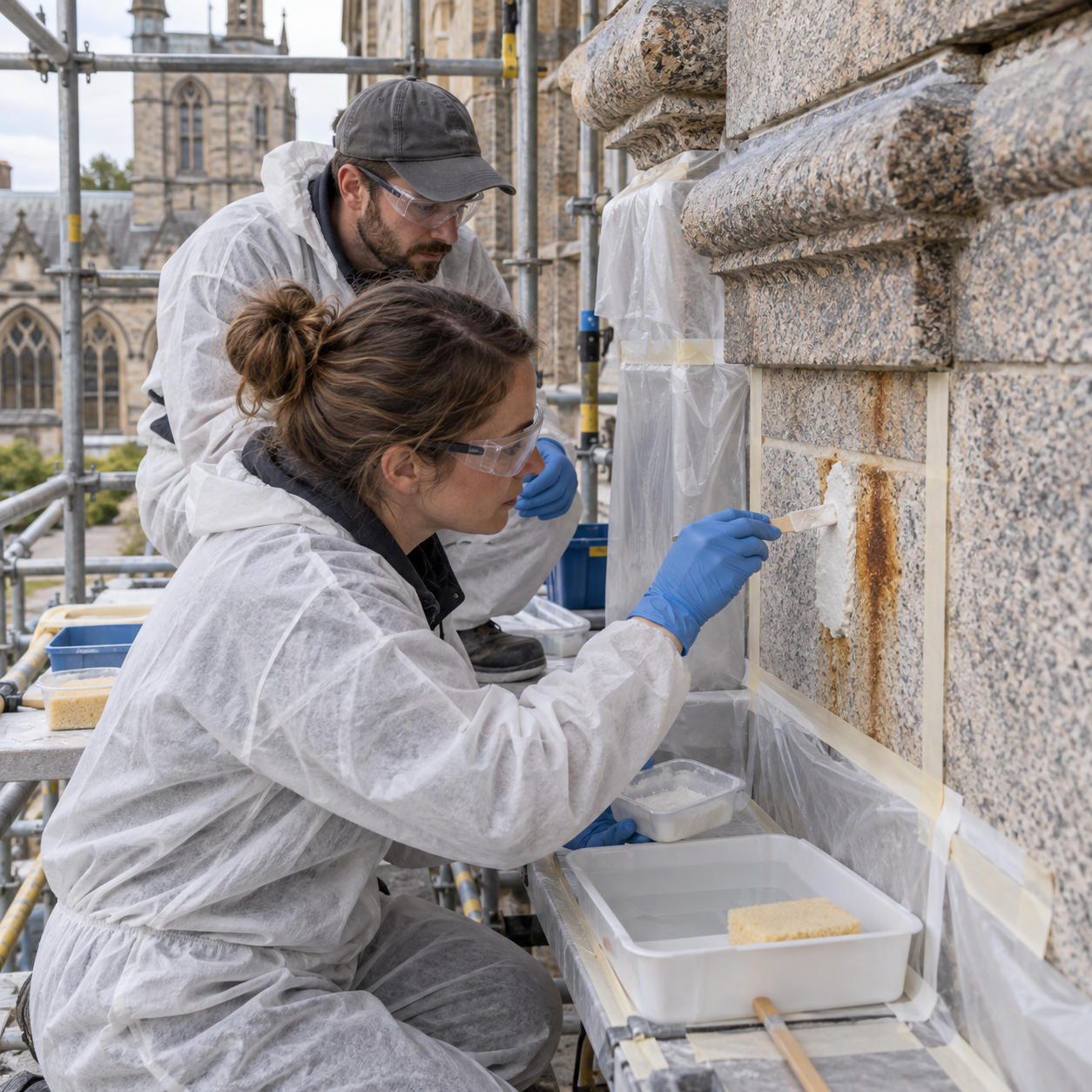
Oxalic acid may be considered by conservation professionals for selected iron stains on certain masonry, but it is not a general-purpose cleaner. Stone mineralogy, mortar, previous coatings, salts, metal anchors and weathering can change the result. Calcareous materials such as limestone and marble are especially vulnerable to acid attack. Work should proceed only under the direction of a qualified conservator or project architect with material identification, mock-ups, containment and an approved rinse or neutralization plan. This article supports procurement and project control rather than prescribing a field mixture or dwell time.
For industrial qualification, assign purchasing, quality, engineering, operations, logistics and EHS ownership before the first delivery. Approve the specification, analytical methods, sampling point, retained-sample period, storage conditions, transfer equipment, deviation response and release authority in writing. Compare representative lots under controlled conditions and record process performance, mass balance, waste, equipment observations and final quality. This separates raw-material variation from water, equipment, operator or analytical changes. Review the chain from supplier release through carrier, package, receiving connection and day tank because contamination or misidentification can occur after final analysis. Reconcile ordered, received, stored and consumed quantities and investigate unexplained differences. Supplier scorecards should cover documentation accuracy, delivery condition, corrective-action quality and change notification as well as price. Qualify an alternate source before a disruption using the same methods and process criteria. When buyer and supplier results differ, review sample representativeness, temperature, calibration, detection limits and uncertainty before deciding disposition. Confirm emergency contacts, unloading hours and stop-work authority for every shipment. Include maintenance and warehouse teams in post-trial review because they often identify seal, vent, hose or handling issues not visible in a certificate of analysis. Close qualification with an authorized report, approved supplier status and a defined routine-monitoring plan. The current safety data sheet, local law and site procedures control storage, handling, exposure control and emergency response.
Diagnose the stain and substrate
Determine whether discoloration is iron, biological growth, atmospheric soil, paint, bitumen or a reaction from embedded metal. Identify stone, mortar, pointing repairs and surface finishes. Treating the wrong mechanism can spread staining or permanently change color and texture.
Review conservation requirements
Historic projects may specify oxalic-acid-based treatment only for narrowly defined conditions. A Canadian heritage masonry tender package provides an example of oxalic acid appearing within controlled project documentation; the project’s own architect and conservation specification remain authoritative.
Build a representative mock-up program
Select inconspicuous areas representing stone type, exposure, stain severity and prior repair. Record photographs, color, gloss, texture and water behavior before and after trial. Observe the panel after drying and weathering rather than approving the immediate wet appearance.
Protect adjacent materials
Mask glass, metals, painted surfaces, plants, joints and vulnerable stone according to the project plan. Control runoff and overspray. Inspect concealed anchors and ferrous elements because a cleaner may expose or accelerate the source of recurring rust.
Approve product quality and preparation controls
Specify oxalic acid identity, assay, insolubles and package condition appropriate to controlled conservation work. Store it securely and prepare only under the project method statement by trained personnel. Do not substitute another grade or blended cleaner without conservator approval.
Avoid recipe transfer between sites
Concentration, application method, contact time and rinsing depend on the substrate and mock-up. A condition accepted on granite may damage limestone, marble, mortar or decorative finishes. The trial record must control field work, not a generic online recipe.
Control application, rinsing and residue
Use access, ventilation, protective equipment and containment defined by the site safety plan. Apply within the accepted panel limits and prevent drying where the method prohibits it. Verify removal of residues and manage wastewater under local rules.
Evaluate the dry final surface
Inspect for whitening, etching, streaking, salt movement, joint loss, color change and residual stain. Compare with the approved mock-up under similar light and moisture. Stop work if the response differs from the reference panel.
Prevent recurrence and document the work
Repair leaking flashings, corroding fixings, drainage defects or incompatible metals that create new stains. Record lot, area, weather, operator, method and observations so future custodians understand what was applied.
Prepare a conservation supply inquiry
Provide project specification, required grade, package, quantity, destination and documentation needs. Review the Hiacid oxalic acid product page, then request material information for professional conservation review.
Related oxalic acid resources
- Oxalic Acid Supply for Registered Varroa Treatments
- High-Purity Oxalic Acid for Semiconductor Wafer Cleaning
- Oxalic Acid for Tungsten Recovery from Scheelite
Frequently asked questions
Can oxalic acid be used on every historic stone?
No. Acid-sensitive stone, mortar and finishes can be damaged; material identification and conservator-led trials are essential.
Why is a mock-up necessary?
It reveals color, texture, residue and compatibility effects before larger historic areas are exposed.
Does this article provide a field recipe?
No. Concentration and application conditions must come from the approved project specification and trial.
What should happen if staining returns?
Investigate moisture, metal fixings, drainage and other root causes instead of repeatedly cleaning the surface.