
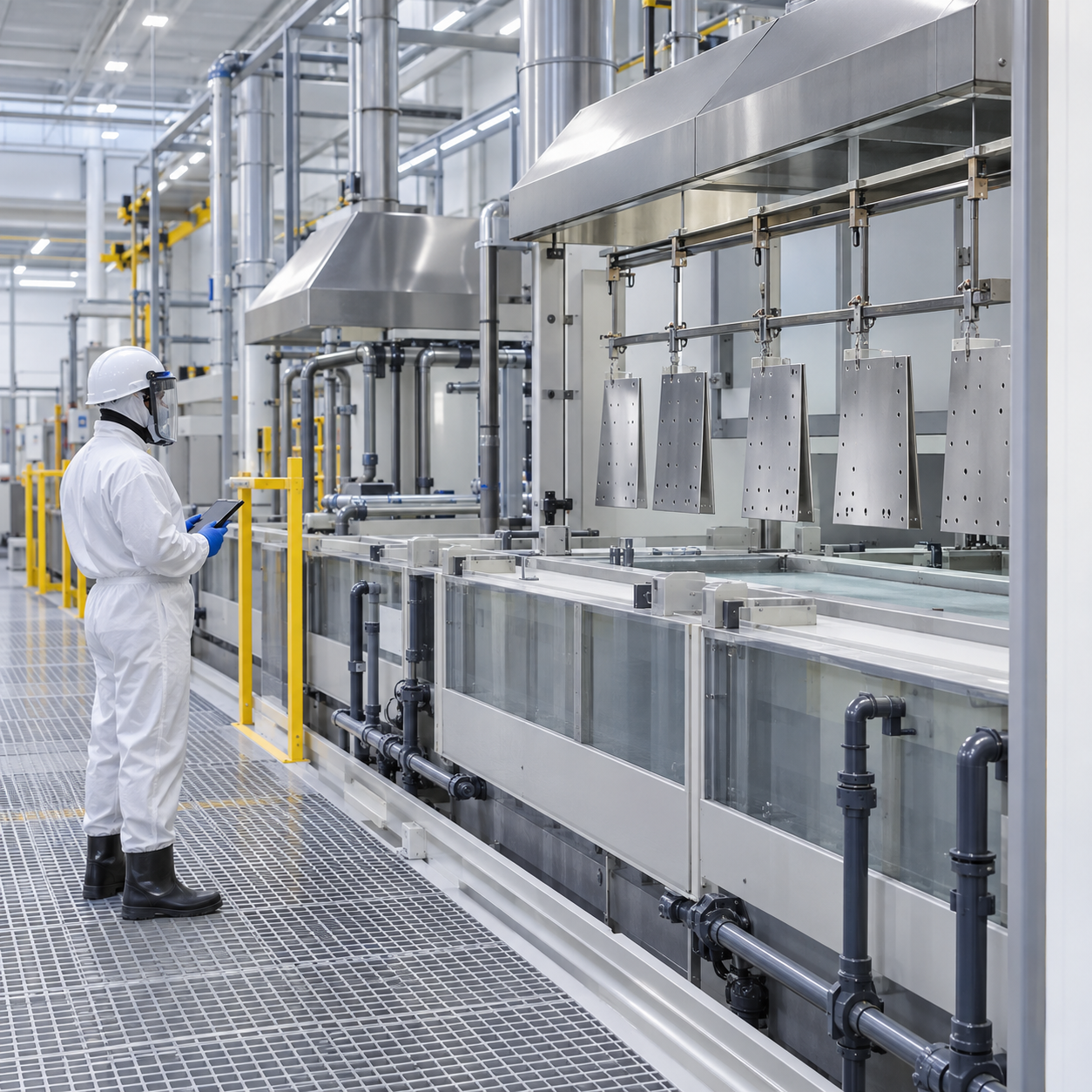
Nitric acid is used in selected titanium and titanium-alloy pickling or descaling systems, often within mixed-acid processes designed by qualified materials engineers. Titanium surface condition, alloy, prior heat treatment, alpha case and final service requirement all affect the approved method. Incorrect bath balance or contamination can produce dimensional loss, hydrogen pickup, uneven attack or a surface that fails later processing. This article addresses B2B nitric acid qualification and quality control. It deliberately does not provide a bath recipe, mixing sequence or operating condition; the controlling process specification and facility safety review must supply those details.
For B2B qualification, assign purchasing, quality, engineering, operations, logistics and EHS ownership before the first commercial delivery. Approve the specification, analytical methods, sampling point, retained-sample period, storage conditions, transfer equipment, deviation response and release authority in writing. Compare representative lots under controlled conditions and record process performance, mass balance, waste, equipment observations and final quality. This separates raw-material variation from water, equipment, operator or analytical changes. Review the chain from supplier release through carrier, package, receiving connection and day tank because contamination or misidentification can occur after final analysis. Reconcile ordered, received, stored and consumed quantities and investigate unexplained differences. Supplier scorecards should cover documentation accuracy, delivery condition, corrective-action quality and change notification as well as price. Qualify an alternate source before a disruption using the same methods and process criteria. When buyer and supplier results differ, review sample representativeness, temperature, calibration, detection limits and uncertainty before deciding disposition. Confirm emergency contacts, unloading hours and stop-work authority for every shipment. Include maintenance and warehouse teams in post-trial review because they often identify seal, vent, hose or handling issues not visible in a certificate of analysis. Close qualification with an authorized report, approved supplier status and a defined routine-monitoring plan. Nitric acid is a strong oxidizer and corrosive chemical; the current SDS, local law and site procedures control segregation, handling, ventilation, exposure control and emergency response.
Start with the approved titanium specification
Identify alloy, product form, prior processing, scale condition, dimensional tolerance and the next operation. Confirm the current customer, aerospace, medical or plant specification before buying acid. The NASA process specification for metal pickling shows why titanium requires alloy-specific controls, including attention to hydrogen pickup and verified processing solutions.
Do not transfer stainless-steel practice
Titanium and stainless steel respond differently to oxidizing and fluoride-bearing environments. A nitric-acid process validated for stainless passivation is not a substitute for a titanium pickling specification. Engineering must approve chemistry, equipment materials, inspection and rejection criteria for the exact titanium condition.
Translate surface risk into an acid specification
Define nitric acid concentration, chloride, iron, sulfate, residue, color and other risk-based impurities with agreed test methods and reporting limits. State whether results are actual values or pass/fail. Supplier grade names alone cannot establish compatibility with a critical titanium process.
Qualify several commercial lots
Run controlled panels or production-representative coupons from the relevant alloy and heat-treatment condition. Compare surface appearance, mass or dimensional change, alpha-case removal, hydrogen results and downstream joining, coating or fatigue requirements as applicable. Retain acid and metal samples for investigation.
Control the complete bath, not only fresh acid
Track additions, drag-in, dissolved metals, water, temperature, workload and bath age using the approved control plan. Fresh nitric acid assay does not reveal the condition of an operating bath. Establish hold, adjustment and dump criteria before production begins.
Protect sampling and analysis
Collect samples through a compatible closed method at a defined point after adequate circulation. Record bath identification, time, temperature and recent additions. Use validated analytical methods, calibrated instruments and a documented response when laboratory and production indicators disagree.
Engineer oxidizer and mixed-acid safety
Nitric acid is a strong oxidizer and is corrosive; mixed-acid titanium processes may introduce additional severe hazards. Use compatible closed equipment, ventilation, containment, segregation, interlocks and emergency systems under the current SDS and site process-hazard analysis. The NIOSH nitric acid guidance offers occupational-hazard context.
Manage NOx and incompatible contamination
Prevent contact with organics, incompatible metals, reducing agents and unauthorized cleaners. Define exhaust and scrubber capability for normal and upset conditions. A change in load, temperature, bath chemistry or ventilation should trigger review rather than informal operator adjustment.
Build change control into procurement
Require advance notice for manufacturing site, concentration, production route, purification, analytical method and packaging changes. Compare lots after a significant change using the same panels and release criteria. Maintain a qualified alternate source before supply pressure forces an unreviewed substitution.
Prepare a titanium-processing inquiry
Provide the required nitric acid specification, methods, package, monthly volume, destination and quality documents without sending proprietary bath recipes. Review the Hiacid nitric acid supply page, then request a documented industrial quotation.
Related nitric acid resources
- Nitric Acid Supply for Dairy CIP Systems
- Nitric Acid for NdFeB Magnet Recycling Trials
- Nitric Acid for Photovoltaic Silicon Wafer Texturing
Frequently asked questions
Can a stainless passivation procedure be used for titanium pickling?
No. Titanium requires its own approved process, materials controls and inspection criteria.
Why control impurities when the bath is monitored?
Incoming chloride, metals or residue can consume bath margin and affect critical surface performance.
Does this article specify a mixed-acid formula?
No. Recipes and operating conditions must come from the applicable process specification and hazard review.
When should an acid supplier change be requalified?
Review changes to site, route, concentration, purification, methods, packaging or any factor tied to process performance.