
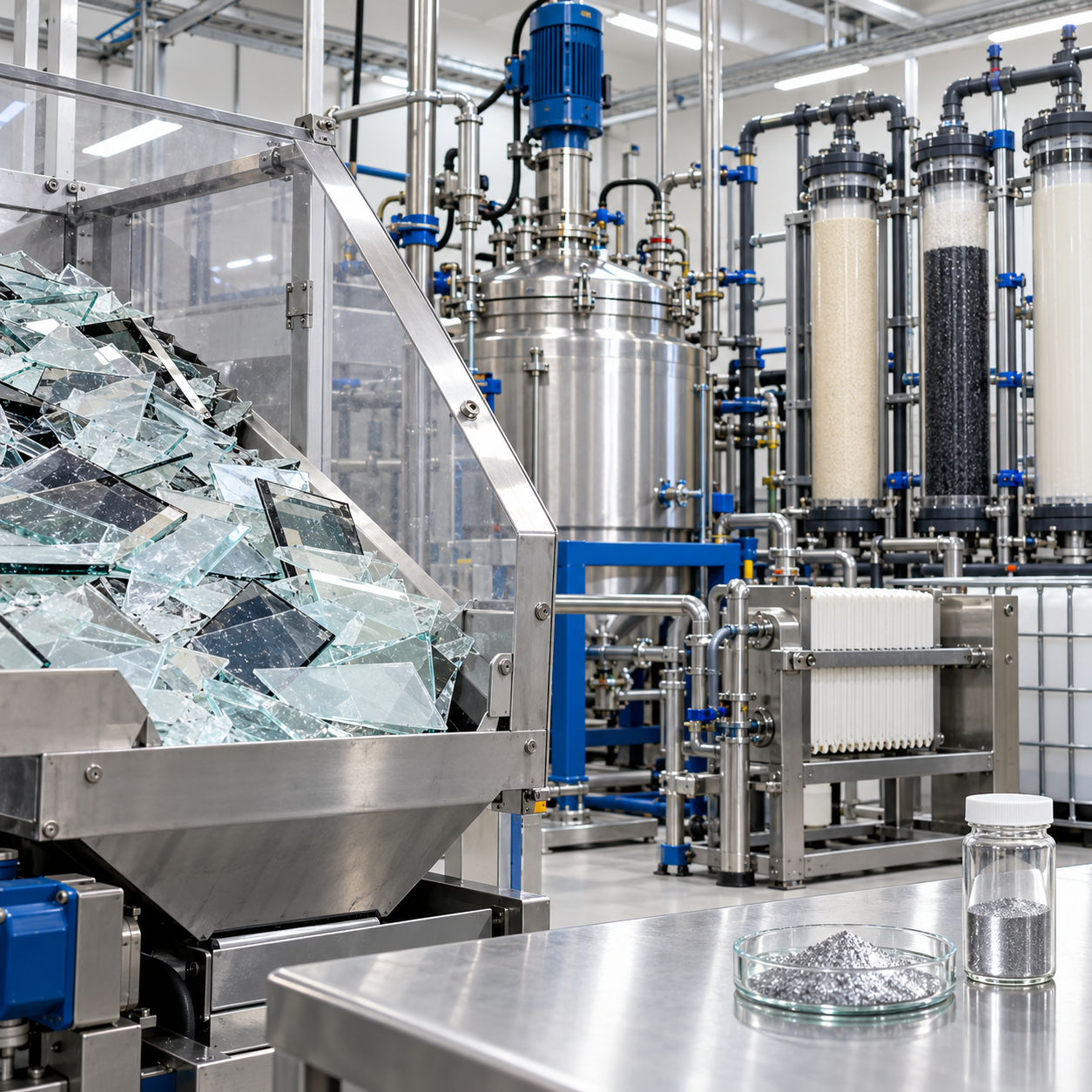
Liquid-crystal displays use a thin indium-tin-oxide coating on glass, but the valuable indium concentration is low and varies by panel design and side. Nitric acid can leach indium from prepared display glass, while also dissolving aluminum, zinc, tin and organic layers that complicate purification. A viable recycling route begins with safe dismantling and representative sampling, then connects leaching with liquor reuse, indium concentration, purification and glass or polymer routing. It must quantify the total organic carbon introduced by polarizing films and confirm that repeated use of leachate does not simply accumulate impurities faster than indium.
For B2B implementation, assign owners in process engineering or laboratory management, quality, purchasing and EHS before the first delivery. Approve receiving tests, sampling tools, storage, dosing or analytical basis, deviation response and retained-sample period in writing. Compare representative nitric acid lots under identical conditions and record mass balance or analytical recovery, product quality, waste load, emissions and equipment observations. Define who may approve a temporary deviation and what evidence is required before release. Review transportation, package integrity, unloading, ventilation and emergency response alongside the supplier’s laboratory results. Close each qualification with a written conclusion, an updated material specification and defined requalification triggers. Procurement should confirm lead time, minimum order, container loading, port documentation and contingency stock. Quality teams should trend incoming results instead of recording only pass or fail, while users record actual consumption and performance. Before scale-up or routine adoption, repeat the trial at expected load, residence time and recycle ratio. Sample startup, stable operation and shutdown because transient conditions can reveal corrosion, impurity or filtration problems. Document calibration, detection limits and calculation formulas so results can be reproduced. Include raw material, utilities, labor, maintenance, emissions control, waste treatment and inventory in the economic review. This disciplined approach separates acid-lot variation from feed, equipment, matrix or operating changes and supports faster buyer-supplier investigations. Confirm unloading connections, storage capacity and segregation from incompatible materials through a documented site review. Train operators on the current safety data sheet, exposure controls, first response and notification routes. Audit scales, flowmeters or pipettes used to dose acid, because concentration control cannot compensate for inaccurate addition. Review results jointly with the supplier before approving a long-term specification, and keep the agreed test methods attached to the purchase contract. Where recycled process liquor is involved, distinguish fresh-acid consumption from total circulating inventory. Schedule periodic requalification after equipment, packaging, raw-material source or process changes. These additional controls make performance evidence transferable from development into routine purchasing and production.
Control dismantling and feed preparation
Remove lamps, batteries, circuit boards and other regulated components before treating the glass. Record panel technology, age, side, polarizer removal, particle size and mass fractions.
Map where indium is located
Analyze front and back glass and separated coatings independently. Build representative composites across models because indium distribution and coating thickness are not uniform.
Use comparative leaching evidence
A Separation and Purification Technology study compared nitric acid and other acids on unground waste LCD screens and reported both metal extraction and dissolved organic load.
Screen more than extraction percentage
Measure indium, tin, aluminum, zinc, iron, total organic carbon, acidity and filtration. Vary acid concentration, time, temperature and glass preparation while including duplicates and multiple device lots.
Concentrate and purify indium deliberately
Test leachate reuse, ion exchange, solvent extraction or precipitation using the actual multimetal liquor. Set acceptance criteria for final indium concentration, purity and recovery.
Track glass, polymer and liquid outputs
Close indium and tin balances across glass residue, polarizer fraction, pregnant solution, washes and final product. Characterize glass reuse potential and the treatment needed for dissolved organics.
Engineer safe closed leaching
Use corrosion-resistant reactors, controlled acid addition, ventilation, temperature limits and validated NOx treatment. Design for sharp glass, plugging, leaks and unexpected reaction with mixed e-waste.
Prevent feed contamination from driving cost
Upstream sorting and film removal may reduce organic load or acid demand even when they add labor. Compare full-process economics rather than only the leach reactor yield.
Control nitric acid quality and delivery
Specify concentration, chloride, metals, residue and package. Require agreed methods, lot COA, seals, retained samples and change notification so process drift can be investigated.
Prepare an LCD-recycling inquiry
Provide concentration, test volume, package, destination and impurity limits. Review the Hiacid nitric acid product page, then request pricing and documents.
Related nitric acid resources
- Nitric Acid for Rare Earth Recovery from CRT Phosphors
- Nitric Acid for Scandium Recovery from Red Mud
- Nitric Acid Recovery from Stainless Pickling Liquor
Frequently asked questions
Does nitric acid leach only indium from LCD glass?
No. Tin, aluminum, zinc and organic material may also enter the liquor.
Why measure total organic carbon?
Dissolved polarizer and coating material can interfere with downstream purification and wastewater treatment.
Can the leachate be reused indefinitely?
No. Reuse can concentrate indium but also accumulates impurities, so a purge and monitoring plan are needed.
What should be included in the mass balance?
Include each glass side, films, leachate, washes, residues and the final indium product.