
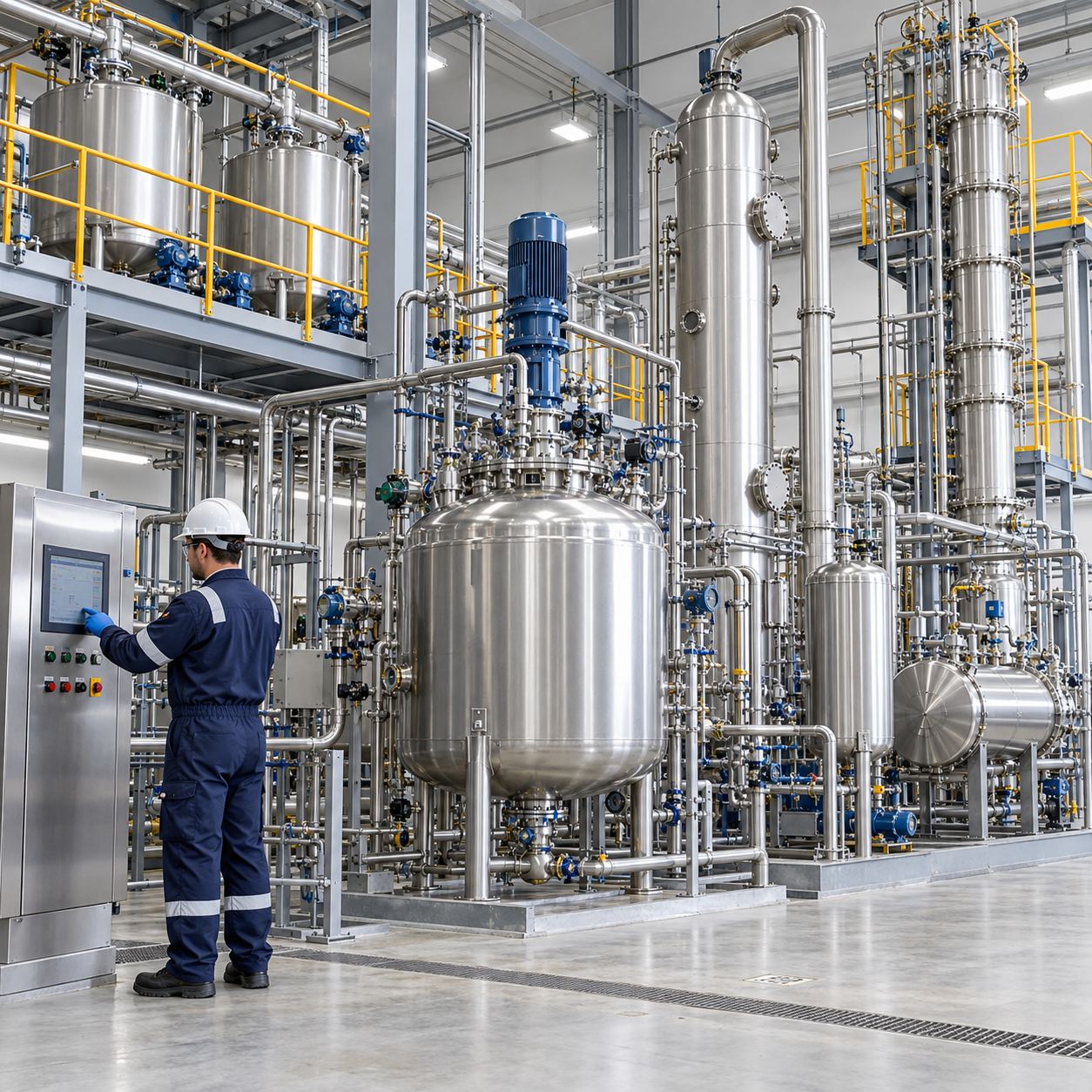
N,N-Dimethylacetamide, commonly called DMAc, is a polar aprotic solvent used in chemical processing, fibers, coatings and synthesis. Published manufacturing routes react acetic acid with dimethylamine through an intermediate salt and then separate water, unreacted feeds and related impurities from the product. Acetic-acid water and impurity profiles therefore affect reaction balance, recycle, distillation load and finished DMAc quality. Procurement teams should qualify feed by performance and impurity transfer rather than buying on nominal concentration and price alone. This guide addresses B2B raw-material control without providing a reaction recipe or operating setpoints.
For industrial qualification, assign purchasing, quality, engineering, operations, logistics and EHS ownership before the first commercial delivery. Approve glacial acetic acid assay, impurity limits, analytical methods, sampling, storage, dilution or dosing equipment, deviation response and release authority in writing. Compare representative lots under controlled conditions and record process performance, mass balance, waste, equipment observations and final product quality. This separates raw-material variation from changes in water, feedstock, equipment, operator or laboratory method.
Review the chain from supplier release through carrier, package, receiving connection and point of use because contamination or dilution can occur after final analysis. Reconcile ordered, received, stored and consumed quantities and investigate unexplained differences. Supplier scorecards should cover documentation accuracy, delivery condition, corrective-action quality and change notification as well as price. Qualify a contingency source before disruption using the same methods and process criteria. When buyer and supplier results differ, review sample representativeness, temperature, standards, calibration, detection limits and uncertainty before disposition. Procurement documents should define shelf life, minimum remaining life, seal condition, seasonal temperature and rejection criteria.
Glacial acetic acid is corrosive, combustible and has a pungent vapor. Its freezing point is near ordinary cool-weather conditions, so crystallization can disrupt delivery or measurement if not controlled. Use the current SDS, compatible materials, ventilation, ignition control, secondary containment and an approved emergency plan. The OSHA acetic acid data page and NIH PubChem record provide general identity and hazard context; local law, site procedures and the process hazard review remain controlling. Confirm emergency contacts, unloading hours and stop-work authority for every shipment.
Use published evidence as context
An expired DuPont patent describes continuous production of dimethylacetamide from glacial acetic acid or acetic anhydride and dimethylamine with reaction and separation stages. Its examples are historical context, not current plant instructions.
Translate evidence into site qualification
Define feed, equipment, analytical methods, acceptance criteria and stop conditions before trials. Scale only after replicated data, a reviewed hazard assessment and documented product and waste routes support the decision. Close qualification with an authorized report, approved-supplier status and a routine monitoring plan.
Translate product grade into feed limits
Define DMAc assay, water, acidity, amines, color, metals, residue and application-specific impurities. Map each limit to possible contributions from acid, amine, process water and recycle.
Include end-use performance where needed
Fiber, coating, electronics or pharmaceutical customers may require different purity and color evidence. Test representative customer processes instead of relying on one generic DMAc specification.
Characterize glacial acetic acid consistently
Specify acid assay, water, formic acid, acetaldehyde, metals, color and nonvolatile residue using agreed methods. Retain matched acid, amine and DMAc samples for investigations.
Close acid amine and water balances
Reconcile feed, salt intermediate, reactor output, recovered amine, unreacted acid, water, purge and finished product. Correct for sample basis and moisture before comparing lots.
Evaluate reaction and separation together
A feed lot should be judged by conversion, specific consumption, pressure and temperature stability, column load, energy, recycle composition and finished-product quality.
Trend difficult impurity cuts
Monitor the components that challenge distillation or accumulate in recycle. Stable headline DMAc assay can hide increasing heavies, color bodies or off-spec side streams.
Engineer safe closed transfer
Acetic acid is corrosive and dimethylamine is volatile and flammable. Use compatible dedicated equipment, ventilation, detection, isolation, pressure protection and reviewed emergency procedures.
Prevent acid-amine contact outside the process
Backflow or cross-connection can create heat and pressure in storage or transfer equipment. Use physical separation, non-return protection, line clearance and verified valve alignment.
Create supplier and change governance
Require COA, SDS, manufacturing traceability, retained samples and advance notice of changes to site, feedstock, purification, method, package or logistics. Requalify critical changes through production evidence.
Prepare a DMAc-feed inquiry
Provide acid concentration and impurity limits, package, annual volume, delivery profile and destination. Review the Hiacid glacial acetic acid page, then request a technical quotation.
Related glacial acetic acid resources
- Glacial Acetic Acid for Ketene Manufacturing
- Glacial Acetic Acid for Zinc-Nickel Electroplating
- Glacial Acetic Acid for Pectin Extraction
Frequently asked questions
Why can acid water affect DMAc production?
It changes reaction and separation balances and increases the load on water removal and recycle control.
Is finished DMAc assay sufficient for process control?
No. Water, amines, acidity, color, trace impurities, recycle accumulation and end-use behavior can also matter.
Why retain matched feed and product samples?
They allow investigations to distinguish acid, amine, process and laboratory causes.
Does this article give a DMAc manufacturing recipe?
No. It is a raw-material qualification framework and intentionally omits operating conditions.